

The Shifting Talent Equation in Science and Technology
November 12, 2026
A confluence of policy changes, funding pressures, and competitive recruitment is reshaping where talented researchers choose to build their careers. Both the United States and China face real trade-offs in how they respond.
In the first half of 2025, Princeton University researchers tracking faculty appointments noted that roughly 50 tenure-track scholars of Chinese descent had taken positions at Chinese institutions within a six-month window.1 That figure adds to a cumulative tally of more than 850 such transitions since 2011.
1. What the data show
A study published in the Proceedings of the National Academy of Sciences found that approximately 20,000 scientists of Chinese descent left the United States between 2010 and 2021.2 Following the launch of the Department of Justice China Initiative in 2018, annual departures increased by approximately 75%, with two-thirds of those who relocated moving to China specifically. A 2024 survey of Chinese-descent scientists still based in the United States found that 61% were considering leaving, and 45% reported they had reduced or stopped federal grant applications, citing concerns about scrutiny and uncertainty.3
By September 2025, researchers tracking faculty appointments identified at least 85 scientists who had left U.S. research institutions for Chinese universities since early 2024, with more than half making the move in 2025 alone.4
The departures increasingly include marquee names, and they extend beyond the Chinese diaspora. In July 2026, Tsinghua University announced that Omar Yaghi, a winner of the 2025 Nobel Prize in Chemistry, had joined its faculty full time to lead a new institute combining artificial intelligence, chemistry, and materials science.5
On measures of research output and capability, the gap between the United States and China has narrowed in several important fields. Stanford’s 2026 AI Index Report found that the performance difference between leading American and Chinese AI models on major benchmarks had fallen from between 17 and 31 percentage points in 2023 to approximately 2.7% as of March 2026.6 At the same time, the number of international AI researchers choosing to relocate to the United States declined 89% since 2017.7
Perspective on long-term workforce trends emerges from MacroPolo’s Global AI Talent Tracker, which measures elite accomplishments using paper acceptances at NeurIPS as a benchmark. These metrics demonstrate early structural movement where talent originates: elite AI scholars earning undergraduate degrees in Chinese institutions expanded from 29% globally in 2019 to 47% in 2022, although American organizations maintained their role as the primary professional destination. Through interactive mapping of career trajectories across academic and employment milestones, the tracker highlights this evolving dynamic—an expanding pipeline originating in China that continues moving toward American laboratories, albeit at a noticeably decelerating rate.8
2. Factors affecting researcher decisions in the United States
Research funding levels are one of the most direct factors in career decisions for scientists at any career stage. In 2025, the National Institutes of Health froze or terminated nearly 2,500 grants representing $2.3 billion in committed funding, and the National Science Foundation cut over 1,300 grants worth approximately $700 million.9 NIH awards were down approximately 29% and NSF awards down approximately 50% compared to recent prior years, according to the Association of American Universities.10
Visa and immigration policy has also become a more significant factor. Presidential Proclamation 10043, signed in May 2020, restricts entry for certain graduate students and researchers with ties to entities designated as supporting military-civil fusion programs. In 2021, consular officers refused 1,964 visa applications under it, frequently based on the applicant’s undergraduate institution.11 The Department of Homeland Security’s July 2026 decision to end duration of status and impose a four-year cap on student visas introduced additional planning uncertainty for doctoral researchers.12 A new H-1B fee of $100,000 took effect in September 2025, significantly raising the cost of that visa pathway for researchers completing degrees.13
The now-concluded China Initiative, which ran from 2018 to 2022, produced outcomes that are still debated. A survey conducted as part of the PNAS study found that more than 70% of Chinese-descent researchers in the United States reported feeling professionally less secure during its operation, and 45% said they had avoided applying for federal grants because of concerns about scrutiny.14
3. What China is offering
Meanwhile, China has pursued a sustained and well-resourced strategy to attract scientific talent from abroad, a strategy that predates recent U.S. policy changes and has been intensified in response to them.
That strategy has a longer institutional history than current headlines suggest. China launched the Thousand Talents Plan in December 2008 to recruit science and technology experts from abroad, principally from overseas Chinese communities. Promotion of the plan stopped around 2018 amid U.S. investigations of scientists. A Reuters review of more than 500 government documents spanning 2019 to 2023 identified the Qiming Program as its primary successor, operating more discreetly and targeting applicants trained at institutions such as MIT, Harvard, and Stanford.15
Financial packages for returning or incoming researchers have become substantially more competitive. The Qiming Program, supervised by China’s Ministry of Industry and Information Technology and focused on semiconductor, AI, and biotechnology fields, offered successful candidates a national grant of approximately $140,000 supplemented by $280,000 in provincial matching funds. Total packages including local incentives, salary supplements, and housing subsidies can reach approximately $812,000 for senior recruits.16
In October 2025, China introduced the K visa, a new category for foreign science and technology professionals that is uncapped, provides five-year multiple entry, and does not require employer sponsorship. It comes with tax benefits and housing support, and is explicitly targeted at researchers in quantum computing, AI, and semiconductors.17
Alongside research funding, family considerations, and social ties, the strongest pull increasingly comes from the commercial sector. Many returning scientists are joining Alibaba, ByteDance, Tencent, Baidu, and a cohort of AI startups whose compensation now rivals or exceeds what American industry offers. Data from Maimai, a professional networking platform, put the average monthly salary for AI scientists and heads of AI at 132,796 yuan, roughly $19,600, between January and April 2026.
Elite programs for new graduates, including ByteDance’s TopSeed, Alibaba Star, and Tencent’s Big Shot, extend annual packages of 5 million yuan and up to a few dozen top doctoral hires per company.18 At the top of the market, Tencent hired Shunyu Yao from OpenAI as chief scientist, ByteDance recruited Yonghui Wu, a former vice president of research at Google DeepMind, to lead its AI research and development division.19
The commercial market also cuts in both directions: nearly 70 members of ByteDance’s Seed AI team departed over the past year, with some joining OpenAI, Google, Meta, and Apple.20
Yu Xie, a Princeton University sociology professor who studies these flows, notes that the underlying pull factors, including competitive salaries, research funding, and improving institutional quality, are independently significant and would be attracting talent regardless of U.S. policy choices.21
4. The function that mobile talent performs
China has been the most important foreign source of U.S.-based scientists for more than two decades.22 Researchers who trained in American doctoral programs and built careers at American institutions carry with them not only domain expertise but research networks, collaborative relationships, and familiarity with both scientific cultures.
Beyond published results, they hold tacit knowledge—the experimental judgment, troubleshooting instinct, and sense of which problems are tractable that are transmitted through apprenticeship rather than through papers. A senior investigator who leaves takes with them the training of the next cohort, the informal refereeing of ideas within a department, and the web of collaborations that made their laboratory a node rather than an isolated point.
The cross-border dimension compounds the loss. Scientists who are fluent in two research cultures have historically served as the connective tissue of U.S.-China scientific exchange, translating not only language but norms, expectations, and the practical mechanics of collaboration. As that cohort thins on the American side, the capacity for the two systems to read and learn from each other erodes with it.
5. The policy trade-offs involved
The policies contributing to these dynamics were not designed to produce them, and the trade-offs they involve are genuinely difficult. National security concerns about the transfer of sensitive research to strategic competitors are substantive. Research integrity concerns about undisclosed foreign affiliations are legitimate.
China faces its own version of these trade-offs. Its aggressive overseas talent recruitment has generated domestic employment concerns, with youth unemployment for ages 16 to 24 running near 18% in late 2025 and domestic graduates competing in a market that Chinese media and researchers have noted is already under considerable strain from the volume of returnees.23
There is a further dimension to this competition that the funding, visa, and recruitment story does not fully capture. For many of the most accomplished researchers, the decisive variable is the degree of intellectual freedom a system affords—the latitude to choose one’s own questions, to pursue unconventional or unfashionable lines of inquiry, and to follow them over long horizons without a predetermined conclusion.
A defining strength of the American research system has been its tolerance for a wide range of agendas and findings. Researchers have generally been rewarded for advancing knowledge or introducing new methods rather than for reaching conclusions that served a national narrative. The economic historian Robert Fogel is an instructive case: his quantitative work on American slavery provoked intense controversy, yet the scholarly community ultimately judged it on methodological and evidentiary grounds rather than on whether its conclusions were congenial.24
China’s talent strategy, by contrast, is tightly coupled to national priorities and strategic sectors. That coupling is a genuine advantage in fields where the objective is well defined and progress can be organized around a clear technological goal—semiconductors, artificial intelligence, batteries, aerospace. The open question is how such a model performs in the domains where the most consequential breakthroughs have historically originated: open-ended exploration whose value was not apparent at the outset and could not have been specified in advance by any planner.25
The question of where scientists believe they are most free to pursue questions of their own choosing may matter as much, over time, as the question of where they can be best paid to pursue questions chosen for them.
6. The economic stakes
The economic consequences of a less reliable pipeline of internationally mobile scientific talent are unlikely to appear first as a dramatic fall in employment or research output. They are more likely to emerge gradually: a laboratory that cannot recruit a postdoctoral researcher, or a multinational that finds it harder to connect its American operations with networks in China.
That matters because foreign-born talent is unusually important at the advanced end of the American science and technology system. In 2021, foreign-born workers accounted for 19% of the U.S. STEM workforce but 43% of doctorate-level scientists and engineers. More than half of doctorate holders working as computer and mathematical scientists (58%) and engineers (56%) were foreign-born. China was the birthplace of 7% of all foreign-born STEM workers in the United States, and India and China together have supplied a large share of the advanced technical workforce on which American universities and employers depend.26
The innovation contribution is larger than headcount alone would predict. Research using U.S. patent and inventor records finds that immigrants comprised 16% of U.S.-based inventors but produced 23% of innovation output. Once collaboration effects on U.S.-born co-inventors are included, the researchers estimate that immigrants can be associated with 36% of aggregate U.S. innovative output since 1990.27
For multinational employers, bicultural scientists and engineers perform an additional economic function. They reduce the transaction costs of operating across two large but increasingly differentiated technology ecosystems. As those bridges become harder to recruit and retain, firms may respond by duplicating teams, locating more activity within a single national ecosystem, narrowing collaborative portfolios, or accepting slower movement from research insight to market execution. None of those choices is costless.
The relevant horizon, therefore, is five to ten years rather than the next hiring cycle. The economic question is not whether the United States will cease to be a leading science and technology power; its existing advantages remain formidable. It is whether avoidable uncertainty in funding and talent policy will make retaining—and renewing—that advantage more expensive.
7. What institutions on each side can do
The state visit that President Xi Jinping concluded in Washington on September 25, 2026 changed the tone of the relationship more than the rules that govern scientific careers. China pledged to invite 100,000 young Americans for exchanges and study over the next five years, but the official readouts do not mention Chinese students or scientists in the United States, visas, or research security.28 Those are the conditions researchers actually weigh, and much of how they are applied is decided on campus rather than at summits. That puts the next move with research institutions.
For American universities, the binding constraints are now agency rules, and several are still being defined. From fiscal year 2027, the National Science Foundation will not fund research conducted with entities on U.S. government restricted lists, but it has yet to define what counts as a “research collaboration.”29 Universities have a narrow window to press for a definition that preserves the long established federal principle that fundamental research should remain unrestricted. Compliance offices can treat honest disclosure errors as correctable rather than punishable: among surveyed scientists of Chinese descent who want to stop applying for federal grants, 84% cite fear of legal liability for mistakes on forms.30
For Chinese universities and research institutes, the evidence points past recruitment to what happens after a scientist arrives. A study of 3,534 Chinese academy members found that elite returnees published 26% less within three years of joining Chinese institutions.31 The payoff from getting integration right is large: a Stanford analysis of about 10,000 returnees finds that each additional returnee is associated with roughly a 17% gain in research quality among local scientists who never work with them directly.32 Institutions can protect that payoff by funding bridges that keep returnees’ international collaborations alive, and by converting part of the new youth exchange pledge into semester study and laboratory placements rather than short visits.33
For multinational employers who need researchers fluent in both research ecosystems, the relevant planning horizon has shortened. Companies that will need that capability in 2030 and beyond are better served by building it deliberately now, through fellowships, rotation programs, and retention structures.
8. The compounding dynamics at stake
The United States retains a commanding position in aggregate scientific output, private research investment, and institutional quality.
Both countries have strong interests in maintaining some degree of scientific exchange. The researchers who have trained in both systems, who speak both scientific languages and maintain networks on both sides, perform a function that neither system can easily replicate internally.
The timing gives the question historical weight. The United States marks the 250th anniversary of its founding in 2026, and the shape of its next 250 years depends heavily on how this decade rebuilds the American industrial base through the combination of AI technology and foreign direct investment. Immigration policy is one of the few instruments that serves both purposes at once. Targeting it to attract the talent those purposes require, rather than reversing it, is the choice this moment presents.
The test is concrete. If American universities reduce the uncertainty that pushes scientists out, and Chinese institutions reduce the friction that wears returnees down once they arrive, the stability the two leaders endorsed will reach the laboratories where it matters most. If not, 100,000 young Americans will travel east on goodwill visits while the scientists keep moving in one direction.
Notes
- Princeton University researchers’ tally of Chinese-descent faculty departures, reported in “Reverse Brain Drain: Chinese AI Scientists Return Home After Years in US,” VnExpress International, March 25, 2026.
- Y. Xie, X. Lin, J. Li, Q. He, and J. Huang, “Caught in the Crossfire: Fears of Chinese-American Scientists,” Proceedings of the National Academy of Sciences, vol. 120, no. 27 (2023). The 20,000 departure estimate covers 2010-2021.
- Stanford Center on China’s Economy and Institutions, “Reverse Brain Drain? Exploring Trends among Chinese Scientists in the U.S.,” July 2024, sccei.fsi.stanford.edu. Survey statistics on considering leaving (61%) and reducing grant applications (45%) are drawn from the PNAS study cited in endnote 2.
- “Reverse Brain Drain Sees 85 US Scientists Leave for China,” CO/AI, Sept. 29, 2025; J. Xu, “In the Race to Attract the World’s Smartest Minds, China Is Gaining on the US,” CNN, Sept. 29, 2025.
- R. Herman, “America’s Scientific Brain Drain Is No Longer Hypothetical,” RealClearScience, July 14, 2026; “10 Scientists and Experts Who Have Left the US and UK for China So Far in 2026,” South China Morning Post, July 10, 2026; “Prominent Chinese Scientists Leave US After Decades to Join Tsinghua University,” VnExpress International, March 17, 2026.
- Stanford Institute for Human-Centered AI, “AI Index Report 2026,” April 2026. Performance gap figures summarized in J. Vincent, “Stanford AI Index 2026: China Narrows U.S. Lead to 2.7%,” The Next Web, April 2026.
- Stanford HAI, “AI Index Report 2026.” The 89% decline in AI researchers relocating to the United States covers 2017-2026.
- MacroPolo (Paulson Institute), “The Global AI Talent Tracker 2.0,” 2023, comparing 2019 and 2022 data; macropolo.org. Shares reflect researchers’ country of undergraduate education.
- Science News, “See the Alarming Extent of NIH and NSF Funding Cuts in 2025,” Jan. 21, 2026, sciencenews.org. Figures as of November 2025.
- Association of American Universities, “Federal Research Cuts Threaten U.S. Innovation and Leadership,” aau.edu, July 23, 2025.
- Presidential Proclamation 10043, May 29, 2020. Visa refusal figure from H. Houlette, J.J. Lee, and X. Li, “Graduate Students and the U.S. China Initiative,” Journal of Comparative & International Higher Education, vol. 17, no. 1 (2025), 92-104.
- Department of Homeland Security student visa duration-of-status change, July 2026. Reported in Houlette, Lee, and Li (2025).
- “China Woos STEM Talent With New K Visa,” TIME, Oct. 2025. H-1B fee of $100,000 effective Sept. 21, 2025.
- Houlette, Lee, and Li, “Graduate Students and the U.S. China Initiative,” 2025. The 70% academic insecurity figure and 45% grant-avoidance figure draw on PNAS survey data (endnote 2 above).
- The Thousand Talents Plan launched in December 2008. On the Qiming succession, see the Reuters investigation reported in “Tech War: China Quietly Recruits Overseas Chip Talent as US Tightens Curbs,” South China Morning Post, August 25, 2023, based on a review of more than 500 government documents spanning 2019 to 2023.
- The Economy, “China’s Intensifying Talent Offensive and the Reordering of the Global Technology Landscape,” Nov. 13, 2025, economy.ac. Grant amounts converted from yuan at approximate 2025 exchange rates.
- China K visa program details from “China Woos STEM Talent With New K Visa,” TIME, Oct. 2025; and Post Quantum, “China’s Quantum Talent Ecosystem,” postquantum.com, May 27, 2026.
- Maimai salary data reported in “China’s Tech Giants Escalate AI Agent Talent War,” BigGo Finance, June 8, 2026. New graduate package tiers reported by 36Kr, summarized in “China’s AI Talent Wars, Crazier Than the Internet Boom,” China Tech Bite, September 2026.
- Senior hires reported in “China’s AI Talent War Goes Big: PhD Starting Pay Tops $825,000,” Seoul Economic Daily, August 2026.
- ByteDance Seed team departure data aggregated by Maimai, reported in “China Tech Giants Battle for AI Talent,” IDN Financials, April 20, 2026.
- Yu Xie, quoted in “China Gaining on US in Reverse Brain Drain,” MSN, June 8, 2026.
- Stanford Center on China’s Economy and Institutions, “Reverse Brain Drain?” July 2024.
- Youth unemployment figure from “Reverse Brain Drain Sees 85 US Scientists Leave for China,” CO/AI, Sept. 29, 2025, citing official Chinese statistical data. Domestic competition concerns reported in “China Woos Foreign Tech Talent Fanning Graduates’ Unemployment Fears,” NBC News, Oct. 2025.
- Robert W. Fogel and Stanley L. Engerman, Time on the Cross: The Economics of American Negro Slavery (Boston: Little, Brown, 1974). Fogel was awarded the Sveriges Riksbank Prize in Economic Sciences in Memory of Alfred Nobel in 1993, with Douglass North, for renewing research in economic history through quantitative methods.
- On the distinction between directed, mission-oriented research and open-ended inquiry, see, for example, the long-running debate over the sources of transformative scientific advance; the characterization here is the authors’ and is offered as an interpretive frame rather than a settled empirical finding.
- National Center for Science and Engineering Statistics, National Science Board, The State of U.S. Science and Engineering 2024, March 13, 2024; and National Science Board, The STEM Labor Force: Scientists, Engineers, and Skilled Technical Workers, May 30, 2024. The reports find that foreign-born workers represented 19% of the STEM workforce and 43% of doctorate-level scientists and engineers in 2021; 58% of doctorate-level computer and mathematical scientists and 56% of doctorate-level engineers were foreign-born.
- Shai Bernstein, Rebecca Diamond, Abhisit Jiranaphawiboon, Timothy McQuade, and Beatriz Pousada, “The Contribution of High-Skilled Immigrants to Innovation in the United States,” National Bureau of Economic Research Working Paper 30797, revised 2023. The study estimates that immigrants were 16% of U.S.-based inventors but generated 23% of patent-based innovation output; direct and spillover effects together account for an estimated 36% of total U.S. innovation since 1990.
- White House, “Fact Sheet: President Donald J. Trump Advances a Fair and Reciprocal Relationship with China While Hosting Historic State Visit,” Sept. 25, 2026, whitehouse.gov; “Xi Says China to Invite 100,000 Young Americans to Visit China for Exchanges, Study over Next 5 Years,” Xinhua, Sept. 24, 2026. Chinese readouts describe the AI channel as an AI dialogue mechanism (人工智能对话机制).
- National Science Foundation, Dear Colleague Letter on research security, July 8, 2026, effective fiscal year 2027, reported in “NSF Moves to Ban Many US-China Research Collaborations under New Research Security Policy,” The Educationist, 2026. The fundamental research principle is set out in National Security Decision Directive 189 (1985).
- Stanford Center on China’s Economy and Institutions, “Reverse Brain Drain?” (endnote 3), drawing on the PNAS survey (endnote 2). Fixed admission periods: DHS final rule effective Sept. 15, 2026 (endnote 13).
- J. Huang, C. Cao, and H. Liu, “Indigenization and Inclusion in Chinese Academia,” Nature Human Behaviour, Dec. 23, 2025.
- S. Ru, H. Tang, B. Yeung, and X. Zhou, “China’s Scientific Rise Increasingly Fueled by Scientists Coming Home,” Stanford Center on China’s Economy and Institutions China Brief, Sept. 1, 2026, sccei.fsi.stanford.edu.
- “Why Are So Few American Students Studying in China?” WBUR Here & Now, Aug. 26, 2025; People’s Daily Online, Sept. 23, 2026, on completion of the 50,000 youth exchange target.
Alan Chen is Assistant Dean for Global Programs at CKGSB and is an advisor to a leading AI university in the UAE.
Bruce Zou is a lecturer at the University of Pennsylvania's Graduate School of Education and a staff member at Wharton Executive Education.
Mukul Pandya is the founding editor-in-chief of Knowledge@Wharton (1998-2020). He was an associate fellow at Oxford University's Said Business School (2023-2026).
Enjoying what you’re reading?
Article Subscribe (1)
CKGSB Report






Our Programs
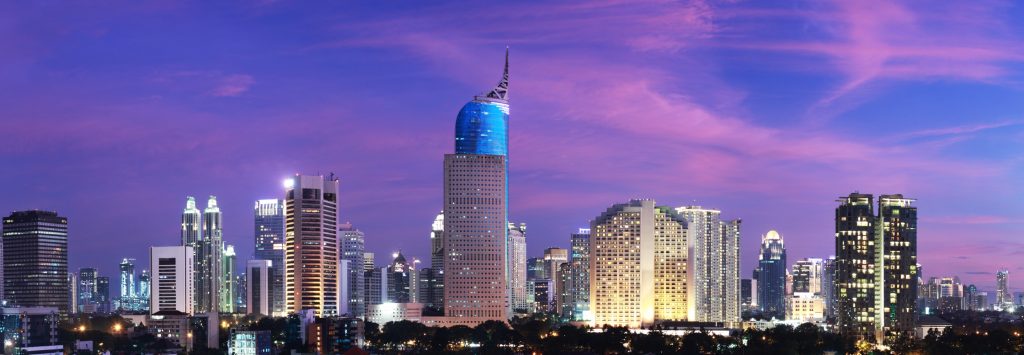
Emerging Markets: Innovation and Scaling for Exponential Growth – ASEAN
A China-focused innovation program for ASEAN executives and business owners responding to the impact of AI on their industries.
Gain insights from leading Chese thinkers in Jakarta, with an optional immersion in China and opportunities to connect with the business leaders driving innovation. The program offers a closer look at how developments in China could affect your industry and business.
LocationJakarta, Indonesia
Date23–26 March 2027
LanguageEnglish (with Chinese translation)
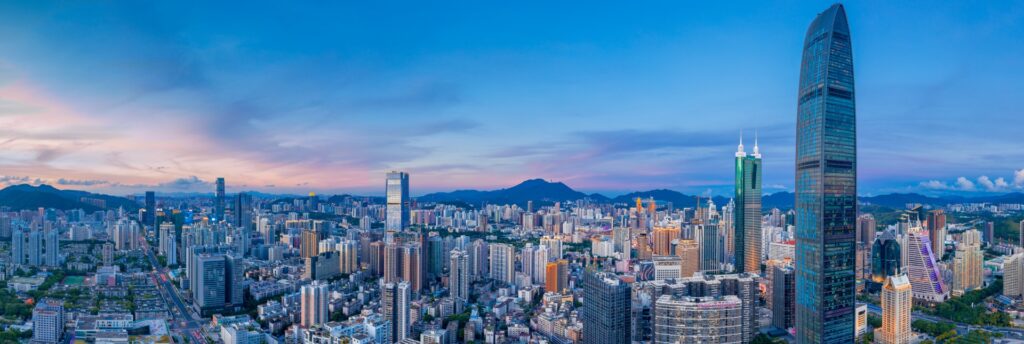
Asia Start: AI + Digital Ecosystem China Expedition
An immersive program for entrepreneurs and executives looking to understand China's AI and digital economy firsthand.
Gain the latest trends and insights, strategies, and connections to overcome challenges and support future business growth in Asia and beyond.
LocationChina (Beijing, Shanghai, Hangzhou & optional Shenzhen)
DateApril 19–24, 2027
LanguageEnglish

Intelligent China: AI, EVs & Smart Manufacturing
A three-part program examining China’s advances in AI, electric vehicles, and smart manufacturing.
Through faculty-led sessions, company visits, and exchanges with industry leaders, gain practical insights for your organization's strategy, partnerships, and investment decisions. Join an individual four-day program or complete the full 12-day series.
LocationBeijing, Shenzhen, Shanghai, and Hangzhou
DateSummer – Winter 2027 (three 4-day programs)
LanguageEnglish

Scaling Innovation: AI and Digital Strategies for Business Transformation
Global Unicorn Program Series
In partnership with Columbia Engineering
This program is designed to equip senior executives with the strategic insights and tools necessary to lead in this transformative era.
LocationNew York, USA
Date26 Sep - 01 Oct, 2027
LanguageEnglish

Emerging Tech Management Week: Silicon Valley
Global Unicorn Program Series
In partnership with UC Berkeley College of Engineering
A technology management program for leaders looking to turn emerging technologies into business opportunities.
Combining proven strategies and cutting-edge research, the program helps participants fuel innovation, seize opportunities in emerging technologies, and catalyze transformation within their organizations. Designed for managers, start-up leaders, and technology investors, it includes visits to venture capital firms and technology companies, alongside mentored group projects.
LocationUC Berkeley, California, United States
Date31 Oct - 05 Nov, 2027
LanguageEnglish
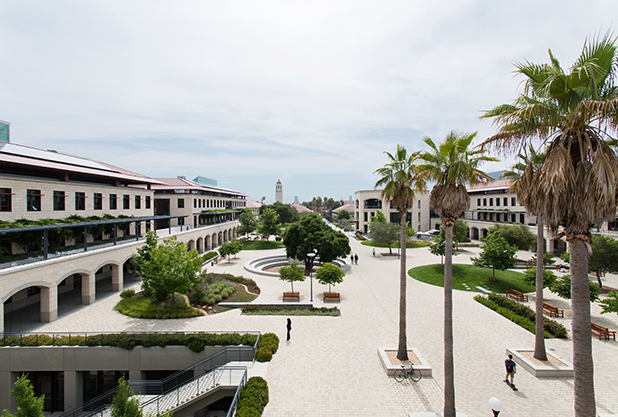
Stanford & Silicon Valley Immersion Program
Global Unicorn Program Series
In partnership with Stanford Engineering Center for Global & Online Education
A Silicon Valley immersion for entrepreneurs, intrapreneurs, and investors leading and scaling AI-driven companies.
The program combines academic learning with visits to AI and robotics labs and Silicon Valley companies, giving participants direct exposure to emerging technologies and the businesses developing and applying them.
LocationStanford University Campus, California, United States
Date05 - 10 Dec, 2027
LanguageEnglish with Chinese Translation