

The Portfolio Cure
October 13, 2026
A California biotech bet that drug discovery could be run better by borrowing lessons from investment funds and marrying them to the principles of efficient operating. Then its most important trial appeared to fail. What happened next is a lesson in resilience, capital, and the unglamorous discipline of doing a lot at once.
Around the Christmas holiday in 2021, Neil Kumar sat in a nearly empty office, sick with COVID, watching the value of the company he had founded collapse in real time. BridgeBio Pharma, a Palo Alto-based biotechnology company, had just released the 12-month results of a clinical trial for acoramidis, an experimental heart drug on which it had staked much of its future. The data looked like a failure. By the time the market absorbed the news, the stock had lost roughly three-quarters of its value in a single day. Kumar was the company’s founder, CEO and largest individual shareholder. “I can remember just being physically ill, seeing the data,” he recalls.
That moment—and the 18 months of uncertainty that followed—has become the foundation of a business story that is, at heart, about an unusual idea: that the discovery of new medicines, one of the riskiest and most capital-hungry activities in modern commerce, could be run like a diversified investment fund—disciplined, uncorrelated, and paired with a tight operating machine. BridgeBio was built to test that idea. The near-death experience of 2021 tested whether it could survive contact with reality.
Five years on, with the company having recovered, launched its first products, and spun off GondolaBio, a second firm, Kumar sat down with CKGSB Knowledge, joined by GondolaBio president James Li and Kaiqi Sun, who heads the company’s operations in China. They reflected on what the crisis taught them and why they believe the pharmaceutical industry is approaching a moment of profound change.
An Idea Borrowed from Finance
To understand BridgeBio, start with the problem it was designed to solve. Developing a drug is a punishing business proposition. A single new medicine can take 14 years and enormous sums to bring to market, and the overwhelming majority of candidates fail somewhere along the way. In the language of finance, drug research is “mode-negative, expected-return positive”—meaning the single most likely outcome for any given project is that it returns nothing at all, even though the rare success can be spectacular. “It’s effectively a lottery-ticket industry,” Kumar notes.
Faced with a lottery, a rational investor does not buy one ticket. This is the insight BridgeBio borrowed from portfolio theory, the branch of financial economics—associated in the company’s case with the MIT economist Andrew Lo—that shows how combining many uncorrelated bets can make the whole safer than any of its parts. Industries such as oil exploration and film production already work this way; no sensible studio bets everything on a single movie. BridgeBio applied the same logic to genetic diseases, gathering a large collection of uncorrelated drug programs rather than wagering the firm on one or two.
The company narrowed its search in a way meant to tilt the odds. It focused on “genetically validated targets”—diseases where scientists have already traced the illness to a specific, well-understood genetic fault, so that a drug has a specific mechanism to correct. Kumar says drugs aimed at such targets succeed about four times as often as the industry average. To organize the work, BridgeBio adopted a “hub-and-spoke” structure: a central team (the hub) sets priorities and controls capital, while small, focused scientific teams (the spokes) pursue a single disease. The aim was to keep teams lean and decisions disciplined.
Crucially, the model was also a financing strategy. By spreading risk across many programs, BridgeBio hoped to attract kinds of capital that rarely venture into early-stage biotech—debt investors and large private-equity firms, who need predictability. Before the 2021 readout, the company had borrowed heavily, taking on debt of about a billion dollars. Many observers criticized that leverage as reckless. It would soon look like foresight.
The acoramidis trial targeted transthyretin amyloid cardiomyopathy, or ATTR-CM—a progressive disease in which a misfolded protein builds up in the heart muscle. (The drug works by stabilizing that protein, transthyretin, before it can do damage.) BridgeBio had strong reasons for confidence. The biology was well understood, a rival compound from Pfizer had already proven the approach could work, and across five separate historical datasets, untreated patients had reliably declined over 12 months. If the treated patients in BridgeBio’s trial were holding steady, the drug was presumably working.
Then came the surprise. The patients receiving a placebo—the inactive dummy treatment used for comparison—did not decline as expected. The standard of care for these patients had improved so much between the older studies and BridgeBio’s that the untreated group stayed unusually healthy. With no deterioration in the comparison group, there was no gap for the drug’s benefit to show through. As Kumar puts it, the drug had not failed the trial; “the trial had failed the drug.”
That distinction was cold comfort in the moment. The equity markets, Kumar learned, cared about one asset—the heart drug—and largely ignored the dozen other programs BridgeBio liked to talk about. Worse, the company would now have to raise money, if it could raise money at all, at a punishing cost. It faced shutting down promising work in diseases that almost no one else was pursuing.
What saved the company from panic, Kumar says, was preparation that had felt almost absurd at the time. BridgeBio had written a detailed contingency plan for exactly this low-probability outcome—down to a press release for a negative result—even though, he admits, “none of us believed we were going to have to use it.” When the blow landed and everyone was reeling, the plan gave them something to execute. “Had we not had all those things, I think we would not have been able to lead ourselves through that process.”
Deciding What to Keep
The 18-month wait for longer-term data forced BridgeBio to do the thing its model was built for, but under maximum stress: decide which projects to keep alive. Here the company’s theoretical bent became a survival tool. Rather than let the scientists running each program lobby for their own work—”a great scientist who is passionate about patients will always see a way to keep going,” Kumar notes—BridgeBio ran every program through the same calculation.
Two numbers governed the decision. The first was the probability of technical success: the odds a program would ultimately work, estimated not from any individual’s optimism but from historical industry data on how often drugs at a given stage succeed. “Even the smartest person in the world is often wrong about guessing whether a program will work,” Kumar says. “The best way is to say, ‘I don’t know—here’s the historical probability.'” The second number was net present value, or NPV, a standard finance measure of what a project’s future profits are worth today.
The cruelty of the situation was that the crisis changed the math itself. Because the company was now trading far below what management believed it was worth, its cost of capital—the return investors demand to fund it—had roughly doubled, from about 13% to 21%. At that punishing rate, programs that had been narrowly worthwhile became money-losing. A promising treatment for a rare disorder affecting perhaps a thousand patients, which the science teams loved, no longer cleared the bar. It was cut. “Literally, that’s how we did it,” Kumar says. “We used Excel models and prioritized the pipeline, and we cut everything below what was going to be positive.”
Layoffs followed the same logic. BridgeBio’s stated first value is to put patients first, and Kumar argues that a value only means something when it forces a painful trade-off. Serving patients broadly, in his telling, required “minimum viable teams”—the smallest group that could move each surviving program forward, under a mantra of “do more with less.” The survivors emerged as highly versatile leaders. The company now tracks an unsentimental metric it calls return on human capital—market value created per employee—on which it believes it far outperforms peers.
If one decision vindicated BridgeBio’s financial engineering, it was the much-criticized debt. Because the company had borrowed a billion dollars before the crisis, it did not need to sell new shares into a skeptical market to survive. “That allowed us not to touch the capital markets when those markets were angry at us,” Kumar says. “We just put our heads down, conserved capital, and operated.”
The alternative, he argues, is the ordinary fate of biotech companies: a bad result forces a company to raise fresh equity on desperate terms, the new investors dilute the old ones, and the original backers are wiped out. BridgeBio avoided that trap. Long-term investors who held on (Kumar names KKR, Viking Global and Sequoia, some invested for the better part of a decade) were eventually rewarded; one early backer, he says, made 40 times its money. His broader point is about the character of biotech’s investor base. Most public-market money, he argues, rushes in and out around trial results and flees when there is no news, leaving good companies trading below their worth for long stretches. Patient capital is scarce, and in a crisis it is everything.
Lessons, Including an Unexpected One
Asked what he took from the ordeal, Kumar offers several lessons, one of them strikingly personal. The first is humbling: you cannot argue with the market. BridgeBio had tried to educate investors about the value of its whole portfolio and got nowhere. “This is a narrative-driven culture, even though it’s investing,” he says. “You can go out and try to educate till you’re blue in the face, and people just think you’re arrogant.” Better, he concluded, to stop lecturing and simply deliver.
A second lesson concerns structure. The market’s insistence on valuing single assets, Kumar came to believe, is something a company can exploit by separating and recombining its businesses to match what different pools of capital want to fund. That insight would soon reshape the entire company.
The third lesson was about morale. Kumar frames it through his grandmother, who greeted good news by warning that something bad was surely coming. He had run BridgeBio the same way—hitting the gas in good times, bracing for the next blow—until he realized the toll it took. “The integral of happiness is negative,” he says, borrowing the language of calculus to describe a life in which good moments are discounted and bad ones absorbed in full. His conclusion is that a leader has to force the team to celebrate its wins, however unnatural it feels, so that people can prepare for the next fight.
James Li, GondolaBio’s president, frames that resilience as a daily discipline. “Every day, we’re told things are not possible, technically very difficult, or that a new idea makes no sense,” he says. In the diseases BridgeBio pursues, “there’s often nothing — so when you ask people, they say there’s nothing you can do. But patients don’t want to hear that. You have to be resilient and say, ‘We’re actually going to make something happen.’”
BridgeBio 2.0
The most visible product of these lessons is GondolaBio, a separate company BridgeBio spun off to house its earliest-stage research. The name is intentional: a gondola is the ski-lift that carries you over a valley. In biotech, the “valley of death” is the gap between a promising academic discovery and a real drug program: the stage where good ideas die for lack of funding. BridgeBio and GondolaBio are meant to be vehicles across it.
The logic for splitting the company was, once again, about capital. By 2024, BridgeBio was trading around $26 a share and starved of funding, yet its scientists were surrounded by extraordinary new opportunities—cheaper genome sequencing, better maps of human DNA, a flood of newly understood disease targets. Investors trusted BridgeBio’s research engine but wanted to see whether it could sell products before committing more money. The company could not afford to wait; as Kumar says. “Every minute matters for the patients we serve.” So it separated the early research into GondolaBio, which could attract more than $1 billion of investor demand because investors could back the science without taking on the commercial risk. A third business, focused on cancer, was spun out as a separate public company as well.
Kumar frames this corporate rearrangement as serving a single goal: as many medicines as possible, as fast as possible, for diseases others ignore. “There may be a time when we reunite it,” he says. “Maybe we operate them separately. I don’t know.” The structure is a means; the mission is fixed.
BridgeBio now faces a different challenge: learning to sell. Having proven its science with the eventual success of the heart drug—marketed as Attruby—it must build the machinery of a commercial pharmaceutical company without losing the discipline that defined it. Kumar’s answer draws on a theory of why big companies stagnate. Large drugmakers, he argues, grow by centralizing everything, which yields savings but ever-slower growth. Cities, by contrast, grow by pushing decisions outward to neighborhoods that each act on their own, and they accelerate as they expand.
BridgeBio wants to grow like a city. It will keep research decentralized, with small autonomous teams, because that is what makes it efficient. But it accepts that selling drugs requires some central muscle—a single team to negotiate with insurers, one to deal with each national regulator. The trick is to centralize only the commercial layer and leave discovery alone. Kumar is candid that this is unproven at scale: “I think we’ve done one launch well, but ask me after we do three more.” The prize, he argues, is a company that could eventually carry 60 or 70 products—many of them modest earners serving small patient populations that big pharma, chasing blockbusters, will not touch.
The second-mover problem is stark in the heart-drug market itself, where Pfizer’s rival treatment arrived first, in 2019, and now generates roughly $6 billion a year. Kumar is unsentimental about how such contests are decided. Scientific elegance, he says, sways perhaps 5% of physicians; most look only at clinical outcomes and price. Being the incumbent, especially in the United States, confers an enormous edge—tellingly, BridgeBio holds a majority share in Europe, where advertising and marketing to doctors are far more restricted, while trailing in America. Winning share, he says, means building evidence (BridgeBio aims to publish more than 20 papers a year in the field), simplifying the message, and funding generous patient-support programs. “The best science in medicine will win,” he says. “But it’s a long game.”
In rare diseases, Kumar emphasizes, developing the drug is only half the task; the other half is finding the scattered, often undiagnosed patients who need it. A treatment is “useless if you’re not finding patients.” BridgeBio leans heavily on what might be called diagnosis infrastructure: partnerships with genetic-testing firms; artificial-intelligence tools that scan electronic medical records and flag patients a doctor might miss; and outreach to patients, who in rare-disease communities often understand their condition better than the general physicians they see. The company has even rebuilt its websites so its information surfaces in AI systems such as ChatGPT. It is, Kumar suggests, as much an exercise in understanding how medical decisions get made as in chemistry.
China, and a Global View of Science
The company’s politics, Kumar says, are simply “put patients first,” and good science can come from anywhere—China, Europe, Australia, India. The motivation is partly personal: his own nephew, who has a genetic condition and lives in India, long lacked access to treatments available in the West, and Kumar speaks with feeling about global access to medicines.
GondolaBio has set up an office in China, drawn by a striking surge of innovation from Chinese universities in genetic disease, much of it never before translated into actual drugs. Sun, speaking from Shanghai, added a telling detail. Visiting a clinic the day before, GondolaBio’s leadership had sat through an entire half-day patient session, something the local investigator said he had never seen other biotech or pharma companies’ senior management do. In China’s research community, Sun suggested that the focus on rare genetic diseases, willingness to engage directly with patients, and the unique “hub-and-spoke” operating model had made the company well known and welcome.
Kumar is clear-eyed about constraints and he draws a sharp line: in copycat drugs, China is a formidable competitor; in novel medicines, it is a partner and a source of discovery. “Whoever wants to partner with us globally, we’re open to it.”
Kumar rejects the charge that BridgeBio is too complex, pointing to engineering-style information systems built to handle it — while conceding that launching three commercial products in one year is a near-term challenge.
Kumar is more optimistic about the industry’s trajectory than about any single quarter. Biotechnology has long suffered from what scientists ruefully call Eroom’s Law—Moore’s Law spelled backwards—the observation that each new drug costs more to produce than the last, a steady decline in productivity. Kumar believes the next five years will finally reverse it, as plunging sequencing costs reveal the causes of far more diseases and as new operating models like BridgeBio’s take hold. He is skeptical that biotech will have a single dramatic “ChatGPT moment”—medicines, after all, are things people would rather not need—but he thinks a quieter revolution is already under way. “If you can reliably make medicines based on causal biology,” he says, “efficiency and productivity from the industry will climb markedly.”
Whether BridgeBio’s portfolio cure ultimately works will be judged over a horizon as long as a drug’s own life. Kumar sets his own test for the next five years plainly: five to 10 disease-changing medicines delivered, hundreds of thousands of patients reached, and a company that has become the partner of choice for academic scientists trying to turn biology into cures. It is an ambitious wager. But the willingness to place large, disciplined, diversified bets—and to survive the ones that appear to fail—is the whole idea.
Enjoying what you’re reading?
Article Subscribe (1)
CKGSB Report






Related Articles
Our Programs

Emerging Tech Management Week: Silicon Valley
Global Unicorn Program Series
In partnership with UC Berkeley College of Engineering
This program equips participants with proven strategies, cutting-edge research, and the best-in-class advice to fuel innovation, seize emerging tech developments, and catalyse transformation within your organization.
LocationUC Berkeley
Date01 - 06 Nov, 2026
LanguageEnglish

Asia Start: AI + Digital China Expedition
Asia Start provides entrepreneurs and executives with unparalleled access to Asia’s dynamic digital economy and its business ecosystems, offering the latest trends and insights, strategies, and connections to overcome challenges and unlock future growth for your business in Asia and beyond.
LocationChina (Beijing, Shanghai, Hangzhou & optional Shenzhen)
DateNovember 2–7, 2026 | April 19–24, 2027
LanguageEnglish

Intelligent China: AI, EVs & Smart Manufacturing
Explore how China is advancing AI, electric vehicles and smart manufacturing through faculty-led sessions, company visits and exchanges with industry leaders. Build practical insights for your organization’s strategy, partnerships and investment decisions, with the flexibility to join individual four-day programs or the full 12-day series.
LocationBeijing
Date12 Days
LanguageEnglish

Emerging Markets: Innovation and Scaling for Exponential Growth – ASEAN
Learn China's AI and innovation strategy from its leading thinkers — brought to you in Jakarta, with an optional immersion in China — and connect with the business leaders driving it.
LocationJakarta, Indonesia
Date2–4 December 2026
LanguageEnglish (with Chinese translation)
Stanford & Silicon Valley Immersion Program
Global Unicorn Program Series
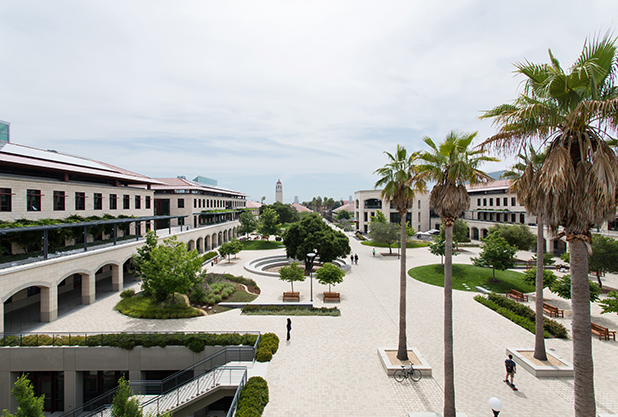
In partnership with Stanford Engineering Center for Global & Online Education
This CKGSB program equips entrepreneurs, intrapreneurs and key stakeholders with the tools, insights, and skills necessary to lead a new generation of unicorn companies.
LocationStanford University Campus,
California, United States
Date06 - 11 Dec, 2026
LanguageEnglish with Chinese Translation