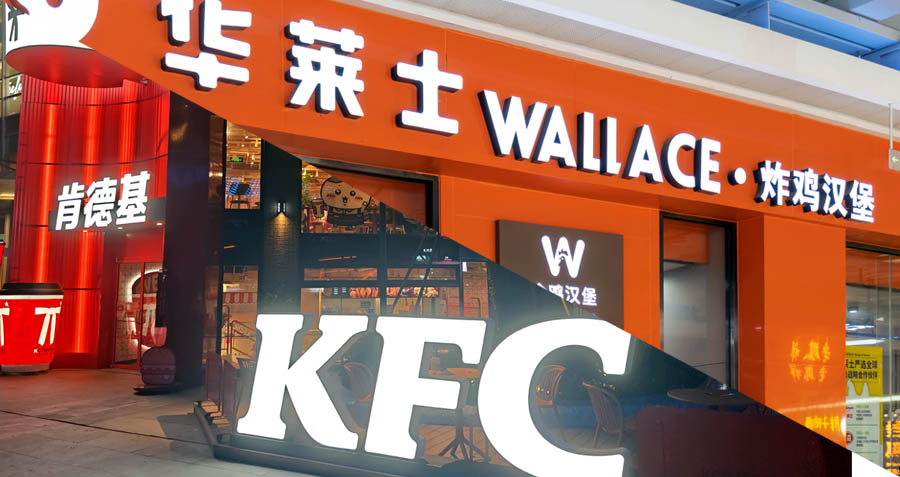

Fast food wars: China’s battle for burgers and chicken
October 29, 2026
Domestic challengers are reshaping China’s fast-food market as Western giants fight back.
When KFC opened its first Chinese restaurant near Beijing’s Tiananmen Square in 1987, fried chicken was still something of a novelty. McDonald’s followed in 1990, and together the two American chains helped introduce Western-style fast food to a country undergoing rapid economic transformation.
Nearly four decades later, the market they established has become one of the most competitive in the world. KFC operates nearly 14,000 restaurants across China, while McDonald’s has expanded to more than 7,700. Yet both face increasingly formidable competition from domestic companies that have adapted the Western fast-food model to Chinese tastes, spending habits and local market conditions.
Among the most prominent challengers is Tastien, which has built a network of approximately 10,000 restaurants around its distinctly Chinese interpretation of the hamburger. Wallace, meanwhile has established an even larger presence—claiming over 2,000 outlets—through inexpensive burgers, fried chicken and other fast-food staples, particularly in smaller cities.
Rather than abandoning Western fast food, these companies have made it their own. But KFC and McDonald’s are hardly standing still, continuing to expand aggressively while adapting their products and business models to local consumers.
From novelty to necessity
KFC and McDonald’s arrived in China when Western consumer brands carried considerable prestige. For many urban families, visiting an American fast-food restaurant was an occasional treat, representing modernity, international lifestyle and rising prosperity.
Their subsequent growth reflected China’s broader economic transformation. Rising incomes, urbanization and changing working patterns made eating outside the home increasingly common, while expanding shopping malls provided the chains with attractive locations.
But as Western fast food became an everyday part of Chinese consumption, its original novelty faded. Consumers became more familiar with the products, more demanding about convenience and increasingly sensitive to price.
The past five years have accelerated that transition. China’s prolonged property downturn, weak consumer confidence and subdued household spending have encouraged diners to seek cheaper alternatives, even as the fast-food sector has continued growing faster than full-service restaurants.
“Competition in China’s fast-food market has become much fiercer,” says Ivan Su, senior equity analyst at Morningstar. “Weak consumer spending has made value the main battleground.”
Food delivery has also transformed the competitive landscape, allowing smaller chains to reach customers without securing expensive locations in major shopping districts.
For domestic brands, these changes have created an opportunity to challenge the companies that once defined the category.
Meet the contenders
KFC remains China’s largest fast-food chain by system sales. Operated by Yum China, it has built an extensive restaurant network supported by sophisticated procurement, logistics and food safety systems.
McDonald’s has followed a somewhat different trajectory. Since a CITIC-led consortium took control of its mainland China and Hong Kong operations in 2017, the company has accelerated expansion, adding a net 920 restaurants in China during 2025.
Their domestic competitors, however, have developed different approaches.
Tastien has built its identity around the so-called Chinese burger, replacing conventional buns with freshly prepared Chinese-style flatbread and offering fillings inspired by local cuisine. Its restaurant designs and marketing incorporate traditional Chinese imagery, aligning the brand with the broader guochao trend of renewed enthusiasm for domestic products and cultural aesthetics.
Wallace, by contrast, has concentrated primarily on affordability. Its inexpensive fried chicken, burgers and combination meals appeal particularly to consumers outside China’s wealthiest urban centers.
Matthieu David, founder of Daxue Consulting, says that the growth of both brands owes much to their early focus on underserved markets. “Tastien and Wallace have been very good in third-, fourth- and fifth-tier cities,” he says, noting that KFC and McDonald’s historically had a much smaller presence in many of these locations.
Franchising has been equally important. Rather than financing every new restaurant directly, domestic chains have expanded through local investors willing to operate outlets under their brands. “The investment is much lower than KFC and McDonald’s, much lower for the franchisee, for the store design and so on,” David says.
This has enabled domestic companies to establish extensive networks relatively quickly, although the long-term profitability of those networks remains an open question.
Making Western fast food Chinese
Tastien’s emergence illustrates how Chinese companies are reinterpreting products originally popularized by international brands.
Rather than replacing the hamburger with an entirely different meal, Tastien has retained the familiar format while incorporating Chinese ingredients, preparation methods and cultural imagery.
Yet localization is hardly a new strategy, nor is it exclusive to Chinese companies.
“Localization is very important,” says Su. “But this isn’t unique to fast food. Localization matters in almost every consumer category in every country.”
Indeed, KFC has been adapting its Chinese menu for decades, introducing products ranging from soy milk and fried dough sticks to rice dishes and Macau style egg tarts. McDonald’s has generally pursued a more restrained approach, maintaining a stronger emphasis on its international core menu while introducing selected China-specific products.
David nevertheless questions whether the localization strategies of domestic challengers are as distinctive as their marketing suggests. While Tastien has experimented with Chinese-inspired flavors and bread, Wallace’s popular products remain variations of familiar chicken burgers.
“I would say location, price first, and then product localization,” he says. The implication is that Chinese brands are not necessarily winning because their food is more authentically Chinese. Instead, their products, prices and restaurant networks may be better suited to particular groups of consumers.
The price war
With Chinese households increasingly cautious about discretionary spending, fast-food chains are competing to offer inexpensive meals without sacrificing the convenience and consistency that made the sector successful.
In 2025, Tastien’s spicy chicken burger was priced at RMB 14.60, while a KFC three-item burger, nuggets and cola promotion was advertised at RMB 28.90. McDonald’s also marketed selected RMB 19.90 combinations.
Wallace has built much of its business around low-cost offerings, while Tastien combines competitive pricing with a more distinctive brand identity. KFC and McDonald’s have responded with promotional meals, digital discounts and loyalty incentives.
But competing on price presents a dilemma. Discounts may attract additional orders while simultaneously reducing average spending per customer and putting pressure on profitability.
At KFC, this tension is already visible. According to Yum China’s second-quarter 2026 results, same-store sales increased 1% year-on-year, while customer transactions rose 4%. Average spending per transaction, however, declined 3%.
Su argues that established international chains retain an advantage through their financial strength, allowing them to prioritize long-term brand development rather than chasing short-term revenue at the expense of quality.
David is less convinced that the low-price positioning of some domestic competitors will remain viable indefinitely. “I’m not sure it’s sustainable,” he says of their current pricing strategies. He argues that Tastien and Wallace may eventually need to raise prices to improve profitability and expand into more affluent markets. The challenge is doing so without losing the customers attracted to their affordability.
The battle for lower-tier China
“Lower-tier cities are becoming more and more important as big cities fill up,” says Su.
KFC has introduced smaller restaurant formats specifically designed for these markets. Its Small Town concept seeks to make expansion commercially viable in locations that may not support a conventional restaurant.
Yum China has also accelerated franchising, with franchisees accounting for 45% of KFC’s net new restaurant openings in the second quarter of 2026.
For Western chains, however, expansion into smaller cities may require more than simply offering cheaper food. David believes they can capitalize on their established reputations to position themselves as relatively attractive places to socialize. “KFC could be the fancy place for high school students, for young professionals to go,” he says, pointing to the appeal of coffee, ice cream and comfortable seating.
Such a strategy would distinguish international chains from smaller, delivery-oriented competitors by emphasizing the restaurant experience as well as the food itself.
Is the expansion sustainable?
Franchising has allowed domestic chains to grow rapidly without bearing the full cost of each new restaurant. But the model also creates potential conflicts between companies seeking to expand their networks and franchisees concerned about profitability.
Su warns that rapid franchising can undermine the economics of an entire restaurant network. Headquarters can continue benefiting from new openings even when additional locations take customers away from existing franchisees.
David has observed similar concerns surrounding domestic chains. “There are more and more complaints about the profitability of the franchise model,” he says.
He points to increasingly close spacing between outlets as a potential warning sign that some markets are approaching saturation.
The international giants retain important advantages here. Their extensive supply chains, standardized operating procedures and decades of experience provide greater control over costs, product consistency and food safety.
“Supply chain is a big one,” says Su, pointing to Yum China’s extensive infrastructure, which supports procurement efficiency and faster menu development.
David also highlights food safety concerns involving some domestic operators, particularly Wallace, as evidence of the potential risks associated with aggressive cost control.
In March 2025, Wallace apologized after allegations involving expired ingredients and altered date labels at some outlets, saying it would permanently close the implicated stores and conduct a nationwide inspection.
Such concerns do not mean international chains are immune to problems. Both KFC and McDonald’s have faced controversies during their decades in China. But their established supplier management systems and operational experience remain significant assets, and there is still a perception among Chinese customers that the international chains offer greater peace of mind in terms of food safety.
A changing consumer market
China’s fast-food competition reflects a broader transformation in the country’s consumer economy. International brands no longer automatically command the prestige they enjoyed during the early decades of China’s economic opening. Domestic companies have become more sophisticated in their branding, more competitive on price and increasingly capable of matching foreign competitors in convenience.
At the same time, the continued expansion of KFC and McDonald’s demonstrates that international brands are not necessarily losing their appeal. David suggests that domestic chains may face difficulties retaining customers as their incomes increase. Consumers who initially choose inexpensive brands may eventually move toward more established alternatives as their purchasing power grows.
For now, China’s fast-food market is becoming less a straightforward contest between Western and domestic brands than a competition between different approaches to price, convenience and operational efficiency. KFC and McDonald’s are becoming increasingly localized, while Chinese challengers are attempting to replicate the scale and consistency of their international rivals.
Enjoying what you’re reading?
Article Subscribe (1)
CKGSB Report








Our Programs

Emerging Tech Management Week: Silicon Valley
Global Unicorn Program Series
In partnership with UC Berkeley College of Engineering
A technology management program for leaders looking to turn emerging technologies into business opportunities.
Combining proven strategies and cutting-edge research, the program helps participants fuel innovation, seize opportunities in emerging technologies, and catalyze transformation within their organizations. Designed for managers, start-up leaders, and technology investors, it includes visits to venture capital firms and technology companies, alongside mentored group projects.
LocationUC Berkeley, California, United States
Date01 - 06 Nov, 2026
LanguageEnglish

Stanford & Silicon Valley Immersion Program
Global Unicorn Program Series
In partnership with Stanford Engineering Center for Global & Online Education
A Silicon Valley immersion for entrepreneurs, intrapreneurs, and investors leading and scaling AI-driven companies.
The program combines academic learning with visits to AI and robotics labs and Silicon Valley companies, giving participants direct exposure to emerging technologies and the businesses developing and applying them.
LocationStanford University Campus, California, United States
Date06 - 11 Dec, 2026
LanguageEnglish with Chinese Translation

Emerging Markets: Innovation and Scaling for Exponential Growth – ASEAN
A China-focused innovation program for ASEAN executives and business owners responding to the impact of AI on their industries.
Gain insights from leading Chese thinkers in Jakarta, with an optional immersion in China and opportunities to connect with the business leaders driving innovation. The program offers a closer look at how developments in China could affect your industry and business.
LocationJakarta, Indonesia
Date23–26 March 2027
LanguageEnglish (with Chinese translation)
Asia Start: AI + Digital Ecosystem China Expedition
An immersive program for entrepreneurs and executives looking to understand China's AI and digital economy firsthand.
Gain the latest trends and insights, strategies, and connections to overcome challenges and support future business growth in Asia and beyond.
LocationChina (Beijing, Shanghai, Hangzhou & optional Shenzhen)
DateApril 19–24, 2027
LanguageEnglish

Intelligent China: AI, EVs & Smart Manufacturing
A three-part program examining China’s advances in AI, electric vehicles, and smart manufacturing.
Through faculty-led sessions, company visits, and exchanges with industry leaders, gain practical insights for your organization's strategy, partnerships, and investment decisions. Join an individual four-day program or complete the full 12-day series.
LocationBeijing, Shenzhen, Shanghai, and Hangzhou
DateSummer – Winter 2027 (three 4-day programs)
LanguageEnglish