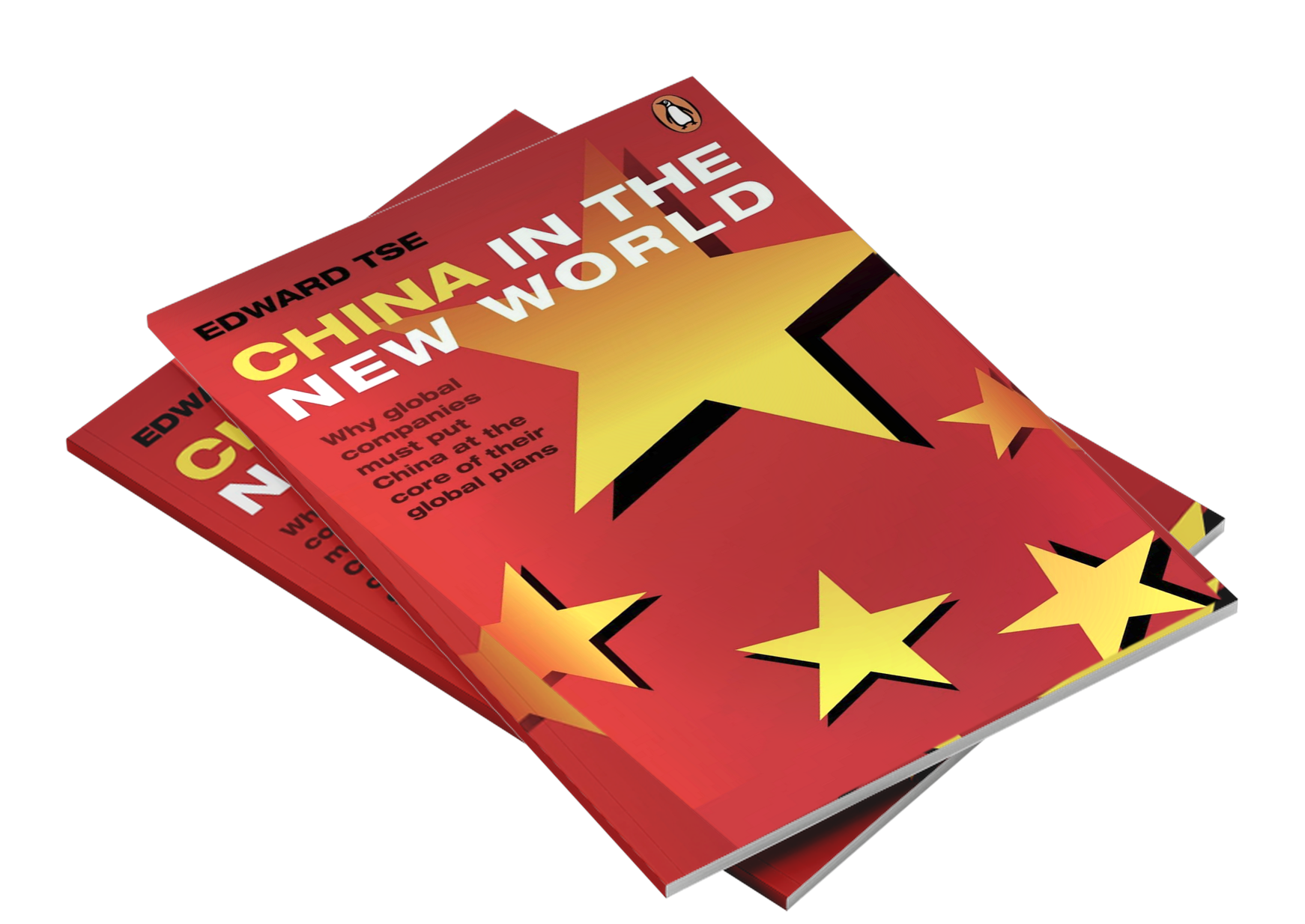
China in the New World
What role should China play in a global company’s strategy? Not every company needs to be in China, but few can now afford to ignore it. In China in the New World, CKGSB Professor Edward Tse argues that China has become a source of innovation, technology, capital, business models and standards — not simply a market or a manufacturing base — and sets out what that shift means for companies everywhere.
By Edward Tse, Professor of Managerial Practice of Strategy, CKGSB
China in the New World: Why Global Companies Must Put China at the Core of Their Global Plans explores how China’s changing role in the global economy is reshaping business strategy — and why companies around the world need to rethink what China means for their future. As the world moves towards a more multipolar order, Professor Edward Tse argues, China can no longer be viewed simply as a large consumer market or a center for global manufacturing and supply chains — it is increasingly a source of innovation, technology, knowledge, business models, industry standards and capital, while Chinese companies grow more competitive and international. The book is published by Penguin Random House SEA and is available now — order worldwide on Amazon.
For global companies, this creates both challenges and opportunities. Not every company needs to be in China, Tse argues, but its growing influence will be felt across sectors and geographies, and business leaders increasingly need to understand China’s impact on their industries and incorporate it into their global strategies. Drawing on more than three decades of experience advising Chinese and multinational companies, Tse examines the forces behind China’s transformation, the rise of a new generation of Chinese companies, and what these changes mean for global business.
Why China Matters to Global Business Strategy
The central argument of China in the New World is that understanding China today requires looking beyond the size of its economy: China remains a major market, manufacturing center and supply-chain hub, but its capabilities now extend across advanced manufacturing, artificial intelligence, green technology, digital platforms and new business models. For multinational companies, the question is therefore no longer simply “What is our strategy for the China market?” but increasingly “What role should China play in our global strategy?” The book explores this question through four interconnected themes:
1. Understanding China’s Context
To understand China’s future role in global business, Tse first examines the forces that created the China of today — the interaction between government, entrepreneurship, foreign investment, market competition and technological development. Central to his thinking is a “fourth C” of strategy: context. Beyond companies, competitors and customers, business leaders need to understand the constantly changing environment in which they operate, and China’s scale, diversity and speed of change make this particularly important.
2. The Rise of China’s New Corporate Champions
Chinese companies have evolved from followers into increasingly important innovators and global competitors, developing strengths across industries including electric vehicles, batteries, advanced manufacturing, renewable energy, telecommunications, artificial intelligence, biotechnology and digital technologies — and are now taking capabilities built in the domestic market into international ones. For global businesses, their rise creates new competitive pressures, but also opportunities to learn, collaborate and develop new capabilities.
3. New Models of Competition and Collaboration
China’s growing business capabilities do not create a simple choice between competing with Chinese companies and withdrawing from China. Instead, Tse sees new forms of cross-border relationships emerging, where competition and collaboration increasingly coexist — global companies exploring partnerships that provide access to Chinese innovation, R&D, advanced manufacturing, technical talent and supplier ecosystems, while Chinese companies expand and adapt their capabilities for international markets.
4. China and the Emerging Multipolar World
The book places these business changes within a wider transformation of the global order. Tse argues that the world is moving towards multipolarity, shaped by forces pulling economies apart — geopolitical tensions, tariffs, technology restrictions — and forces bringing them together through trade, investment and commercial relationships. The rise of the Global South is a key part of this shift, as countries across Asia, the Middle East, Africa and Latin America draw on investment, technology and ideas from both China and the West, and China’s own global influence extends beyond the products it manufactures to capital, technology, knowledge, business models and standards.
Rethinking China Strategy for a New Era
China in the New World challenges business leaders to rethink what a “China strategy” means. For some companies, China will remain an important market; for others, its significance may lie in supply chains, technology, innovation, competitors, partnerships or industry standards, and companies in the Global South will need to consider which elements of China’s development experience are relevant to their own markets. There is therefore no single China strategy for every organization — rather than a plan for doing business in China, Tse argues it is about determining what role China should play in a company’s global operations and long-term competitiveness.
The book is written for business executives and those who advise them, investors, policymakers, academics, researchers and China watchers seeking to understand China’s changing place in the global economy and its implications for business strategy.
“As we enter a new multipolar world, China’s role will become even more important. No longer simply a market or an epicenter for supply chains, China is becoming a source of innovation, knowledge, business models, standards and capital. Global companies, wherever they are headquartered, must put China at the core of their global strategic plans.”
— Professor Edward Tse
About Edward Tse
Edward Tse is Professor of Managerial Practice of Strategy at Cheung Kong Graduate School of Business (CKGSB) and an expert on China business strategy, drawing on more than three decades of experience working with Chinese and multinational companies. He previously led the China practice of Boston Consulting Group and served as managing partner and later chairman for Greater China at Booz Allen Hamilton/Booz & Company, and is the founder of Gao Feng Advisory Company and author of The China Strategy and China’s Disruptors.
Table of Contents
Introduction
Context and Complexity
Part I – Context
Chapter 1: Never Before
Chapter 2: Opening Up
Chapter 3: Into Business
Chapter 4: The Model
Part II – Strategies
Chapter 5: Future-Ready
Chapter 6: New Champions
Chapter 7: New Dimensions
Chapter 8: A New Order
The book moves from understanding the forces behind the China of today to examining what China’s evolution means for companies preparing for the future.
Get the book
Order worldwide on Amazon
View the book on Penguin’s website
Enjoying what you’re reading?
Article Subscribe (1)

Professor profile

Edward TSE
Professor of Managerial Practice, Cheung Kong Graduate School of Business (CKGSB)
PhD University of California, Berkeley


Continue reading
Chinese Companies’ New Playbook for Going Global

Brand Intelligence: Navigating the Transformation in the AI and Web3 Era

Business for Good: The Power to Create Change
Chinese Companies’ New Playbook for Going Global
Brand Intelligence: Navigating the Transformation in the AI and Web3 Era
Business for Good: The Power to Create Change
Our Programs

Emerging Tech Management Week: Silicon Valley
Global Unicorn Program Series
In partnership with UC Berkeley College of Engineering
A technology management program for leaders looking to turn emerging technologies into business opportunities.
Combining proven strategies and cutting-edge research, the program helps participants fuel innovation, seize opportunities in emerging technologies, and catalyze transformation within their organizations. Designed for managers, start-up leaders, and technology investors, it includes visits to venture capital firms and technology companies, alongside mentored group projects.
LocationUC Berkeley, California, United States
Date01 - 06 Nov, 2026
LanguageEnglish

Intelligent China: AI, EVs & Smart Manufacturing
A three-part program examining China’s advances in AI, electric vehicles, and smart manufacturing.
Through faculty-led sessions, company visits, and exchanges with industry leaders, gain practical insights for your organization's strategy, partnerships, and investment decisions. Join an individual four-day program or complete the full 12-day series.
LocationBeijing, Shenzhen, Shanghai, and Hangzhou
Date December 2026 – July 2027 (three 4-day programs)
LanguageEnglish

Emerging Markets: Innovation and Scaling for Exponential Growth – ASEAN
A China-focused innovation program for ASEAN executives and business owners responding to the impact of AI on their industries.
Gain insights from leading Chese thinkers in Jakarta, with an optional immersion in China and opportunities to connect with the business leaders driving innovation. The program offers a closer look at how developments in China could affect your industry and business.
LocationJakarta, Indonesia
Date2–4 December 2026
LanguageEnglish (with Chinese translation)

Stanford & Silicon Valley Immersion Program
Global Unicorn Program Series
In partnership with Stanford Engineering Center for Global & Online Education
A Silicon Valley immersion for entrepreneurs, intrapreneurs, and investors leading and scaling AI-driven companies.
The program combines academic learning with visits to AI and robotics labs and Silicon Valley companies, giving participants direct exposure to emerging technologies and the businesses developing and applying them.
LocationStanford University Campus, California, United States
Date06 - 11 Dec, 2026
LanguageEnglish with Chinese Translation

Asia Start: AI + Digital China Expedition
An immersive program for entrepreneurs and executives looking to understand China's AI and digital economy firsthand.
Gain the latest trends and insights, strategies, and connections to overcome challenges and support future business growth in Asia and beyond.
LocationChina (Beijing, Shanghai, Hangzhou & optional Shenzhen)
DateApril 19–24, 2027
LanguageEnglish