
Solid-state batteries: Can China disrupt its own lithium empire?
September 30, 2026
Could solid-state batteries threaten China’s dominance of the lithium battery industry?
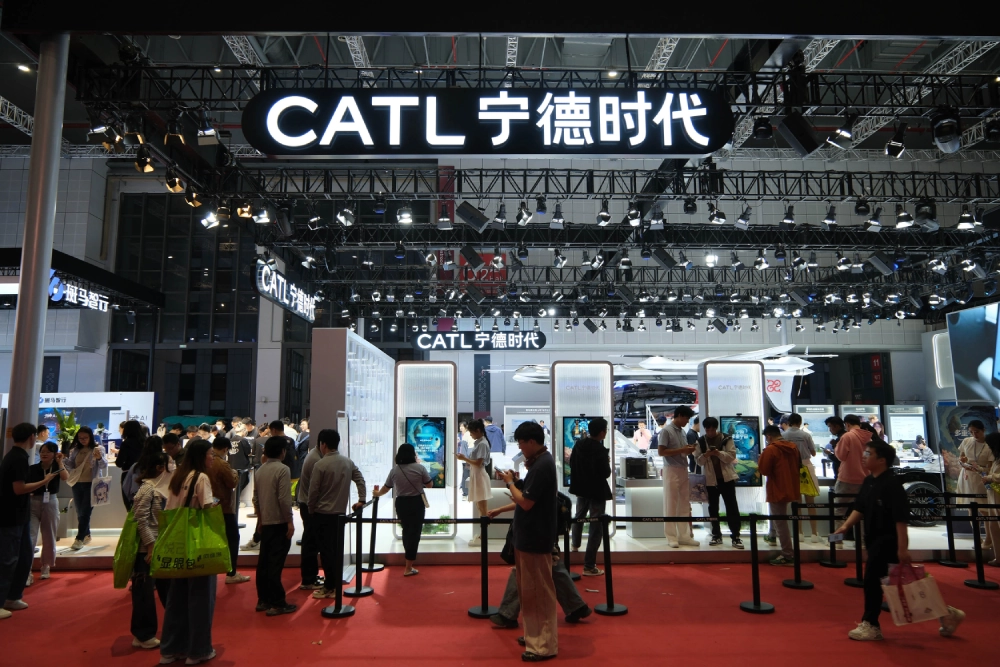
China has spent more than a decade building the world’s most formidable battery industry. An enormous domestic electric vehicle (EV) market, government support and an increasingly integrated supply chain have helped Chinese manufacturers turn lithium-ion batteries into an industry in which companies such as CATL and BYD now occupy commanding positions.
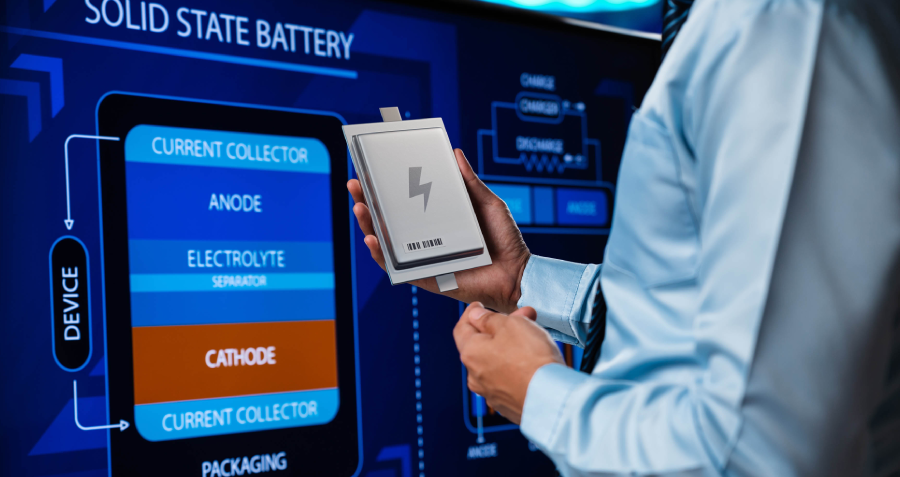
But the technology that helped create that dominance may be approaching another turning point. Currently under development, solid-state batteries replace the liquid electrolyte used in conventional lithium-ion cells with a solid material, potentially allowing batteries to store substantially more energy while improving safety. This has huge potential benefits for everything from EVs to aviation and robotics.
“Solid-state batteries represent a genuine generational leap rather than an incremental improvement,” says Yang Yongping, CEO of market intelligence providers EqualOcean and EO Auto. “Energy density could potentially rise from around 250-300Wh/kg for today’s lithium batteries to more than 500Wh/kg, while battery safety could also improve fundamentally.”
The catch is that China has more invested in the existing battery order than almost anyone else. Its enormous lithium-ion manufacturing base gives Chinese companies engineering expertise, capital, supply chains and customers that could help them commercialize solid-state batteries faster than competitors. But it also leaves billions of dollars tied up in factories and equipment designed around a technology that solid-state batteries could eventually disrupt.
Beyond the lithium-ion battery
The attraction of solid-state technology begins with energy density. One of the most promising approaches pairs a solid electrolyte with a lithium-metal anode.
“Lithium-metal anodes have 10 times the theoretical specific capacity of traditional graphite anode active material,” says Varnika Agarwal, senior new battery technology analyst at Benchmark Mineral Intelligence. “But interfacial stability, low lifecycle performance due to dendrite formation, manufacturing scalability and higher initial production costs continue to hinder full commercialization.”
That does not translate directly into a tenfold improvement at the battery level, but it illustrates why researchers see significant room to increase performance.
Greater energy density could allow an EV to travel further without a corresponding increase in battery weight. Toyota, one of the leading non-Chinese developers of the technology, has said it is targeting commercialization of all-solid-state batteries in 2027-2028 and has previously outlined ambitions for charging from 10% to 80% in 10 minutes or less.
Safety provides another attraction. Conventional lithium-ion batteries contain flammable liquid electrolytes and can enter thermal runaway if damaged or subjected to extreme conditions. Replacing the liquid electrolyte does not eliminate every possible battery failure, but solid-state designs could substantially reduce some of these risks.
The potential impact extends well beyond cars. Agarwal points to robotics and humanoids, portable electronics and medical devices, aerospace and heavy trucking as industries that could benefit. In these applications, the calculation can be different from that of a mass-market passenger car: saving weight, reducing cooling requirements or increasing operating time may justify paying substantially more for the battery.
Yang similarly expects commercialization to begin where performance matters more than price. “It is important to distinguish between the timing of the technological transformation and the commercial transformation,” he says. “Because of cost and mass-production considerations, solid-state batteries will first redefine high-end intelligent electric vehicles, drones and embodied robots, before moving into the mass market.”
That distinction matters because solid-state batteries are still a long way from sweeping conventional lithium-ion technology aside.
The solid-state manufacturing wall
For all the announcements, prototypes and ambitious performance targets, turning solid-state batteries into reliable mass-produced products remains extraordinarily difficult.
“Electrochemical interface instability and scalable manufacturing remain the two dominant, interlocked barriers gating commercial deployment,” Agarwal says. Unlike liquid electrolytes, which naturally maintain contact with electrode surfaces, solid materials must remain tightly connected as a battery repeatedly charges and discharges.
Dendrite formation can degrade performance, while brittle materials can develop microfractures. Some designs require pressure to maintain contact between layers. Sulfide electrolytes offer high ionic conductivity but can react with moisture and produce toxic hydrogen sulfide, requiring carefully controlled manufacturing environments. Oxide electrolytes, meanwhile, can be stable but brittle and expensive.
These problems help explain why impressive laboratory results do not necessarily translate into commercially viable batteries.
Manufacturing presents an equally difficult challenge. “This isn’t a drop-in replacement,” Agarwal says. “Production needs new coating methods, dry rooms, sintering processes, lamination controls, pressure management and inspection systems.”
That raises the cost of making the transition—and creates the central dilemma for China.
Chinese companies have spent enormous sums building lithium-ion capacity, while the technology itself continues to improve. Lithium iron phosphate, or LFP, batteries have become cheaper and safer, while improvements in pack design and manufacturing continue to squeeze more performance from established chemistries.
Solid-state technology therefore has to compete not with today’s lithium-ion battery frozen in time, but with a technology that will itself continue getting better.
China’s advantage—and its baggage
China nevertheless begins the race with formidable advantages. “The underlying capabilities that support China’s lithium battery empire—materials processing, equipment manufacturing and the world’s deepest pool of battery engineers—can all be transferred directly to solid-state batteries,” Yang says.
Agarwal sees China’s existing position as both an advantage and a constraint. “Chinese companies have battery scale-up know-how and supply chain dominance,” she says, noting that Chinese companies account for approximately 171GWh of planned solid-state battery supply by 2030.
China is also already experimenting with an intermediate step: semi-solid batteries, which retain some liquid electrolyte while incorporating solid-state characteristics.
Agarwal describes China as the closest major market to commercialization as of 2026, pointing to semi-solid deployment and trials involving manufacturers including Dongfeng, GAC, BYD, Geely and FAW. CATL, meanwhile, plans small-scale trial production of a sulfide-based solid-state battery in 2027, according to Agarwal, while mass production is not expected until around 2030.
But the same scale that gives China an advantage also creates potential resistance to radical change. Existing manufacturers have factories, suppliers, processes and expertise optimized around conventional batteries. If commercial solid-state production requires substantially different equipment, switching technologies means spending new capital while potentially reducing the value of existing assets.
“It will be disruptive, as all-solid-state battery gigafactories can’t be incorporated into the existing lines,” Agarwal says. Solid-state batteries will require new factories and therefore new capital expenditure, potentially creating space for “new battery producers and regions.”
A new international battery race
Unlike the mature lithium-ion industry, where China already enjoys enormous manufacturing scale, the solid-state race remains technologically fragmented.
Toyota and Idemitsu are working on sulfide-based solid electrolytes and targeting commercialization in 2027-2028, followed by larger-scale production. North American startups are pursuing several different approaches, while European projects are exploring oxide and polymer electrolytes.
The absence of a settled technological standard means existing scale does not guarantee that today’s battery leaders will dominate tomorrow’s market.
“Government industrial policy is very important—probably the single biggest differentiator versus how the West and even Japan are approaching this,” Agarwal says. She points to central and provincial policies supporting solid-state development as well as the China All-Solid-State Battery Collaborative Innovation Platform, a government-backed initiative established to bring companies, researchers and suppliers together around commercialization.
This resembles the broader industrial ecosystem that helped China scale EVs and lithium-ion batteries in the first place: state support can help technologies cross the difficult gap between promising laboratory results and mass manufacturing.
But even successful commercialization may not produce the wholesale technological replacement sometimes implied by the hype surrounding solid-state batteries.
Benchmark’s outlook is considerably more cautious. Agarwal expects lithium-metal all-solid-state batteries to account for only around 2% of total battery demand by 2040, with anodeless solid-state designs taking another 1%. Conventional lithium-ion technology, she argues, will remain dominant.
Despite the investment pouring into solid-state technology, Agarwal does not expect it to displace conventional batteries. “Li-ion will always be dominant,” she says. Solid-state batteries will be “complementary rather than competitive.”
That would make the transition much less destructive for China’s existing battery industry than a rapid wholesale switch.
Instead, different battery chemistries may increasingly divide the market. Cheap, mature lithium-ion technologies such as LFP could continue powering mass-market vehicles and stationary storage, while expensive high-energy-density solid-state batteries initially find niches in premium EVs, robotics, aerospace and other applications where weight, size and safety command a premium.
For China, that scenario could turn the supposed innovator’s dilemma into something more manageable.
Its existing lithium-ion industry would remain valuable even as manufacturers build a new solid-state ecosystem alongside it. The danger would arise if a breakthrough elsewhere dramatically changed the economics of batteries faster than Chinese producers could respond.
China’s existing battery empire gives it materials expertise, manufacturing knowledge, capital and an enormous domestic customer base that would be extremely difficult for competitors to replicate. At the same time, solid-state technology requires new processes and new investment, creating one of the few opportunities for companies outside China to challenge an industry in which Chinese manufacturers already enjoy overwhelming scale.
The next battery race may therefore be less about who invents the most impressive cell than who learns to manufacture it reliably, cheaply and by the millions. China has already demonstrated that capability once. The harder question is whether it can do so again while continuing to profit from the technology it would ultimately be disrupting.
Enjoying what you’re reading?
Article Subscribe (1)
CKGSB Report




Related Articles
Our Programs

Emerging Tech Management Week: Silicon Valley
Global Unicorn Program Series
In partnership with UC Berkeley College of Engineering
A technology management program for leaders looking to turn emerging technologies into business opportunities.
Combining proven strategies and cutting-edge research, the program helps participants fuel innovation, seize opportunities in emerging technologies, and catalyze transformation within their organizations. Designed for managers, start-up leaders, and technology investors, it includes visits to venture capital firms and technology companies, alongside mentored group projects.
LocationUC Berkeley, California, United States
Date01 - 06 Nov, 2026
LanguageEnglish

Stanford & Silicon Valley Immersion Program
Global Unicorn Program Series
In partnership with Stanford Engineering Center for Global & Online Education
A Silicon Valley immersion for entrepreneurs, intrapreneurs, and investors leading and scaling AI-driven companies.
The program combines academic learning with visits to AI and robotics labs and Silicon Valley companies, giving participants direct exposure to emerging technologies and the businesses developing and applying them.
LocationStanford University Campus, California, United States
Date06 - 11 Dec, 2026
LanguageEnglish with Chinese Translation

Emerging Markets: Innovation and Scaling for Exponential Growth – ASEAN
A China-focused innovation program for ASEAN executives and business owners responding to the impact of AI on their industries.
Gain insights from leading Chese thinkers in Jakarta, with an optional immersion in China and opportunities to connect with the business leaders driving innovation. The program offers a closer look at how developments in China could affect your industry and business.
LocationJakarta, Indonesia
Date23–26 March 2027
LanguageEnglish (with Chinese translation)

Asia Start: AI + Digital Ecosystem China Expedition
An immersive program for entrepreneurs and executives looking to understand China's AI and digital economy firsthand.
Gain the latest trends and insights, strategies, and connections to overcome challenges and support future business growth in Asia and beyond.
LocationChina (Beijing, Shanghai, Hangzhou & optional Shenzhen)
DateApril 19–24, 2027
LanguageEnglish

Intelligent China: AI, EVs & Smart Manufacturing
A three-part program examining China’s advances in AI, electric vehicles, and smart manufacturing.
Through faculty-led sessions, company visits, and exchanges with industry leaders, gain practical insights for your organization's strategy, partnerships, and investment decisions. Join an individual four-day program or complete the full 12-day series.
LocationBeijing, Shenzhen, Shanghai, and Hangzhou
DateSummer – Winter 2027 (three 4-day programs)
LanguageEnglish