
Paying to spend less: the paradoxical progression of China’s warehouse clubs
November 27, 2026
As Chinese consumers become more cautious about spending, some membership warehouse clubs are growing rapidly by combining competitive prices with trusted products and convenience. But Sam’s Club’s success also highlights the limits of the model.
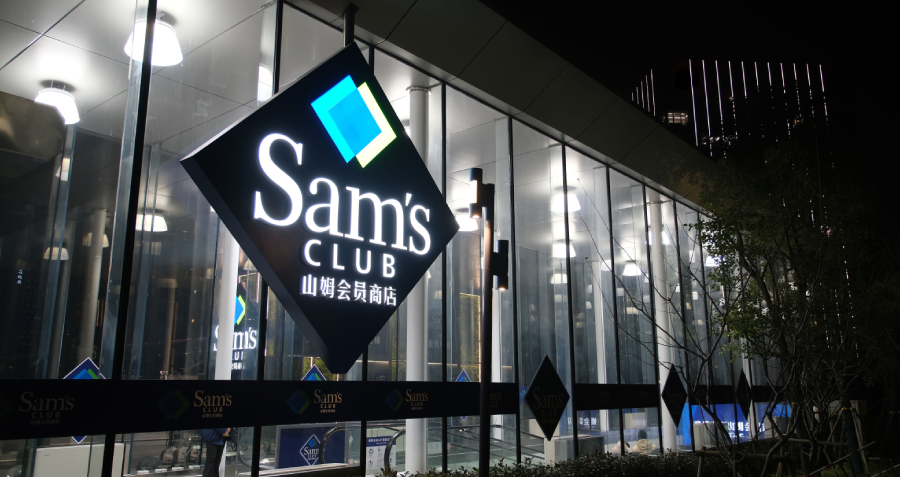
A shopper leaving Sam’s Club in Shanghai with a trolley full of imported cheese, baked goods and steaks might not appear to be responding to a consumer slowdown. Yet the growing appeal of the Walmart-owned membership warehouse club lies in a trade-off: paying more up front means getting more for each yuan spent.
“At the moment, it feels like buying in bulk is the best way to get value on things like baby formula or meat and fish,” says Crystal Xu, a 35-year-old teacher and Sam’s Club member based in Shanghai who recently had her second child. “Money is currently tight for several reasons, so bulk buying seems to make the most sense. We even bought a small extra freezer to put in our apartment so we can store more.”
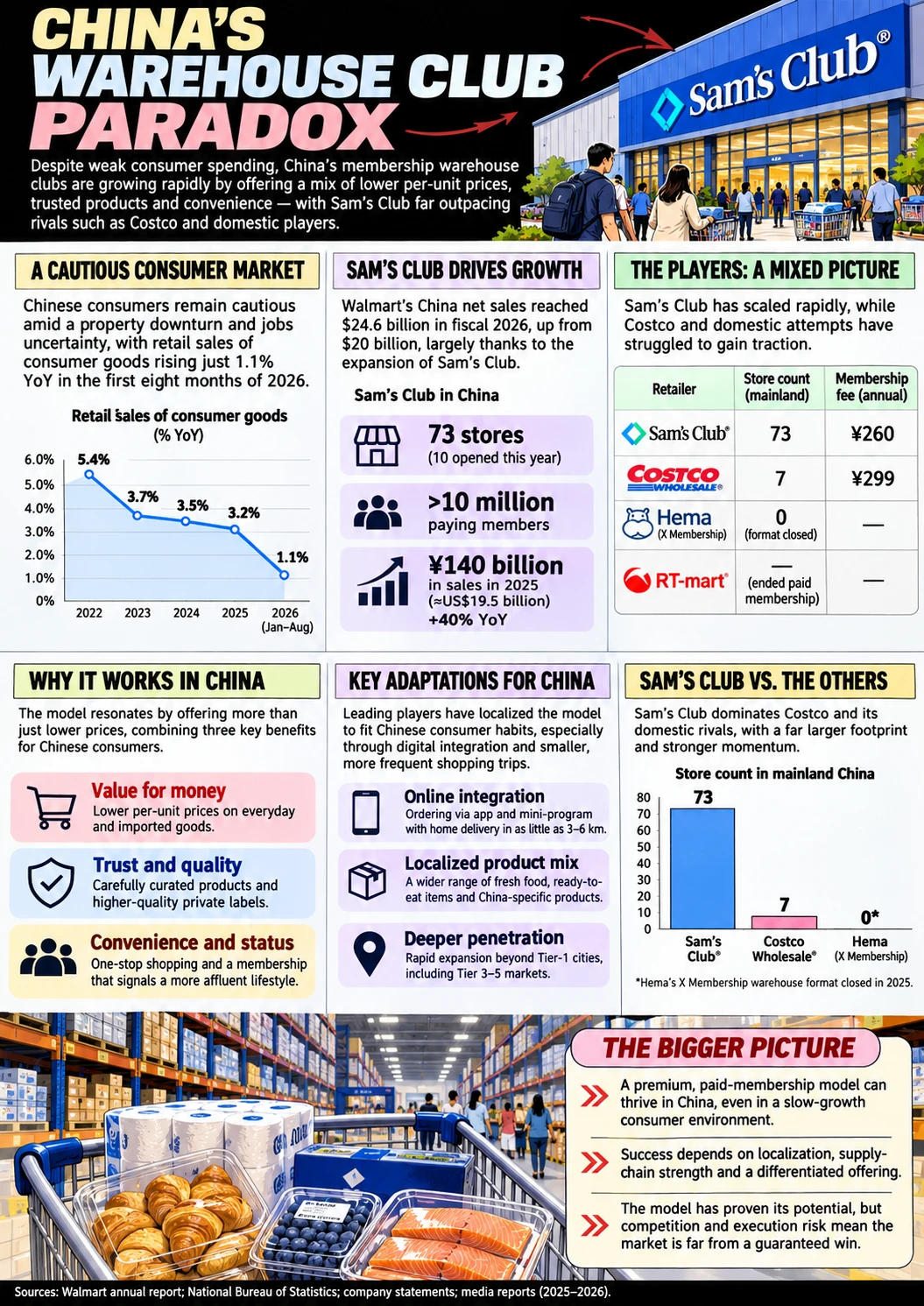
For several years now, Chinese consumers have faced reasons to exercise caution in their spending. The property downturn has weighed on household confidence, while uncertainty over employment and future income has encouraged more deliberate spending. China’s retail sales of consumer goods grew by just 1.1% year-on-year in the first eight months of 2026, according to the National Bureau of Statistics.
Against this backdrop, the performance of membership warehouse clubs appears contradictory. According to its annual report, Walmart saw $24.6 billion in net sales in China in its 2026 fiscal year, up from $20 billion the previous year, much of this thanks to Sam’s Club, which has expanded its presence while building a substantial online business.
“Over the past few years, consumer sentiment in China has remained weak,” says Olivia Plotnick, founder of wai social, a marketing agency specializing in helping brands in China’s consumer market. “However, this cautious sentiment has not translated into a uniform decline in spending: consumers remain active in essential purchases, services, and value-oriented categories, while becoming more selective about discretionary spending. The result is a market characterized by cautious confidence, greater price sensitivity, and increasingly divergent consumption patterns across demographics.”
But Sam’s Club’s success is not necessarily an indicator of an easy and fertile market to be captured, with both local and international competitors, such as Costco, not faring quite as well.
The warehouse club model
A membership fee is central to the warehouse club model, requiring customers to pay upfront in exchange for access to a curated product range, which, unlike in conventional supermarkets, is concentrated on a narrower, more carefully selected range of goods.
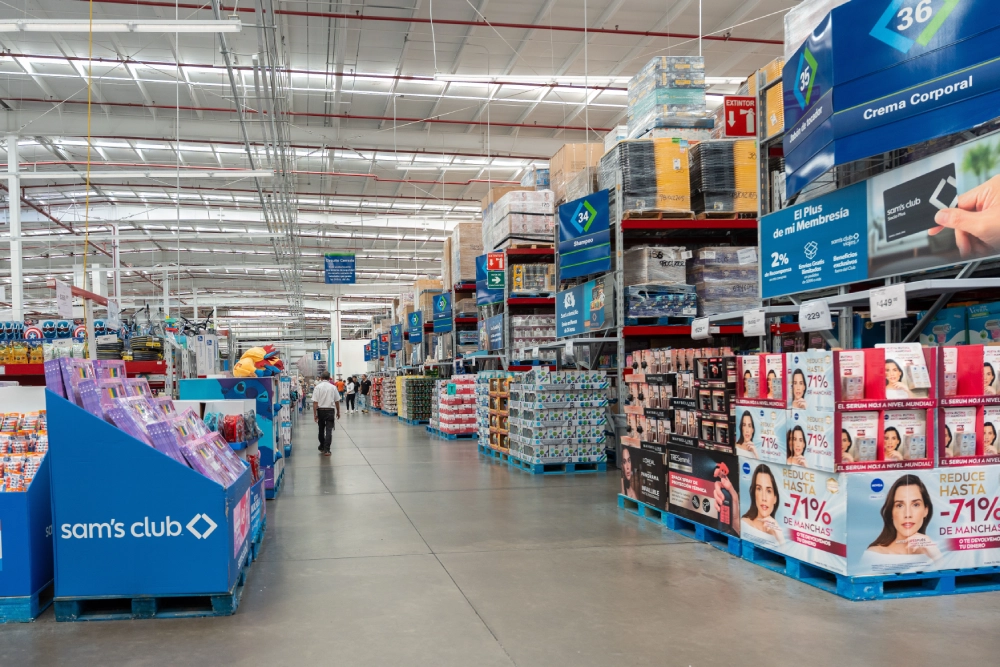
The warehouse club originated in the US, and given China’s smaller urban apartments, which often lack storage space, and the traditional practice of buying fresh food more regularly from nearby shops, the model did not seem predisposed to success in the country. Nonetheless, the country saw the entry in 1996 of Sam’s Club, as well as the more recent entry of another US stalwart, Costco, in 2019.
Success has been mixed. Sam’s Club now has 73 stores across the country, with 10 opened this year, many of which are in Tier-3–5 cities. The company’s China unit reportedly passed ¥140 billion in sales in 2025, up from roughly ¥100 billion the year before, with more than 10 million paying members.
“Costco is the opposite case,” says Ashley Dudarenok, founder of consultancy ChoZan. “It still has only seven stores on the mainland, hasn’t opened a new one in more than two years, and its own Asia head has said the China [membership] renewal rate is around 60%, against about 90% globally.”
Domestic retailers have also struggled to reproduce Sam’s Club’s success. Alibaba-backed Hema, which opened its first X Membership warehouse store in Shanghai in 2020, has already closed the format, with the last of the 10 stores closing in August 2025. RT-mart (part of Sun-Art group) has some stores in Jiangsu province but abolished its membership fee entirely in September 2026, formally exiting the paid-membership track and repositioning as a zero-barrier store format.
“Given the success of Sam’s Club, the membership warehouse store format clearly works in China,” says Dudarenok. “But that success is limited to the player that adapted it properly.”
How does the model work?
“Growth comes from consumers ‘consolidating routine purchases into value-oriented formats,’” says Jason Yu, general manager at CTR Market Research. “Private labels also compress supply-chain intermediaries to deliver extreme value-for-money, but the private label lines are generally more premium, hence total basket value is often higher.”
But it isn’t just financial value that has played a role in the growth of warehouse clubs in China. In recent years, Chinese consumers’ understanding of value has shifted from simply seeking low prices to looking for purchases that genuinely justify their cost.
“They are increasingly willing to pay a premium for tangible product benefits, distinctive experiences, and emotional resonance, but are less persuaded by brand prestige or marketing alone,” says Plotnick.
Another aspect of value that warehouse clubs can provide is as a trusted intermediary. After years of food safety scares, endless livestream promotions and fake reviews, there is a scarcity of certainty for Chinese shoppers. But memberships can provide exactly that.
“Chinese consumers now want someone they trust to do the choosing for them, because, in uncertain times, a store that removes decisions feels like good value in itself,” says Dudarenok. “People are paying ¥260 a year so they don’t have to research every bottle and brand of olive oil.”
Social status is a third area in which warehouse clubs provide value. Sam’s Club runs a two-tier fee structure, with ¥260 as the standard and ¥680 as the premium—with a 92% renewal on the premium tier and 80%+ overall, which, according to Yu, signals a membership base that skews affluent. Costco, on the other hand, charges only ¥299.
“The premium positioning is one of the smartest moves in Chinese retail, and a Sam’s card has become a small marker of middle-class life,” says Dudarenok. “People post their Sam’s hauls on RedNote, the rotisserie chicken and the Swiss roll have become social media stars, and there is even a reseller economy for people without a membership. It lets affluent families save money without looking like they’re saving money. You’re not bargain hunting, you’re a member. The ¥680 Executive tier makes that explicit. I’d call it value retail with status built in, which suits a middle class that feels less secure than it did five years ago but doesn’t want to show it.”
Sam’s Club vs. the Others
The warehouse club model can clearly be successful, but Sam’s Club dominates Costco and its domestic rivals. And that has arguably stemmed from the company’s full-scale localization and major digitalization, while at the same time maintaining differentiation in its offerings.
As well as its main stores, Sam’s Club has a large number of localized warehouses that provide instant online fulfillment. The warehouses are 200–500 m², serve a 3–6 km radius and stock around 1,000 high-frequency items, removing one of the model’s structural barriers completely.
“The ‘drive to the suburbs and stock up once a week’ idea was failing in China,” says Yu. “One-hour delivery turned a warehouse club into a channel converting bulk retail into instant retail.”
Online sales reportedly accounted for more than half of Sam’s Club’s China sales in 2025, with sales growing approximately 40% during the year.
Another key adaptation Sam’s Club has made has been in opening in lower-tier cities. “Down-tier relocation of growth is another big factor in Sam’s Club’s success,” says Yu. “Tier-3–5 cities delivered around 80% of the company’s 2025 expansion. Sam’s has been active in opening new stores in those untapped spaces where consumers have more disposable income and favor offline shopping.”
Costco, on the other hand, has been more conservative in its expansion. Its seven stores are all located in major Tier-1 cities and it does not yet have a localized warehouse network, meaning that the launch of a 90-minute home delivery mini-program in 2024 was still limited to an 8 km radius around the stores.
More recently, however, the company has made a proper entrance into e-commerce. In May 2026, it partnered with JD.com for a trial to combine Costco’s product portfolio with JD’s nationwide logistics and supply chain network. In July, they jointly announced a same-day/next-day delivery option, and the online store recorded more than 30 million visits in its first month. Notably, the online store is also open to non-members at a 20% price premium.
How successful this collaboration is in challenging Sam’s Club will be worth keeping an eye on.
“Many consumers note that Costco often has better quality products, particularly fresh and organic, but Sam’s Club is much better at convenience with their large offline footprint and delivery capabilities,” says Plotnick. “Value isn’t defined just by product quality, but by the entire experience.”
As for the domestic competition, which doesn’t face the same localization issues, Hema’s retreat reflects a key issue: reproducing the physical format is easier than replicating the economics and customer proposition behind it. Its X Membership stores offered many of the same broad features as its international rivals, yet the range did not always provide a sufficiently clear distinction from Hema’s mainstream supermarkets.
“Membership only works when the store has something you can’t get anywhere else,” says Dudarenok. “Hema’s X Membership stores never solved the ‘why pay?’ question. The card didn’t work across Hema’s other formats, the product range overlapped with its own Freshippo stores, and it attracted the most price-sensitive shoppers, who are the least likely to renew. That said, I don’t view it as a foreign beating local story. Costco is foreign too, and it has struggled because it adapted slowly.”
The future of warehouse clubs in China
The growth potential for warehouse clubs in China remains promising, if approached properly. According to Numerator data, clubs accounted for just 2.3% of urban FMCG sales in 2025, but sales grew 11% in Tier-1 and Tier-2 cities. Beyond that, Tier-3 and Tier-4 cities saw sales rise 59%.
However, identifying new markets with sufficient concentrations of middle-class households remains a challenge. Bulk purchasing is less convenient for China’s growing number of smaller households, with around a quarter of households comprising just one person and some 320 million people aged 60 or above.
Delivery thresholds present another obstacle: Sam’s Club’s ¥99 minimum for free delivery compares unfavorably with the ¥39 thresholds offered by Hema and Meituan Xiaoxiang, potentially deterring smaller-basket shoppers accustomed to instant retail.
There have also been some reputational hiccups. Attempts to replace exclusive products with mainstream brands backfired in 2025, when Sam’s Club swapped some popular items for mainstream snack brands.
“Members revolted online because those were products they could buy in any corner shop, and Sam’s pulled them within days,” says Dudarenok. “The lesson for any retailer is that in a membership model, the product selection is the brand.”
Repeated food-safety incidents in 2025 and 2026 also proved damaging, and in June 2026, China’s market regulator called on Sam’s Club to address food-safety risks across its supply chain. Sam’s Club has since apologized and said it had strengthened inspections, according to Reuters.
Overall, the outlook is for continued but slower expansion, concentrated in wealthier parts of eastern and southern China, with a limited number of additional county-level markets offering the right conditions.
“The format is structurally a premium one, serving perhaps the top 20–30% of urban households, not a national grocery solution,” says Yu. “This helps explain why Walmart is also accelerating efforts to grow its conventional hypermarket business in China, pursuing a dual-engine strategy rather than relying on warehouse clubs alone.”
Future value proposition
China’s warehouse club boom is less contradictory than it first appears, but it is not an equal success story for every retailer. Weak consumption has not stopped households from buying groceries or other goods; it has made them more selective about where they spend and what they expect in return.
“China’s warehouse-club sector still has considerable room to expand,” says Plotnick. “But the biggest challenge will be maintaining the product differentiation, supply-chain reliability and member trust that underpin its value proposition as its footprint grows.”
For retailers, the broader lesson is that consumers can be cautious without being unwilling to spend. The challenge is to show clearly what they receive in return. In a market where households are scrutinizing purchases more closely, the retailers best placed to grow may be those that make the value of each yuan easiest to understand.
“Growth opportunities are there, but if there ever was a time of easy growth for membership stores, that is now over—the model has shifted from a novelty-driven boom to a penetration-and-retention game,” says Yu.
Enjoying what you’re reading?
Article Subscribe (1)
CKGSB Report







Our Programs
Stanford & Silicon Valley Immersion Program
Global Unicorn Program Series
In partnership with Stanford Engineering Center for Global & Online Education
Visit Silicon Valley tech companies and AI and robotics labs to explore how US firms apply AI and how their approach compares with China’s.
LocationStanford University Campus, California, United States
Date6–11 Dec 2026 / 5–10 Dec 2027
LanguageEnglish with Chinese Translation
Emerging Markets: Innovation and Scaling for Exponential Growth – ASEAN
How is China’s progress in AI changing industries, and what does it mean for companies growing in ASEAN?
LocationJakarta, Indonesia
Date23–26 March 2027
LanguageEnglish (with Chinese translation)

Asia Start: AI + Digital Ecosystem China Expedition
Visit Chinese tech innovators, hear from experts, and meet the founders and engineers behind China’s AI and digital economy.
LocationChina (Beijing, Shanghai, Hangzhou & optional Shenzhen)
DateApril 19–24, 2027
LanguageEnglish

Intelligent China: AI, EVs & Smart Manufacturing
See China’s advances in AI, electric vehicles, and smart manufacturing through faculty sessions, factory visits, and meetings with industry leaders.
LocationBeijing, Shenzhen, Shanghai, and Hangzhou
DateSummer – Winter 2027 (three 4-day programs)
LanguageEnglish

Scaling Innovation: AI and Digital Strategies for Business Transformation
Global Unicorn Program Series
In partnership with Columbia Engineering
Learn from CKGSB and Columbia Engineering faculty how to apply AI and lead digital business transformation.
LocationNew York, USA
Date26 Sep - 01 Oct, 2027
LanguageEnglish

Emerging Tech Management Week: Silicon Valley
Global Unicorn Program Series
In partnership with UC Berkeley College of Engineering
Explore emerging technologies through classes, company visits, and meetings with Silicon Valley innovators to uncover new business opportunities.
LocationUC Berkeley, California, United States
Date31 Oct - 05 Nov, 2027
LanguageEnglish