
From China to the world: Building a global hospitality business
June 17, 2026
Lessons on overseas expansion from one of China’s largest hotel groups
H World Group, one of China’s largest hotel groups, has revived its overseas business. The group’s CSO shares the biggest lessons learnt from the turnaround.
In 2020, Shanghai-based H World Group, one of the world’s largest hospitality companies, acquired Deutsche Hospitality for €700 million (¥5.5 billion) as part of a strategy of overseas expansion. Now rebranded to H World International, the business has just posted its best year since the acquisition, earning an adjusted EBITDA of ¥499 million in 2025, versus a loss of ¥154 million the year previously.
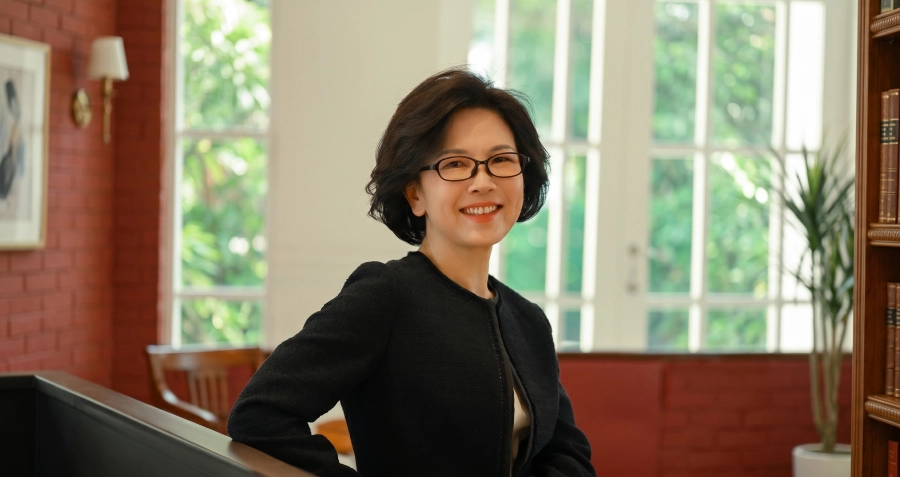
In this Q&A, Jihong He, Chief Strategy Officer of H World Group and Executive Chair of H World International, discusses the rationale behind the acquisition, the challenges of integrating a European hotel group and how H World is approaching global expansion.
Q: In 2020, H World acquired the Deutsche Hospitality portfolio. What was the reason behind that?
H World has always had ambitions to become a significant player in the global hospitality industry, and establishing a presence outside China was a natural part of that strategy.
The acquisition of Deutsche Hospitality provided an immediate platform in Europe, North Africa and the Middle East, giving H World access to an established international portfolio and local operating expertise. Rather than building a presence from scratch, the company was able to enter multiple markets through an established hospitality group with a strong regional footprint and a number of well-known hotel brands.
The deal also created opportunities in the opposite direction. By bringing Deutsche Hospitality into the H World family, the company gained access to international brands that could be introduced into China. Since the acquisition, brands such as Steigenberger, IntercityHotel and MAXX have become part of H World’s domestic portfolio, helping to broaden its offering and strengthen its position in the Chinese market.
Q: COVID hit shortly after the 2020 acquisition. What was the impact on the integration process?
The timing was particularly challenging. The acquisition was completed only weeks before the global hospitality industry was disrupted by Covid-19.
Like hotel operators around the world, H World International experienced significant losses as travel restrictions and lockdowns brought business activity to a halt. Rather than focusing immediately on integration and expansion, the priority became ensuring the survival and stability of the business.
Covid also complicated the integration process itself. Travel restrictions meant that personnel exchanges between China and Europe were largely impossible, forcing teams to work remotely during a period when face-to-face collaboration would normally have been critical. Despite these obstacles, the company was able to navigate the crisis and emerge with the business intact, something management sees as evidence of both organizational resilience and strong financial backing from the wider H World Group.
Q: Can you describe the process of rebranding the Deutsche Hospitality portfolio into H World International? How much of an overhaul was there?
The transition was less about replacing Deutsche Hospitality and more about creating a unified international identity.
H World International functions primarily as the corporate umbrella for H World’s overseas operations. As a publicly listed company, H World required a clear structure for reporting and governance across its international assets.
At the same time, we were very conscious of the heritage we acquired. Deutsche Hospitality had built strong local expertise and trusted brands over decades, especially Steigenberger, which carries a long-standing legacy in European hospitality. That kind of brand recognition cannot simply be replaced, particularly in markets such as Europe, where consumers and owners have deep familiarity with established hotel names.
In local markets, the brands have largely retained their own identities, positioning and heritage. The change was more at the corporate and platform level: bringing the portfolio into a broader international structure while preserving the credibility and emotional equity of names like Deutsche Hospitality and Steigenberger.
So rather than imposing a complete overhaul, H World sought to combine the acquired entity’s local strengths with the resources of a larger global organization. The result is a model that maintains local credibility while benefiting from H World’s technology, operational capabilities and management systems.
Q: H World International has just posted its best-performing year since the acquisition. Can you describe the journey to that success?
The turnaround occurred in two distinct phases.
The first phase focused on navigating the Covid crisis and stabilizing operations. Once travel restrictions eased and demand began returning, management shifted attention toward restructuring and performance improvement.
The turnaround was built around three key pillars. The first was organizational change. H World restructured the management team and leadership framework, creating closer alignment with the group’s operating philosophy and management culture.
The second pillar focused on operational performance. Management reviewed the business hotel by hotel, strengthening revenue management, sales efforts and cost controls. Regional operating structures were introduced, local managers were given greater responsibility, and headquarters functions were streamlined. The company also undertook a significant reduction in overhead costs.
The third pillar involved portfolio restructuring. This included exiting underperforming assets, increasing the proportion of asset-light businesses such as management contracts and franchises, and renegotiating leases and commercial agreements where necessary.
Together, these measures restored profitability and laid the foundation for what became the strongest financial performance since the acquisition was completed.
Q: You have said that hotels are fundamentally a local product. In what ways did H World have to change or adapt when expanding overseas?
While the fundamentals of hotel management are universal, guest expectations vary significantly from market to market.
H World believes that strong brands, efficient operating systems, technology platforms and loyalty programs are relevant everywhere. These are areas where the company has leveraged expertise developed in China and applied it internationally.
At the same time, adaptation has been essential. One of the company’s core principles is to maintain highly localized management teams. Hotels in Germany are managed by Germans, properties in the Netherlands by Dutch managers, and so on. Local teams are better positioned to understand customer preferences, owner expectations and market conditions.
The company has also adapted its products to suit regional needs. In the Middle East, for example, guests often expect larger food-and-beverage offerings and leisure facilities such as swimming pools. In Southeast Asia, H World has modified some hotel concepts to include larger public spaces and additional amenities compared with their counterparts in China.
The goal has been to combine H World’s operational expertise with local market knowledge, rather than attempting to export a purely “China model” overseas.
Q: H World’s first international move was with Ji Hotel to Singapore. How did Singapore become a learning ground for global expansion?
Singapore was viewed as a natural first step because of its proximity to China and its strong commercial and cultural links with the Chinese market.
Many Singaporean travelers were already familiar with Chinese hotel brands, making the market an attractive testing ground for international expansion. At the same time, Singapore provided an opportunity for H World to gain experience operating in a highly competitive and internationally connected hospitality environment.
The launch itself was far from straightforward. Ji Hotel Singapore opened during the Covid period, creating challenges related to construction, technology deployment and cross-border coordination. Teams had to navigate local regulations and operational requirements while dealing with the practical limitations created by travel restrictions.
The experience provided valuable lessons about adapting products and operating systems to local market conditions. It also reinforced management’s confidence that the core Ji Hotel concept could appeal to international travelers beyond its traditional Chinese customer base.
Q: To what extent are the hotels in the international portfolio targeting Chinese guests versus other demographics?
Chinese travelers remain an important customer segment, particularly given H World’s large domestic membership base and the growing number of Chinese travelers going abroad.
However, management emphasizes that hotels cannot rely on a single source market.
International properties are designed to appeal to a broad range of travelers, including local guests, regional visitors and long-haul international customers.
In Europe, for example, local European travelers represent a substantial portion of demand. Certain destinations also attract large numbers of international corporate travelers.
Frankfurt, with its concentration of financial institutions and conference facilities, draws significant business from the United States and other overseas markets.
As a result, H World’s international strategy is focused on building globally competitive hotels rather than creating properties primarily aimed at Chinese outbound tourism.
Q: For H World, what is the current balance of China versus overseas business, and how do you see the trajectory moving over the next five to ten years?
China remains the core of H World’s business and continues to account for the vast majority of its hotel portfolio and revenues.
International operations are growing, representing around 20% of revenue in the first quarter of 2026, and H World expects overseas business to become increasingly important. The company continues to expand across Europe, the Middle East and Southeast Asia, and has already announced plans to enter additional Asian markets.
Management says it remains committed to international growth but intends to pursue that expansion in a disciplined manner. The current focus is on organic development, with new opportunities evaluated carefully rather than pursuing scale for its own sake.
More broadly, the company sees the successful turnaround of H World International as an important milestone. Beyond improving financial performance, the experience has helped H World build management capabilities and confidence in operating internationally, creating a foundation for further global expansion in the years ahead.
Bio: Jihong He serves as Chief Strategy Officer of H World Group and Executive Chair of H World International, overseeing the group’s global strategic initiatives and international business development. She joined H World Group in October 2021 and plays a key role in shaping the company's international growth strategy and asset-light business model. Ms He holds an MBA from the University of British Columbia in Canada.
Enjoying what you’re reading?
Article Subscribe (1)
CKGSB Report






Our Programs

Emerging Tech Management Week: Silicon Valley
Global Unicorn Program Series
In partnership with UC Berkeley College of Engineering
A technology management program for leaders looking to turn emerging technologies into business opportunities.
Combining proven strategies and cutting-edge research, the program helps participants fuel innovation, seize opportunities in emerging technologies, and catalyze transformation within their organizations. Designed for managers, start-up leaders, and technology investors, it includes visits to venture capital firms and technology companies, alongside mentored group projects.
LocationUC Berkeley, California, United States
Date01 - 06 Nov, 2026
LanguageEnglish
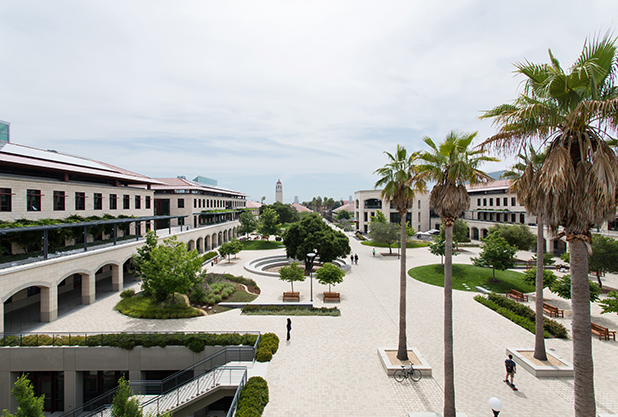
Stanford & Silicon Valley Immersion Program
Global Unicorn Program Series
In partnership with Stanford Engineering Center for Global & Online Education
A Silicon Valley immersion for entrepreneurs, intrapreneurs, and investors leading and scaling AI-driven companies.
The program combines academic learning with visits to AI and robotics labs and Silicon Valley companies, giving participants direct exposure to emerging technologies and the businesses developing and applying them.
LocationStanford University Campus, California, United States
Date06 - 11 Dec, 2026
LanguageEnglish with Chinese Translation
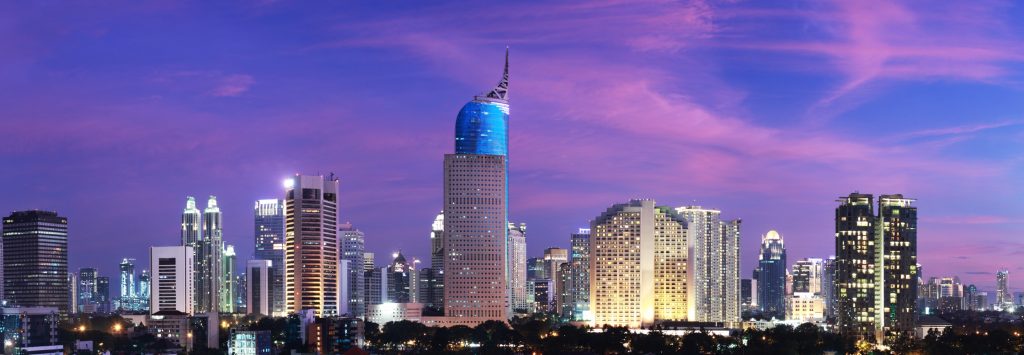
Emerging Markets: Innovation and Scaling for Exponential Growth – ASEAN
A China-focused innovation program for ASEAN executives and business owners responding to the impact of AI on their industries.
Gain insights from leading Chese thinkers in Jakarta, with an optional immersion in China and opportunities to connect with the business leaders driving innovation. The program offers a closer look at how developments in China could affect your industry and business.
LocationJakarta, Indonesia
Date23–26 March 2027
LanguageEnglish (with Chinese translation)
Asia Start: AI + Digital Ecosystem China Expedition
An immersive program for entrepreneurs and executives looking to understand China's AI and digital economy firsthand.
Gain the latest trends and insights, strategies, and connections to overcome challenges and support future business growth in Asia and beyond.
LocationChina (Beijing, Shanghai, Hangzhou & optional Shenzhen)
DateApril 19–24, 2027
LanguageEnglish

Intelligent China: AI, EVs & Smart Manufacturing
A three-part program examining China’s advances in AI, electric vehicles, and smart manufacturing.
Through faculty-led sessions, company visits, and exchanges with industry leaders, gain practical insights for your organization's strategy, partnerships, and investment decisions. Join an individual four-day program or complete the full 12-day series.
LocationBeijing, Shenzhen, Shanghai, and Hangzhou
DateSummer – Winter 2027 (three 4-day programs)
LanguageEnglish