Goodbye New York! Hello Shanghai!
June 24, 2015
A clutch of Chinese companies are preferring to delist from foreign stock exchanges due to the boom in the Shanghai and Shenzhen stock exchanges.
An increasing number of Chinese companies listed in the US are considering going home, as the booming stock markets in both Shanghai and Shenzhen have sent market capitalization over the roof.
According to a Bloomberg report on June 24, two dozen Chinese companies traded in the US had received go private offers this year totaling $25 billion. The biggest bid so far—about $9 billion—has been received by Qihoo 360, a popular internet security software firm based in Beijing. The company went public on the New York Stock Exchange in 2011 with a $176 million IPO, the largest Chinese listing in the US that year.
Momo, a mobile-only Chinese social network, is also on the list. The company just did its IPO on NASDAQ in December 2014, raising $216 million.
The privatization of US-listed Chinese firms is not new—between 2011 and mid-2012, a wave of companies said goodbye to their American dreams after being targeted by short sellers and US regulators for fraudulent accounting practices and other law violations. The bad apples took a toll on the reputation of other US-listed Chinese companies, especially the smaller ones, forcing more to leave after share prices took a dive.
But the current tide of delisting is different—some companies’ shares may be doing just fine in the US (Momo’s share prices have gained more than 15% since December), but they are still leaving because they believe that they can do even better back home in China.
Their confidence seems well grounded—despite recent volatilities, the bull run in China’s stock market has been one of a kind. In the past year, the Shanghai Composite Index has climbed over 116%, while the ChiNext Composite Index in Shenzhen, where most technology start-ups list, have gone up 165%. Accordingly, the average price-to-earnings ratio also shot up for companies on the ChiNext index, reaching 126 times. In comparison, the US-listed Chinese companies are trading only 17 times reported earnings, according to Bloomberg.
The huge difference in valuation is the main reason why many US-listed Chinese companies want to steer their ships around, says Victor Li, partner at US-based hedge fund EJF Capitals. “Capital is always looking for arbitrage opportunities,” Li said in a phone interview. “And we are talking about price differences of multiple times.”
To illustrate the potential valuation gap between different markets, Li points to a pharmaceutical company based in Shenyang called 3SBio, which delisted in 2013 from NASDAQ after a $340 million buyout. But on June 11, the company made its debut on the Hong Kong Stock Exchange with an IPO of $711 million, more than doubled its valuation two years ago. The gap would be even wider if the company used leverage when it went private, a common practice in such transactions, Li says.
And when it comes to the stock market on the mainland, coming back may be even more rewarding. Focus Media, a digital advertising company headquartered in Shanghai, also went private in 2013 after leaving the NASDAQ at about $2.7 billion; the company is now planning to go public through a shell company on the Shenzhen Stock Exchange later this year with a valuation of $7.4 billion. The arbitrage opportunities are so great that even if the China market crashes as much as 50% in the future, the companies could still make financial gains, Li says.
While the valuation gap may have already existed before the market boom, companies couldn’t take advantage of it due to regulatory hurdles. Traditionally, China’s securities law has strict pre-listing requirements on earnings, cash flow and growth rate, which are impossible for loss-making start-ups to meet. The law also prohibits shares of foreign-owned entities (B shares) to be traded by Chinese investors in China, basically shutting out companies backed by foreign venture capital.
But the rules that used to push some companies overseas are starting to change. Securities regulators and senior officials in various government departments, including Chinese Premier Li Keqiang, have announced plans to lower listing requirements and allow variable interest entities (or VIE, an ownership structure used by most Chinese tech companies listed in the US) to list and trade in Chinese markets. China’s Ministry of Industry and Information Technology has already announced the removal of the 50% foreign-ownership cap for e-commerce companies operating in China.
While the policies represent Beijing’s efforts to promote entrepreneurship and innovation, the fact that many US-listed firms are taking advantage of them to come back to China may bring about repercussions, says Ou-yang Hui, Professor of Finance at Cheung Kong Graduate School of Business.
Ou-yang argues that the size of the Chinese capital market is limited, and the government should encourage companies to list overseas to leverage global capital, not the other way around. He says that the returning companies could compete against small and mid-sized firms in China in terms of financing, potentially making life even harder for an already under-served group.
“Global capital is a big contributor to the US economy,” he said. “It’ll be great if China can enjoy the same.”
Enjoying what you’re reading?
Article Subscribe (1)
CKGSB Report







Our Programs

Emerging Tech Management Week: Silicon Valley
Global Unicorn Program Series
In partnership with UC Berkeley College of Engineering
A technology management program for leaders looking to turn emerging technologies into business opportunities.
Combining proven strategies and cutting-edge research, the program helps participants fuel innovation, seize opportunities in emerging technologies, and catalyze transformation within their organizations. Designed for managers, start-up leaders, and technology investors, it includes visits to venture capital firms and technology companies, alongside mentored group projects.
LocationUC Berkeley, California, United States
Date01 - 06 Nov, 2026
LanguageEnglish
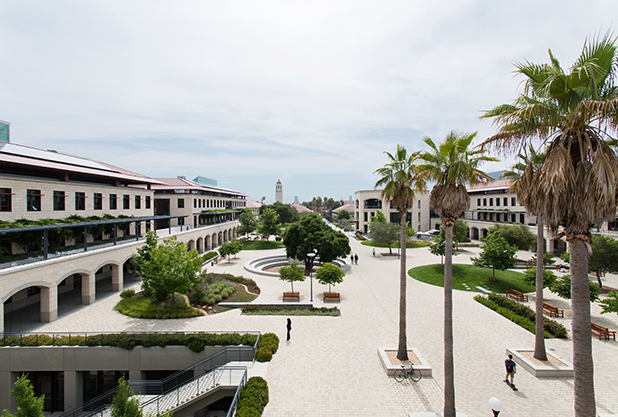
Stanford & Silicon Valley Immersion Program
Global Unicorn Program Series
In partnership with Stanford Engineering Center for Global & Online Education
A Silicon Valley immersion for entrepreneurs, intrapreneurs, and investors leading and scaling AI-driven companies.
The program combines academic learning with visits to AI and robotics labs and Silicon Valley companies, giving participants direct exposure to emerging technologies and the businesses developing and applying them.
LocationStanford University Campus, California, United States
Date06 - 11 Dec, 2026
LanguageEnglish with Chinese Translation

Emerging Markets: Innovation and Scaling for Exponential Growth – ASEAN
A China-focused innovation program for ASEAN executives and business owners responding to the impact of AI on their industries.
Gain insights from leading Chese thinkers in Jakarta, with an optional immersion in China and opportunities to connect with the business leaders driving innovation. The program offers a closer look at how developments in China could affect your industry and business.
LocationJakarta, Indonesia
Date23–26 March 2027
LanguageEnglish (with Chinese translation)
Asia Start: AI + Digital Ecosystem China Expedition
An immersive program for entrepreneurs and executives looking to understand China's AI and digital economy firsthand.
Gain the latest trends and insights, strategies, and connections to overcome challenges and support future business growth in Asia and beyond.
LocationChina (Beijing, Shanghai, Hangzhou & optional Shenzhen)
DateApril 19–24, 2027
LanguageEnglish

Intelligent China: AI, EVs & Smart Manufacturing
A three-part program examining China’s advances in AI, electric vehicles, and smart manufacturing.
Through faculty-led sessions, company visits, and exchanges with industry leaders, gain practical insights for your organization's strategy, partnerships, and investment decisions. Join an individual four-day program or complete the full 12-day series.
LocationBeijing, Shenzhen, Shanghai, and Hangzhou
DateSummer – Winter 2027 (three 4-day programs)
LanguageEnglish