
Beyond the channel boom: Building lasting Chinese beauty brands
October 20, 2026
How Chinese cosmetics brands can turn fleeting sales opportunities into sustainable growth
Over the past two decades, China’s cosmetics market has undergone a remarkable transformation, evolving from a relatively undeveloped industry into one of the world’s largest and most competitive beauty markets.
Domestic brands have been among the biggest contributors and beneficiaries. In 2022, Chinese cosmetics companies captured more than 50% of their home market for the first time, with their share subsequently rising to 57% in 2025.
Much of this success has been driven by their ability to identify emerging sales channels and adapt more quickly than international competitors. Rising cultural confidence and growing enthusiasm for domestic products have further strengthened their appeal.
Yet this growth model presents a fundamental challenge. As each new distribution channel matures, the advantages enjoyed by its earliest adopters inevitably diminish. Brands that flourish alongside a single particular platform can find themselves struggling when its growth slows.
International competitors, meanwhile, may be slower to embrace new channels, but their established brand recognition and financial resources allow them to catch up.
For Chinese cosmetics companies, the challenge is therefore shifting from exploiting new distribution opportunities to building enduring consumer relationships.
The changing face of beauty retail
The evolution of China’s cosmetics industry is closely intertwined with changes in how consumers discover and purchase products.
Before 2000, department-store counters dominated cosmetics retail, particularly in major cities. International brands controlled these prestigious locations, while domestic competitors, lacking comparable brand recognition and product development capabilities, largely depended on specialist beauty stores in smaller cities.
The emergence of personal-care chains, supermarkets and television shopping subsequently created new opportunities. Domestic companies such as Kans recognized the potential of television marketing to reach mass audiences, establishing national visibility despite relatively unsophisticated promotional techniques.
The expansion of e-commerce after 2010 fundamentally changed the competitive landscape. Platforms such as Tmall reduced the financial and operational barriers associated with traditional retail, allowing established Chinese brands and newcomers to compete directly with international companies. Brands including Yunifang, Afu and Mask Family capitalized on this opportunity, using online traffic and targeted promotions to achieve rapid sales growth.
Another transformation followed around 2018, when content-driven platforms such as Xiaohongshu, Douyin and Kuaishou gained prominence. Perfect Diary, for example, combined influencer recommendations on Xiaohongshu with sales conversion through Tmall, rapidly establishing itself in China’s competitive makeup market.
The COVID-19 pandemic accelerated a still more disruptive development: livestream commerce. Between 2020 and 2022, livestreaming transformed the consumer purchasing journey by combining entertainment, product recommendations and immediate transactions.
Kans used a combination of flagship products and short-form drama marketing to expand its Douyin presence, collaborating with influential creators on productions that generated more than one billion views each. Winona pursued a different strategy, using professional skincare content and consumer reviews on Xiaohongshu to build credibility.
The commercial impact has been substantial. According to Jiuqian Consulting, skincare sales on Douyin exceeded those on Tmall in both 2024 and 2025.
Industry data provider Qingyan Intelligence reported that five of Douyin’s ten leading cosmetics brands by gross merchandise value (GMV) in 2025 were domestic. Kans led with nearly ¥8 billion ($1.12 billion) in GMV, followed by Proya and L’Oréal Paris, each exceeding ¥3 billion ($420 million).
These examples illustrate a recurring pattern: China’s sophisticated supply chains, diverse consumer segments and rapidly evolving digital platforms create opportunities for emerging brands to challenge established competitors.
Artificial intelligence could produce the next transformation. During the 2026 midyear “618” shopping festival, both Alibaba’s Taobao-Tmall business and Douyin introduced AI tools for merchants and consumers. Assistants such as Qwen and Doubao are increasingly positioned as starting points for product discovery.
As AI shopping develops, consumers may eventually delegate purchasing decisions to personal AI agents. Brands that understand how these systems recommend products could gain another early advantage.
International brands fight back
Capturing an emerging distribution channel can generate impressive growth. Mistaking that temporary advantage for a lasting competitive strength, however, can be dangerous.
China’s 2026 “618” shopping festival demonstrated how international cosmetics groups are adapting to digital commerce. On Tmall, SkinCeuticals, owned by L’Oréal, climbed from sixth place in the previous year’s beauty rankings to first, displacing a domestic brand.
The shift was equally striking on Douyin. According to Qingyan Intelligence, the platform’s three leading cosmetics brands by GMV during the festival were all international: Estée Lauder, Helena Rubinstein and La Mer.
Only a handful of major domestic players, including Proya and Kans, remained among the top ten. International companies have strengthened their content-commerce operations, increased marketing investment and learned to navigate platforms once dominated by local challengers.
Their performance highlights the value of established consumer recognition, premium positioning and repeat-purchase networks. The experiences of previously successful domestic brands provide a warning.
Florasis initially achieved rapid growth through partnerships with leading livestream influencers, with GMV exceeding ¥5.4 billion ($756 million) in 2021. However, its dependence on concentrated sources of online traffic left it exposed when platform economics changed and public controversy affected the brand. Its GMV has reportedly fallen substantially in recent years.
L’Oréal’s experience offers a contrasting example. Although the group initially lagged domestic competitors in Chinese e-commerce, it subsequently invested heavily in digital distribution. After expanding partnerships with Tmall and JD.com from 2017, Lancôme and L’Oréal Paris topped Tmall’s beauty rankings during the 2018 and 2019 Singles’ Day shopping festivals, respectively.
The lesson is clear: early channel leadership does not guarantee long-term market dominance.
Four paths to sustainable growth
As competition intensifies and digital customer acquisition becomes more expensive, Chinese cosmetics companies cannot rely indefinitely on the emergence of another high-growth platform. Four strategic priorities offer a more sustainable approach.
1.Diversify distribution channels
Every distribution channel eventually encounters growth constraints. As competitors enter, advertising costs rise, customer acquisition becomes more expensive and profitability comes under pressure.
Brands therefore need to develop capabilities across multiple channels rather than concentrate their commercial fortunes on a single platform.
Syoung Group illustrates both the risks of dependence and the potential benefits of diversification.
In 2020, Alibaba’s e-commerce platforms accounted for more than half the group’s revenue.
2023 saw rapid growth in content commerce. In the same year, Syoung’s revenue from these platforms decreased by 26.7% year-on-year, while GMV for its flagship Yunifang brand declined more than 40% across both Alibaba and Douyin.
The company responded by closing underperforming stores and redirecting investment toward Douyin. Revenue from the platform reached ¥860 million ($120 million) in the first half of 2024, and Douyin subsequently overtook Tmall as the group’s largest online channel.
Proya has followed a similar path. In 2021, its Tmall GMV was approximately four times that of Douyin. By 2025, the ratio had narrowed to around 1.3 times, reflecting a more balanced distribution strategy.
2.Build an identity beyond the platform
Brands that emerge through a particular sales channel often become closely associated with it. China’s so-called Taobao brands and Douyin brands demonstrate how distribution platforms can shape consumer perceptions. The challenge is to establish an identity that extends beyond the original channel.
Afu, founded in 2003, became an early e-commerce success after joining Taobao in 2009. Its essential oils and promotional strategy helped it top Tmall’s beauty sales rankings during Singles’ Day in 2013.
However, unsuccessful offline expansion and missed opportunities in content commerce and functional skincare subsequently weakened its appeal among younger consumers. A similar experience occurred in the apparel industry.
Handu Group, once a leading online womenswear brand, built its business around Taobao and Korean-inspired fashion. By 2014, it had become Tmall’s leading womenswear brand during Singles’ Day.
Yet changing fashion preferences, geopolitical tensions affecting Korean cultural products, and the emergence of short-video commerce undermined its position. Its difficulties reflected a failure to move beyond two increasingly restrictive identities: a Taobao brand and a Korean-fashion specialist.
For cosmetics companies, expanding distribution is therefore not simply about reducing operational risk. It is also about reaching consumers who may never encounter the brand through its original platform.
3.Invest in products and brand equity
Digital advertising can purchase visibility, but lasting consumer trust must be earned. International brands’ performance during the 2026 shopping festival demonstrates the importance of brand equity: the accumulated value of consumer awareness, perceived quality and loyalty.
Strong brands can enter new platforms relatively late yet still achieve substantial sales once they establish effective distribution. Platforms also have incentives to accommodate recognizable premium brands, which can generate higher transaction values and strengthen the platform’s positioning. For domestic companies, the implication is that marketing investment must be accompanied by sustained product development.
Perfect Diary’s early success helped its parent company, Yatsen E-commerce, list on the New York Stock Exchange. However, its initial reliance on outsourced manufacturing and intensive digital marketing left it vulnerable as advertising returns declined, contributing to a prolonged business transformation.
By contrast, brands that develop distinctive formulations and proprietary ingredients can establish clearer product identities. Winona has focused on botanical ingredients associated with China’s Yunnan province, including purslane extract and Prinsepia utilis oil, which the brand uses in products targeting sensitive skin and skin-barrier repair.
Kans has similarly invested in a proprietary anti-aging ingredient, cyclic hexapeptide-9, to strengthen the scientific positioning of its flagship skincare products. Such investments help brands compete on perceived effectiveness and product differentiation rather than price and promotional spending alone.
4.Reconsider the value of physical retail
Online channels offer low entry costs, rapid expansion and immediate consumer feedback. Physical retail, however, provides experiences that digital platforms cannot fully replicate.
Stores allow consumers to test products, receive personalized advice and develop emotional connections with brands.
L’Oréal Paris illustrates the advantages of balancing online and offline distribution.
According to Euromonitor International, the brand generated approximately ¥14.2 billion ($1.99 billion) in Chinese retail sales in 2025, with online channels accounting for around 55% and physical retail the remaining 45%. Its presence across Tmall, Douyin and JD.com is complemented by department-store counters, supermarkets and specialist cosmetics retailers.
Domestic premium makeup brand Mao Geping offers another example. Its nationwide network of professional beauty counters provides personalized makeup consultations, product demonstrations and application guidance, reinforcing its positioning as a premium makeup specialist.
In 2025, Mao Geping reported total revenue of ¥5.05 billion ($707 million), including ¥2.43 billion ($340 million) from offline channels, up 24.5% year-on-year. Revenue from comparable established counters increased 16%.
Physical expansion is not equally appropriate for every brand. Mass-market cosmetics companies with relatively low product prices can struggle to cover rental and staffing costs.
For these businesses, a smaller number of strategically located experience stores may be more effective than extensive retail networks. Their primary purpose should be to strengthen brand recognition and consumer engagement rather than simply maximize transactions.
Beyond the next boom
More than two decades of transformation in China’s cosmetics industry reveal a consistent pattern. Each emerging distribution channel creates opportunities for new brands to rise, but each subsequent slowdown exposes those that have failed to build lasting competitive advantages.
Distribution channels are powerful growth accelerators. They can amplify a brand’s visibility and commercial potential, but they cannot substitute for the underlying strength of its products and consumer relationships.
As international competitors strengthen their digital capabilities, customer acquisition costs rise and Chinese consumers become more discerning, domestic cosmetics companies must move beyond channel-led growth. Those that diversify distribution, invest in product innovation and establish enduring consumer trust will be better positioned to navigate future market changes.
The advantages offered by individual platforms are inevitably temporary. Strong brand equity, once established, can endure across successive generations of technology and retail.
This article is adapted from the Cheung Kong Graduate School of Business (CKGSB) case study CHICMAX Group: One Focus, Deep Roots; Many Brands, Far Sails.
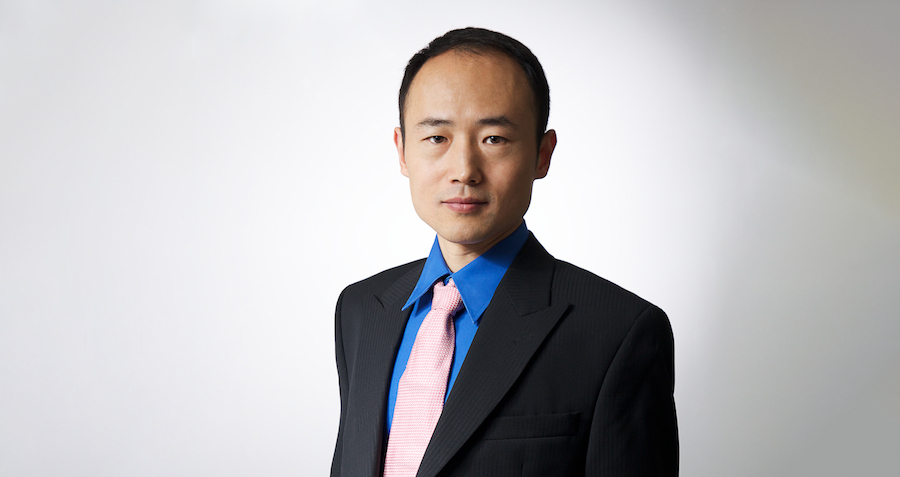
Jing Bing, Associate Professor of Marketing, CKGSB.
Meng Fanyi, Senior Researcher, Case Research Department, CKGSB.
Enjoying what you’re reading?
Article Subscribe (1)
Professor profile

JING Bing
Associate Professor of Marketing, Cheung Kong Graduate School of Business (CKGSB)
PhD, University of Rochester





Related Articles




Our Programs

Emerging Tech Management Week: Silicon Valley
Global Unicorn Program Series
In partnership with UC Berkeley College of Engineering
A technology management program for leaders looking to turn emerging technologies into business opportunities.
Combining proven strategies and cutting-edge research, the program helps participants fuel innovation, seize opportunities in emerging technologies, and catalyze transformation within their organizations. Designed for managers, start-up leaders, and technology investors, it includes visits to venture capital firms and technology companies, alongside mentored group projects.
LocationUC Berkeley, California, United States
Date01 - 06 Nov, 2026
LanguageEnglish

Intelligent China: AI, EVs & Smart Manufacturing
A three-part program examining China’s advances in AI, electric vehicles, and smart manufacturing.
Through faculty-led sessions, company visits, and exchanges with industry leaders, gain practical insights for your organization's strategy, partnerships, and investment decisions. Join an individual four-day program or complete the full 12-day series.
LocationBeijing, Shenzhen, Shanghai, and Hangzhou
Date December 2026 – July 2027 (three 4-day programs)
LanguageEnglish

Emerging Markets: Innovation and Scaling for Exponential Growth – ASEAN
A China-focused innovation program for ASEAN executives and business owners responding to the impact of AI on their industries.
Gain insights from leading Chese thinkers in Jakarta, with an optional immersion in China and opportunities to connect with the business leaders driving innovation. The program offers a closer look at how developments in China could affect your industry and business.
LocationJakarta, Indonesia
Date2–4 December 2026
LanguageEnglish (with Chinese translation)
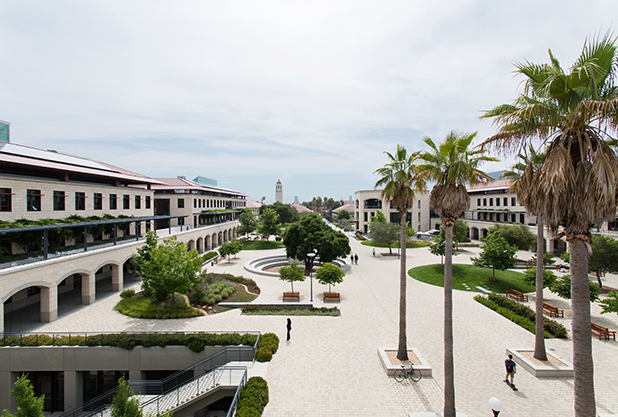
Stanford & Silicon Valley Immersion Program
Global Unicorn Program Series
In partnership with Stanford Engineering Center for Global & Online Education
A Silicon Valley immersion for entrepreneurs, intrapreneurs, and investors leading and scaling AI-driven companies.
The program combines academic learning with visits to AI and robotics labs and Silicon Valley companies, giving participants direct exposure to emerging technologies and the businesses developing and applying them.
LocationStanford University Campus, California, United States
Date06 - 11 Dec, 2026
LanguageEnglish with Chinese Translation
Asia Start: AI + Digital China Expedition
An immersive program for entrepreneurs and executives looking to understand China's AI and digital economy firsthand.
Gain the latest trends and insights, strategies, and connections to overcome challenges and support future business growth in Asia and beyond.
LocationChina (Beijing, Shanghai, Hangzhou & optional Shenzhen)
DateApril 19–24, 2027
LanguageEnglish