
Breaking the duopoly: China’s aerospace ambitions
July 01, 2026
Having dominated sectors from EVs to green energy, China is turning its attention to passenger aircraft
Will China be able to break into the global passenger aircraft industry
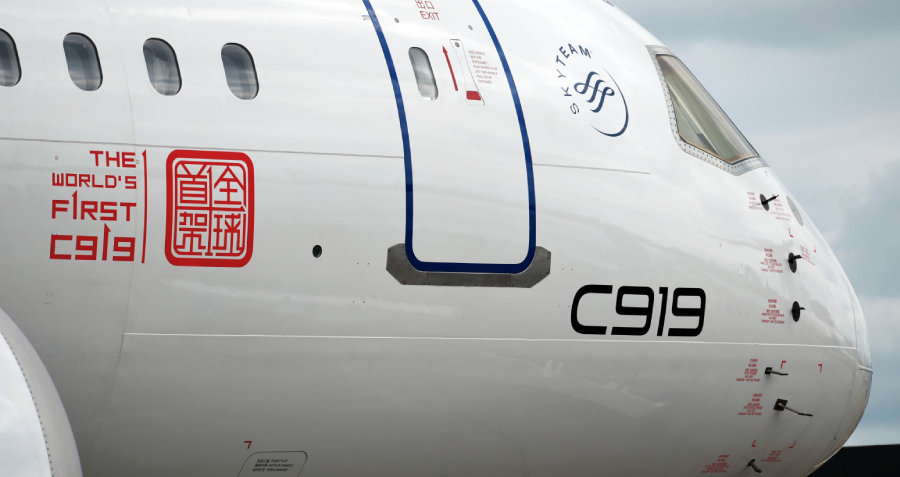
China Eastern Airlines’ move to put the C919 into commercial service in 2023 represented China’s most serious attempt yet to break into one of the few major high-tech industries still dominated almost entirely by Western companies.
Nearly two decades after the Commercial Aircraft Corporation of China (COMAC) was established, Beijing is pushing to secure European certification for the aircraft while simultaneously developing the larger C929 long-haul jet. Yet despite billions of dollars in state support and one of the world’s fastest-growing aviation markets, progress has been slower than many anticipated. With only 44 in operation, COMAC delivered just 15 C919 aircraft in 2025, well short of the earlier target of 75, highlighting the difficulties of building a globally competitive aviation industry.
China has already transformed itself into a leader in sectors ranging from electric vehicles and batteries to solar panels and telecommunications equipment. Commercial aviation, however, is a far tougher challenge. Success requires not only advanced manufacturing capabilities, but also decades of accumulated engineering expertise, extensive global support networks, and the confidence of airlines, regulators and passengers around the world.
Shawn Jones, a businessman who frequently travels around China, says he has no qualms about flying on the C919. “It is clearly a standard international plane, and COMAC will eventually stand alongside the likes of Boeing and Airbus,” he says. In terms of the basic safety of these aircraft, he adds, they have to be absolutely safe to ensure the future of the business; “there is absolutely no room for error,” he adds.
While passengers may feel safe flying in a C919, whether or not it is able to gain European and other international certification is another question entirely. And one that is key to China fulfilling its global aviation ambitions.
China’s long road to commercial aviation
China’s first serious attempt to build a large passenger aircraft was the Y-10 program in the 1970s. Based on, at least in part, the Boeing 707, the aircraft successfully completed test flights but was ultimately abandoned in 1983 due to costs and market concerns.
For the past four decades, China’s rapidly expanding airlines relied on imported aircraft from Airbus and Boeing. As passenger numbers surged alongside economic growth, China has become one of the most important markets for both manufacturers.
Yet Chinese policymakers increasingly viewed the situation as a strategic vulnerability and decided that they had to free themselves from dependency on foreign suppliers for commercial aircraft.
In response, in 2008 Beijing established COMAC, a state-owned company, with the goal of building a domestic aviation industry with the aim of competing internationally.
The company’s first commercial aircraft, the C909, entered service in 2016 after a lengthy development process. Although often overshadowed by the C919, that aircraft provided valuable experience in manufacturing airline operations and certification.
The C919 followed on from that. Based largely on the designs of the Airbus A320 and Boeing 737 families, the narrow-body aircraft entered commercial service in 2023 and has since begun regular operations on domestic routes, including Hong Kong.
Chris Pereira, founder and CEO of consultancy iMpact, says the C919 is part of a much broader industrial strategy.
“Based on estimates I’ve seen from Airbus, China will need roughly 9,500 new aircraft over the next 20 years, and today Boeing and Airbus capture nearly all of this market,” he says.
“The C919 exists to claw that demand back inside the country and to break a 50-year duopoly.”
Learning from other Chinese success stories
China’s aviation ambitions are often compared with industries where the country has already achieved global leadership.
Few observers predicted two decades ago that Chinese companies would become dominant players in electric vehicles, batteries, solar panels, drones or telecommunications equipment. Yet through a combination of government support, market scale, manufacturing expertise and intense competition, Chinese firms have emerged as major global competitors.
“In every industry that China has mastered over the past few decades, early progress has been slow, and later deployment has been massively successful and faster than expected,” Pereira says.
“I expect the aviation industry to be the same—slow and steady, even disappointing progress at first, before explosive growth once a critical mass is achieved in terms of expertise and safety.”
The huge Chinese air travel market provides COMAC with a substantial domestic customer base. The company’s aircraft benefit from strong political backing and access to financing that would be difficult for most private competitors to replicate.
The company’s smaller C909 aircraft has also begun finding customers outside China. More than 120 aircraft are currently in operation, primarily in China, while overseas operators include Indonesia’s TransNusa and carriers in Laos and Vietnam. Although modest by global standards, the aircraft has provided COMAC with valuable experience in overseas certification, maintenance support and airline operations.
These developments actually suggest that while COMAC struggles internationally, it may still succeed in establishing a viable domestic aviation industry.
Yet aviation differs from many of the sectors where China has previously excelled.
Why aircraft are different
Unlike consumer electronics, electric vehicles or solar panels, ailrines have incredibly high requirements for safety given the large numbers of passengers and the tragedy of something going wrong. Safety considerations often outweigh cost advantages. Airlines places a premium on reliability, operational performance and accumulated experience.
“Jetliners aren’t built in volume, where China excels, and aren’t necessarily built with the most cutting-edge technology, where China also increasingly excels,” says Richard Aboulafia, managing director of AeroDynamic Advisory.
“Instead, jetliners need to compete based on operator economics.”
For airlines, even small differences can have major consequences.
“If, relative to its competitors, a jetliner has slightly greater fuel burn, or slightly worse range, or reliability, that airline runs an enormous risk of being outpriced and out-profited by competitors with even slightly better jets,” Aboulafia says.
The industry is also supported by a complex ecosystem that extends far beyond manufacturing.
Airbus and Boeing have spent decades building relationships with airlines, regulators, leasing companies, maintenance providers, and suppliers around the world. Their aircraft are supported by extensive maintenance networks, pilot training programs, spare-parts inventories and technical support systems.
Building an aircraft is only one part of the equation. Building the ecosystem around it is equally important.
“An enormous part of that is building a worldwide global support apparatus with instant response, everywhere,” Aboulafia says. “That’s something COMAC hasn’t begun to address, and it will be very expensive.”
For Beijing, the expense is not the key factor; they first want to reduce dependency, and secondly want to have Chinese-built airliners flying around and to be treated on the same level as Airbus and Boeing.
The challenge of self-sufficiency
One of Beijing’s long-term goals is to reduce dependence on foreign aerospace technology.
Despite being marketed as a Chinese aircraft, the C919 still relies heavily on international suppliers for key systems, including engines, avionics and flight-control components.
“It’s still very dependent,” says Aboulafia. “It’s very hard to fly a plane without engines.”
The aircraft currently uses LEAP engines produced by CFM International, a joint venture between American and French companies. While China is developing domestic alternatives, creating a competitive commercial jet engine remains one of the industry’s greatest technical challenges.
“There are only three companies, in two countries, in the world that have ever built a successful commercial jetliner engine,” Aboulafia says. The other two are Prat Whitney and Rolls Royce.
Pereira agrees that engines represent the biggest hurdle facing China’s aviation ambitions.
“A modern turbofan is among the hardest objects in all of industrial manufacturing,” he says. “It combines extreme metallurgy, thousands of hours of validated reliability and, most importantly, decades of accumulated failure data,” he says.
The challenge goes beyond engineering, and also requires building a culture of trust.
“EASA and the FAA judge process and safety culture as much as the hardware itself,” Pereira says. “In other words, it’s a game of trust as much as it is a game of technological prowess.”
The issue highlights a broader dilemma facing China’s aviation sector. While policymakers often emphasize self-sufficiency, many industry experts argue that commercial aviation has historically succeeded through international collaboration.
Aircraft manufacturers routinely source components globally, while airlines often prefer platforms supported by diverse international supplier networks.
Achieving greater domestic capability without sacrificing competitiveness will be one of COMAC’s most difficult balancing acts.
Looking beyond China’s borders
For now, COMAC’s greatest opportunities remain at home. China’s domestic market is large enough to support substantial production growth even without significant international sales.
“One [goal] is that China wants to build another globally competitive high-tech industry,” says Aboulafia. “The other is that China wants a hedge against decoupling from the West in the event of a national security crisis.”
COMAC may already be well on its way. But if the objective is to compete head-to-head with Airbus and Boeing globally, there is still a long way to go.
International certification is one of the biggest hurdles. COMAC is seeking approval from the European Union Aviation Safety Agency (EASA), a process expected to take several more years. And COMAC has not even begun to seek approval in the US.
Beyond certification, the company must convince airlines, leasing firms, insurers and passengers that its aircraft can match established competitors.
Pereira believes international adoption will eventually come, although likely through emerging markets rather than Europe or North America.
“Adoption will come from Southeast Asia, Africa, Central Asia and the Gulf long before it reaches a European flag carrier,” he says.
He points to countries such as Indonesia, where Chinese-built aircraft are already in operation, as indicators of how China’s aviation footprint may gradually expand.
The next phase of China’s aviation ambitions
The company is developing the C929, a widebody aircraft intended to compete with the Airbus A350 and Boeing 787 in the long-haul market.
The aircraft is expected to carry between 280 and 400 passengers and have a range of approximately 12,000 kilometers. COMAC says the project has entered the detailed design stage, with the first fuselage section targeted for completion in 2027 and service entry expected sometime in the 2030s.
If successful, the C929 would represent an even greater leap than the C919. Long-haul aircraft are among the most technologically demanding products in commercial aviation and have competed in a market segment dominated by Airbus and Boeing for decades. Air China has already been identified as the launch customer for the aircraft.
Looking to the future
Unlike electric vehicles, batteries, or solar panels, success in aviation is measured over decades rather than years. Technical capability matters, but so do operational performance, safety records, certification standards and global support networks built over generations.
China has now demonstrated that it can design and manufacture modern passenger aircraft. Whether it can build a globally competitive aviation industry rests largely on whether or not it can gain international acceptance.
“One of the reasons I feel comfortable on the plane is that in terms of the future of China’s manufacturing business, they cannot afford for one of these planes to have an accident,” Jones says. But for him as a passenger, Jones says that China’s ambitions to become an aviation leader provide reassurance enough to continue flying on them.
Enjoying what you’re reading?
Article Subscribe (1)
CKGSB Report









Our Programs

Emerging Tech Management Week: Silicon Valley
Global Unicorn Program Series
In partnership with UC Berkeley College of Engineering
This program equips participants with proven strategies, cutting-edge research, and the best-in-class advice to fuel innovation, seize emerging tech developments, and catalyse transformation within your organization.
LocationUC Berkeley
Date01 - 06 Nov, 2026
LanguageEnglish

Asia Start: AI + Digital China Expedition
Asia Start provides entrepreneurs and executives with unparalleled access to Asia’s dynamic digital economy and its business ecosystems, offering the latest trends and insights, strategies, and connections to overcome challenges and unlock future growth for your business in Asia and beyond.
LocationChina (Beijing, Shanghai, Hangzhou & optional Shenzhen)
DateNovember 2–7, 2026 | April 19–24, 2027
LanguageEnglish

Intelligent China: AI, EVs & Smart Manufacturing
Explore how China is advancing AI, electric vehicles and smart manufacturing through faculty-led sessions, company visits and exchanges with industry leaders. Build practical insights for your organization’s strategy, partnerships and investment decisions, with the flexibility to join individual four-day programs or the full 12-day series.
LocationBeijing
Date12 Days
LanguageEnglish

Emerging Markets: Innovation and Scaling for Exponential Growth – ASEAN
Learn China's AI and innovation strategy from its leading thinkers — brought to you in Jakarta, with an optional immersion in China — and connect with the business leaders driving it.
LocationJakarta, Indonesia
Date2–4 December 2026
LanguageEnglish (with Chinese translation)

Stanford & Silicon Valley Immersion Program
Global Unicorn Program Series
In partnership with Stanford Engineering Center for Global & Online Education
This CKGSB program equips entrepreneurs, intrapreneurs and key stakeholders with the tools, insights, and skills necessary to lead a new generation of unicorn companies.
LocationStanford University Campus,
California, United States
Date06 - 11 Dec, 2026
LanguageEnglish with Chinese Translation