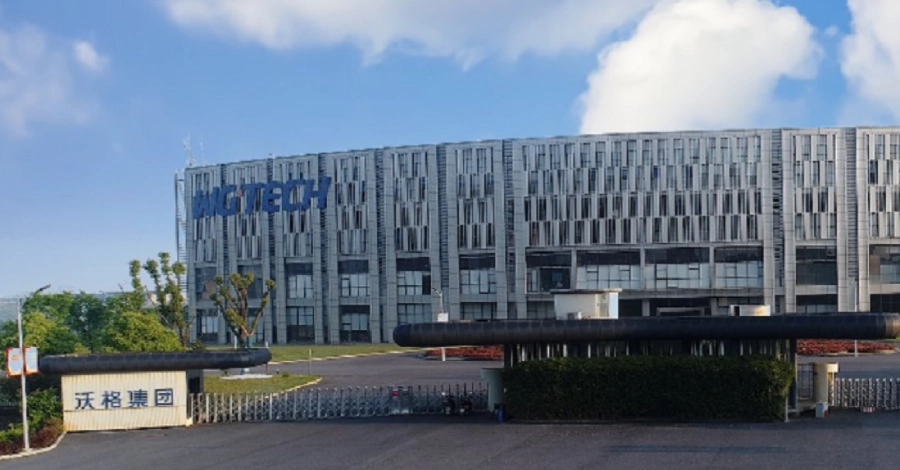

WG Tech JiangXi: Technological Innovation and Strategic Transformation of a Small Giant
August 21, 2026
By 2025, WG Tech JiangXi had grown from a small optoelectronic glass finishing company into an important player in China’s display industry chain.
1.CASE NARRATIVE
By 2025, WG Tech JiangXi had grown from a small optoelectronic glass finishing company into an important player in China’s display industry chain. Through continued accumulation in glass thinning, coating, cutting, glass-based metallization, and TGV technologies, the company had not only broken through foreign technological barriers, but had also gradually advanced its strategic transformation from precision processing to productization, entering new fields such as Mini/Micro LED display and advanced semiconductor packaging.
Yet, as this transformation began to show results, founder Yi Weihua and his management team faced a new strategic question: how could WG Tech convert its existing technological lead into industrial leadership, market leadership, and revenue leadership in global markets? As the company prepared to move forward with globalization, it had to determine how to use its TGV technology and glass-based products to open overseas markets, while also addressing challenges in premium-market development, competition from lower-cost substitute solutions, and the upgrading of its own organizational and managerial capabilities.
To understand how WG Tech reached this point, it was necessary to look back at the structural weakness of China’s display industry and the opportunity Yi Weihua had identified at an early stage.
Historically, liquid crystal display (LCD) technology was a weak link in China’s TV manufacturing supply chain. Despite being the world’s largest TV market, China was massively dependent on imports of LCD screens from South Korea, Japan, and Taiwan which monopolized the industry.
This was an issue identified by WG Tech founder Yi Weihua, who believed that given China’s advantages in its downstream industrial supply chains, the production capacity of the entire LCD industry could be expanded domestically. In the field of optoelectronic [the study and application of light-emitting or light-detecting devices] glass processing in particular, there were a number of opportunities for innovation and the development of Chinese firms.
Yi Weihua and Zhang Fujia co-founded WG Tech JiangXi in 2009 with a focus on Flat Panel Display (FPD) optoelectronic glass processing. Over a 15-year period, WG Tech went from being a small startup to a listed company, breaking down technological barriers and international monopolies and gradually developing into a “small giant” in the optoelectronic glass finishing industry.
2.WG Tech’s cultural DNA: Honoring the heavens and loving the people
After graduating from university in 1996, Yi began work in Shenzhen as a technician, and advanced through the ranks to become a manager and corporate trader. Through his work, he encountered a number of entrepreneurs who had tried and failed to launch projects due to a singular focus on pursuing wealth.
These failures caused Yi to reflect on why people work and what they really want. The conclusion, he felt, was that to be successful in business was sincere ambition rather than simple desire. This is because ambition can be altruistic and require relinquishing the ego to achieve a greater good, transforming personal struggles into common social goals with a greater sense of value and responsibility. This approach became the cultural core of WG Tech.
In 2006, Yi started his own business in touch screen sales, coming into greater contact with the display panel industry. At that time, the development of the display panel industry was stunted, the supply chain was limited in China and the final products were often expensive. Yi saw a business opportunity, particularly when electronic device manufacturer TCL sparked accelerated expansion of the industry.
With this in mind, Yi Weihua and Zhang Fujia founded WG Tech JiangXi Group in December 2009, with Yi saying:
“I want to gather a group of young people with dreams, character and ability to come together to do things that are meaningful to society, as well as enhance the value of the enterprise platform by creating social value, and in turn personal value.”[ Management interview]
3.WG Tech: A “small giant” in the glass finishing industry
Three years after WG Tech mass produced its first batch of products, it was already ranking among the industry’s top three companies. But with huge capital inflows into glass finishing industry in 2013 and 2014, overcapacity became a problem. In 2015, average market prices dropped as much as 40%, the industry saw widespread losses and WG Tech experienced its first decline in sales, although it remained in profit.[https://news.pedaily.cn/201805/431413.shtml]
In the face of market fluctuations, the company took a three-pronged approach to steadying the ship:
- Adjust internal management and improve skills development
- Enhance production capacity and renovate equipment in a timely manner, based on market trends
- Increase R&D for new technologies
As well as these shifts in 2015, the company also completed its listing and capitalization on the NEEQ. And when the market rebounded in 2016, WG Tech went up with it, gradually growing into a world-class optoelectronic glass finishing enterprise.
The foundation of this success, said Yi, depended largely on the company’s unique business philosophy, as well as its differentiated core competitiveness, which included following positive values, providing customers with high-quality service, treating customers’ smallest problems as priorities, building up core technology expertise, etc.
4.Positive values and win-win cooperation with stakeholders
To succeed, WG Tech needed to “become a creator of social value rather than a profit grabber, with social value being the creation of value to all organizations and individuals associated with the company.”
The conference room of WG Tech had a plaque reading “honor the heavens and love the people” hanging on the wall. Which, for the company, meant:
- Respect the land and be open about emissions
- Abide by the law and don’t evade taxes
- Provide generous salaries and benefits to employees, and nurture their growth
- Treat suppliers with respect in exchange for support and trust
- Endeavor to provide the best quality and cost-effective services and products so that customers can be competitive in the market
Yi believed that these values were a key reason why the company took just over 30 days to reach its first PE investment target, compared to the usual 3–5 month cycle, keeping the company afloat amid a cash crunch. They also appealed to larger organizations that value social responsibility, and as a result, TCL Group, WG’s first major customer, transferred all orders from another enterprise to WG Tech.
5.Building core competencies through challenging product requirements
Quality service attracted quality customers, which in turn provided the company with the opportunity to continue to innovate product processes and technology iterations. WG Tech’s factory inspection standards and its product data were among the best in the industry, helping build customer trust, especially with their most demanding products.
Building from their initial expertise in glass thinning, WG Tech gradually expanded their core competencies to include glass coating and cutting among other techniques. By 2017, the company offered a fairly comprehensive solution in the glass finishing field, with vertical integration advantages that reduced processing time and the costs for customers’ supply chain and quality management, while at the same time enhancing WG Tech’s revenues.
In the three key processing areas — thinning, coating, and cutting — WG Tech remained at the cutting edge, being the first to produce many new products and mass produce the most difficult items.
The company also had an innovative and independent R&D system, which ensured high quality and yield in the finishing process, reducing production costs and providing a reliable guarantee for the company’s reputation, growth, and business performance.
6.WG Strategy: Shifting to production
In April 2018, WG Tech was listed on the main board of the Shanghai Stock Exchange (SSE), and the company began to look beyond glass panel processing to actual panel production, a much larger market.
To make the shift, the company built on its technological advantages, integrating its core competencies in R&D and improving the quality of products and services. They first focused on B2B production, then B2C and third would look to globalize their operations.
7.Autonomous innovation: import substitution and creating something from nothing
Since 2019, Yi Weihua, who himself had a technical background, led the R&D team and undertook nearly 80 different research projects. Among the company’s key R&D foci were:
- Technology R&D for consumer terminals (e.g., smartphones)
- R&D related to core competencies such as thinning, coating, and cutting
- Technologies related to 5G communications
WG Tech also developed other interesting products such as a plating layer for the cover of smartphones that helps kill bacteria. But what united all of WG Tech’s R&D projects was the company’s self-reliance, seeking to grow its capabilities internally.
There were obvious risks with the innovation process, especially when done internally, and the direction chosen was not necessarily in line with the requirements of customers. But when the direction was right, it led to incredible breakthroughs. Yi found that industry leaders sometimes deviated from the most innovative path because of their dependency on the needs of major clients.
Yi believed that entrepreneurs needed to have the determination and courage to face difficulties head-on, while insisting on doing the right thing. Between market demands and technological innovation, WG Tech often chose to take the most challenging path for technological innovation.
8.Core technology breakthrough: world-leading glass-based technology
From 2018 to 2024, WG Tech’s proportion of expenditure allocated to R&D showed a gradual upward trend, standing at 2.93%, 4.51%, 5.28%, 4.88%, 6.14%, 4.89%, and 5.42%, respectively.[ The company’s annual reports] In 2021, WG Tech managed to overcome the technical difficulties behind glass-based Mini LED technology, and developed the production capacity for Mini LED glass substrates, which were at the heart of the new generation of display technologies.
Thanks to this breakthrough, WG Tech led the industry and was poised to promote product innovation in Mini LED backlighting, direct-lit display products and advanced semiconductor packaging, and to help develop a larger trillion-dollar market by building the future display and semiconductor businesses.
9.“One Body, Two Wings” production transformation strategy
The two key driving forces for the development of the Mini LED display industry were technological progress and market application. In 2021, WG Tech acquired controlling shares in a number of businesses to expand the company’s reach in optical film materials, new display backlit modules and automotive touch control. It also developed a full industrial chain for Mini LED direct-lit and backlit display modules.
In 2022, the company announced its “one body, two wings” transformation and development strategy. The one body referred to the desire to lead the way in the application of glass-based Mini LED backlit and direct-lit display technologies. One of the wings was the goal of reaching the cutting-edge of TGV technology in the semiconductor packaging field. While the other wing referred to the use of the company’s new technologies and materials to promote the commercialization of new energy applications. The latter was still in progress.
10.Mini LED display technologies
WG Tech’s transformation to production had a key year in 2022, when the company set up a subsidiary, Jiangxi Dehong Display Technology, and began construction of its Mini/Micro LED substrate production project, which opened in October 2023.
Mini/Micro LED was regarded as the third generation of semiconductor display technology after LCD and OLED. WG Tech’s investment in Mini LED-backlit and Micro LED direct-lit display glass was industry-leading, and the company already had mass production capability.
11.Semiconductor Advanced Packaging
The huge demand for computing power for generative AI puts higher requirements on chip performance and advanced packaging technology, and the innovation of chip substrate materials was becoming one of the most important directions for improving chip performance.
Compared with through silicon via (TSV) connection technologies, TGV possessed unique properties such as a low coefficient of expansion, low rise and shrinkage, low board warpage, high patterning accuracy, etc. Moreover, the production process was simple and low-cost, and was not only able to match high-precision technological requirements, but also provided the potential for further cost reduction. Therefore, TGV technology was the key to solving the bottleneck of semiconductor glass-based products.
WG Tech was one of the few manufacturers in the world to master the TGV technology, boasting industry-leading capabilities in glass thinning, TGV, sputtered copper, and microcircuit patterning. It possessed the capability to produce TGV at the micrometer level, achieving a minimum aperture of 5 μm and a minimum thickness of 0.09–0.2 mm to help with lightweight and slim designs.
In 2022, WG Tech established Hubei Tongge Microcircuit Technology Co., Ltd. through a joint venture with Tianmen High-Tech Investment, holding a 30% stake. This venture specialized in R&D and manufacturing within fields such as glass-based chip carriers. In 2024, WG Tech acquired the other 70% equity in Hubei Tongge Micro for RMB 85.73 million, transforming it into a wholly owned subsidiary. The first-phase production line equipment for the company’s glass-based chip carriers/panel-level packaging substrates was completed and installed in 2024, mainly including the PVD coating line as well as core TGV-related process equipment for dry processing, wet processing, and exposure.
12.WG Tech’s success story
WG Tech’s strategic transformation had been a stage-by-stage success. In 2024, the company saw an operating revenue of RMB 2.221 billion ($310 million), representing a year-on-year increase of 22.45%. Within this, the optoelectronic display components business — a key part of the company’s productization transformation — accounted for 56% of revenue, becoming its largest business segment; while the optoelectronic glass precision processing business contributed 28% of revenue. WG Tech had established 14 subsidiaries and branches. With the ongoing implementation of its productization transformation, the company was poised for accelerated growth in the future.
WG Tech’s persistence and approach played a major role in its success:
First, insisting on doing the right thing and creating social value. Founder Yi has repeatedly emphasized that his original intention of doing business was the pursuit of social value. “Insisting on doing the right thing” had always been a priority for WG Tech, and this persistence had also brought a positive impact to the development of the enterprise. In the face of industrial adjustments and setbacks, the assistance from customers and investors helped WG Tech successfully overcome the difficulties. The support it has received was due to the company’s “correct” business values, which generate trust and recognition from stakeholders.
Second, conducting independent R&D to build the core competitiveness of the enterprise.
WG Tech’s leading industry position resulted from its leadership in key technologies. The company insisted on independent research and development, which was arguably the most difficult route to take. In Yi’s view, the most difficult thing about independent R&D was not having the money to invest, but learning how to rebound from failure, how to accumulate experience, and to continue to seek the growth of technological capabilities internally. It took nearly 80 R&D projects, all based on a similar core technology, to reach the TGV breakthrough, allowing WG Tech to become one of the few international manufacturers to master the technology.
Third, shifting to production around core technologies to create a second growth curve. Since its listing on the SSE, WG Tech has continued to make technological breakthroughs around its existing core technologies. The transformation from finishing to production helped WG Tech to enhance its competitive advantage, expand its operations upstream and downstream in the industry value chain and strengthen links with large customers. This deepened its connections with major customers while increasing its influence and bargaining power in the industry. At the same time, the breakthrough in the field of semiconductor packaging was expected to become the company’s second growth curve. The direction and timing of its production transformation were made possible by the company’s forward-looking strategic decisions and direction set out by its top management.
13.WG Tech’s future and challenges
In terms of the future of WG Tech, Yi Weihua said that the completion of its production transformation would inevitably be followed by global expansion. In the process of globalization, TGV technology and glass-based products will drive the company’s growth in international markets. WG Tech had been negotiating with customers at home and abroad to establish relationships. It had realized progress as relevant products had been verified and approved. In terms of its globalization strategy, WG Tech planned to enter ASEAN, Africa, and the Middle East first, and then gradually expand from there after completing its rollout in these peripheral markets.
The shift to production had created a huge market development opportunity but had also been accompanied by considerable challenges.
First of all, before shifting to production, WG Tech’s business philosophy was completely dominated and led by its founder. With the continuous expansion of the company’s business, the management team and its responsibilities were growing, putting greater stress on the company’s management and coordination ability, as well as the company’s abilities in cultural integration, resource integration, technology development and market development, etc.
Seeking seasoned, professional managers with compatible ideas was crucial for the future of WG Tech. At the same time, the company had to clear several organizational challenges. It needed to complete the standardization of organizational management through organizational change, and to improve its use of information technology to enhance the efficiency of decision-making.
Secondly, having endured six years of transformational pain, it was possible that WG Tech’s true challenge still lay ahead. Taking future display as an example, glass-based Mini LED and Micro LED offered superior performance, but their high costs necessitated targeting premium markets.
Simultaneously, as costs were expected to gradually decrease, WG Tech needed to compete for market share against lower-cost alternatives using PCB or aluminum substrates. How will WG Tech convert its existing technological edge into future industrial leadership, market dominance, and genuine revenue supremacy to ultimately become the industry pioneer?
With continued technological innovation, WG Tech believed that increasing volume would eventually lead to a qualitative leap, although the timing of such an industry-wide transition still required patience. Looking at the international market, WG Tech was the earliest company to industrialize glass-based technology and, at present, the only company with full-process capabilities. In the long run, these capabilities were expected to bring WG Tech considerable growth.
However, as a new and potentially transformative technology, uncertainty remained over when customers would adopt this technological path and when the company’s existing technological advantages would begin to translate into incremental revenue.
Such a change would have a huge impact on WG Tech’s scale and volume of production. To realize the full potential of this change, the company would need to adopt a positive strategic vision, incorporating continued win-win cooperation, and plans for competing with global rivals. Implementing this would require a renewal of the company’s internal management and technical teams, along with many other challenges.
Enjoying what you’re reading?
Article Subscribe (1)
CKGSB Report



Our Programs

Emerging Tech Management Week: Silicon Valley
Global Unicorn Program Series
In partnership with UC Berkeley College of Engineering
A technology management program for leaders looking to turn emerging technologies into business opportunities.
Combining proven strategies and cutting-edge research, the program helps participants fuel innovation, seize opportunities in emerging technologies, and catalyze transformation within their organizations. Designed for managers, start-up leaders, and technology investors, it includes visits to venture capital firms and technology companies, alongside mentored group projects.
LocationUC Berkeley, California, United States
Date01 - 06 Nov, 2026
LanguageEnglish
Stanford & Silicon Valley Immersion Program
Global Unicorn Program Series
In partnership with Stanford Engineering Center for Global & Online Education
A Silicon Valley immersion for entrepreneurs, intrapreneurs, and investors leading and scaling AI-driven companies.
The program combines academic learning with visits to AI and robotics labs and Silicon Valley companies, giving participants direct exposure to emerging technologies and the businesses developing and applying them.
LocationStanford University Campus, California, United States
Date06 - 11 Dec, 2026
LanguageEnglish with Chinese Translation

Emerging Markets: Innovation and Scaling for Exponential Growth – ASEAN
A China-focused innovation program for ASEAN executives and business owners responding to the impact of AI on their industries.
Gain insights from leading Chese thinkers in Jakarta, with an optional immersion in China and opportunities to connect with the business leaders driving innovation. The program offers a closer look at how developments in China could affect your industry and business.
LocationJakarta, Indonesia
Date23–26 March 2027
LanguageEnglish (with Chinese translation)
Asia Start: AI + Digital Ecosystem China Expedition
An immersive program for entrepreneurs and executives looking to understand China's AI and digital economy firsthand.
Gain the latest trends and insights, strategies, and connections to overcome challenges and support future business growth in Asia and beyond.
LocationChina (Beijing, Shanghai, Hangzhou & optional Shenzhen)
DateApril 19–24, 2027
LanguageEnglish

Intelligent China: AI, EVs & Smart Manufacturing
A three-part program examining China’s advances in AI, electric vehicles, and smart manufacturing.
Through faculty-led sessions, company visits, and exchanges with industry leaders, gain practical insights for your organization's strategy, partnerships, and investment decisions. Join an individual four-day program or complete the full 12-day series.
LocationBeijing, Shenzhen, Shanghai, and Hangzhou
DateSummer – Winter 2027 (three 4-day programs)
LanguageEnglish