

Why China’s innovative drug industry is taking off
June 24, 2026
How China has become a global pharmaceutical innovator
Research, talent and reform and transforming China’s position in the global pharmaceutical industry
For years, China’s pharmaceutical industry was viewed primarily as a manufacturing base for generic medicines and active pharmaceutical ingredients. Today, however, China is emerging as one of the world’s most important sources of drug innovation.
The transformation has been rapid. Over little more than a decade, China has increased its presence in cutting-edge biomedical research, expanded its share of the global drug development pipeline, attracted record-breaking licensing deals from multinational pharmaceutical companies, and brought homegrown therapies into some of the world’s most tightly regulated healthcare markets.
Taken together, these developments suggest China is no longer simply participating in the global pharmaceutical value chain. It is increasingly helping to shape it.
From basic research to innovation
The foundation of pharmaceutical innovation lies in scientific research. Over the past decade, Chinese researchers have significantly increased their output in the world’s leading medical and scientific journals, narrowing a gap that once seemed insurmountable.
This growth in scientific capacity is now being reflected in drug development. According to McKinsey & Company, China accounted for just 4% of the world’s innovative drug pipeline in 2015. By 2025, that figure had risen to around 30%.
The pace of change is particularly striking in early-stage innovation. Goldman Sachs estimates that Chinese companies contributed 46% of all new drug molecules entering human clinical trials during the first half of 2025, compared with just 17% a decade earlier. Meanwhile, the total number of clinical trials being conducted in China has reached roughly 80% of US levels.
More importantly, China’s strength is increasingly concentrated in some of the industry’s most advanced therapeutic areas.
In next-generation treatments such as stem cell therapies, gene therapies and RNA-based medicines, China accounts for roughly one-third of the global pipeline currently in Phase I and Phase II clinical development. In antibody-drug conjugates (ADCs) and bispecific or trispecific antibodies—areas widely viewed as among the most promising frontiers in cancer treatment—China has become the world’s largest contributor, accounting for more than half of global ADC pipelines and nearly half of all bispecific and trispecific antibody programs.
This represents a significant shift. China’s pharmaceutical sector was once known primarily for adapting or improving existing therapies. Today, Chinese companies are increasingly pursuing original innovation in some of medicine’s most advanced fields.
A vote of confidence from global pharma
Scientific progress alone does not guarantee commercial success. One of the strongest market-based indicators of quality is licensing activity.
In recent years, multinational pharmaceutical companies have increasingly turned to China in search of innovative assets. By 2025, the total potential value of outbound licensing deals involving Chinese innovative drugs exceeded $130 billion, accounting for nearly half of global licensing activity and surpassing the United States for the first time.
A growing number of transactions now reach values once reserved for the industry’s most sought-after assets. Deals involving companies such as CSPC Pharmaceutical, Hengrui Pharmaceuticals, Innovent Biologics and others have entered the tens of billions of dollars.
This reflects a broader shift in industry attitudes. For multinational pharmaceutical companies facing patent expirations and pressure to replenish their pipelines, Chinese innovation has moved from being an optional source of opportunities to an increasingly important strategic necessity.
From laboratory to global markets
The ultimate test of innovation is not licensing revenue but whether a therapy can secure regulatory approval and succeed commercially in overseas markets.
By early 2025, 21 Chinese-developed innovative drugs had received approval in developed markets including the United States, Europe and Japan. Six of these had gained approval from the US Food and Drug Administration (FDA), spanning small-molecule drugs, monoclonal antibodies and cell therapies.
One of the most important milestones was the approval of BeiGene’s Zanubrutinib, the first Chinese-developed original cancer drug to receive FDA approval. By 2025, global sales had reached nearly $4 billion, with the US market accounting for the majority of revenue. The product also helped the company achieve its first full year of profitability.
Another notable example is CARVYKTI, an advanced immune-cell therapy used to treat multiple myeloma developed by Legend Biotech in partnership with Johnson & Johnson. Global sales nearly doubled in 2025, while cumulative patient treatments surpassed 10,000. The therapy also reached profitability, marking the transition from a research-stage asset to a commercially sustainable product.
Together, these examples demonstrate that Chinese companies are increasingly capable of executing across the entire pharmaceutical value chain—from target discovery and clinical development to regulatory approval and global commercialization.
The three pillars of China’s pharma rise
China’s growing competitiveness rests on three mutually reinforcing advantages: investment, talent and industrial infrastructure.
The first is research and development spending. Pharmaceutical R&D investment has expanded rapidly over the past two decades, with leading Chinese drugmakers now investing at levels comparable to international peers. Companies such as BeiGene, Hengrui Pharmaceuticals, Fosun Pharma and CSPC Pharmaceutical now spend billions annually on research.
The second pillar is talent. China is expected to contribute more than one-third of all STEM graduates across G20 countries by 2030. At the same time, a growing number of scientists and executives with experience at multinational pharmaceutical companies and overseas research institutions have returned to China.
Many of the country’s leading biotech entrepreneurs built their careers abroad before returning home to establish companies capable of competing directly with global peers. As a result, pipeline design and development strategies increasingly target international rather than purely domestic standards.
The third pillar is the country’s pharmaceutical services ecosystem.
China has built a comprehensive network of contract research organizations (CROs) and contract development and manufacturing organizations (CDMOs), providing end-to-end support across drug discovery, clinical development and manufacturing. This integrated ecosystem reduces both cost and development timelines.
China’s clinical trial costs are often 50%-60% lower than in the United States, while patient recruitment is significantly faster. At the same time, FDA inspection data suggest that quality standards compare favorably with international benchmarks.
Together, these factors create a systemic competitive advantage that is difficult for other countries to replicate.
A potential price revolution
One consequence of this efficiency is the possibility of dramatically lower treatment costs.
Take CAR-T therapies as an example: In the United States, approved CAR-T treatments are typically priced between $373,000 and $475,000. Comparable Chinese products are generally priced between $140,000 and $180,000.
Importantly, lower prices have not necessarily come at the expense of clinical outcomes. In several major indications, Chinese-developed CAR-T therapies have reported efficacy results comparable to, or in some cases exceeding, those of established international products.
If these trends continue, China could play an important role in expanding access to advanced therapies, particularly in developing countries. At the same time, lower-cost innovation may place increasing pressure on global pharmaceutical pricing models.
Regulation as a competitive advantage
Regulatory reform has also become an important driver of innovation.
Prior to 2015, China’s drug approval system was burdened by significant backlogs and lengthy review times. A series of reforms introduced accelerated review pathways, conditional approvals and breakthrough therapy designations designed to speed the development of innovative medicines.
At the same time, China has developed a parallel system of investigator-initiated trials (IITs), allowing researchers to begin certain clinical studies far more quickly than traditional registration pathways.
Together, these mechanisms have significantly shortened development timelines. Innovative drugs can now progress from initial clinical testing to approval more quickly in China than in either the United States or Europe.
The combination of rapid patient recruitment, accelerated review pathways and investigator-led research has created a development environment that many biotechnology companies increasingly view as globally competitive.
Challenges ahead
Despite its progress, China’s innovative drug sector still faces important challenges.
Basic research spending remains well below US levels, limiting the country’s ability to consistently generate first-in-class scientific breakthroughs. Competition around similar targets also remains intense, creating concerns about duplication of effort.
Global commercialization capabilities remain another weakness. While Chinese companies have become highly successful at licensing assets overseas, relatively few have built extensive international sales networks of their own.
Financing pressures, domestic pricing constraints and geopolitical tensions also create uncertainty. Increased scrutiny of Chinese pharmaceutical companies and healthcare data in overseas markets could complicate future expansion efforts.
Finally, regulators face the challenge of maintaining scientific rigor while accelerating approvals. Ensuring that drugs approved through expedited pathways ultimately deliver meaningful clinical benefits will be critical to maintaining international confidence in China’s regulatory system.
From take-off to long-term leadership
China’s rise in innovative medicines is the result of years of investment across research, talent, industrial infrastructure and regulation. The country has already established a complete innovation ecosystem spanning basic research, drug discovery, clinical development and global commercialization. The next stage will depend on whether Chinese companies can continue to strengthen original innovation, build independent commercial capabilities and navigate an increasingly complex international environment.
The answers to those questions will determine whether China’s pharmaceutical industry remains simply a strong challenger or becomes a long-term global leader.
Enjoying what you’re reading?
Article Subscribe (1)
Professor profile
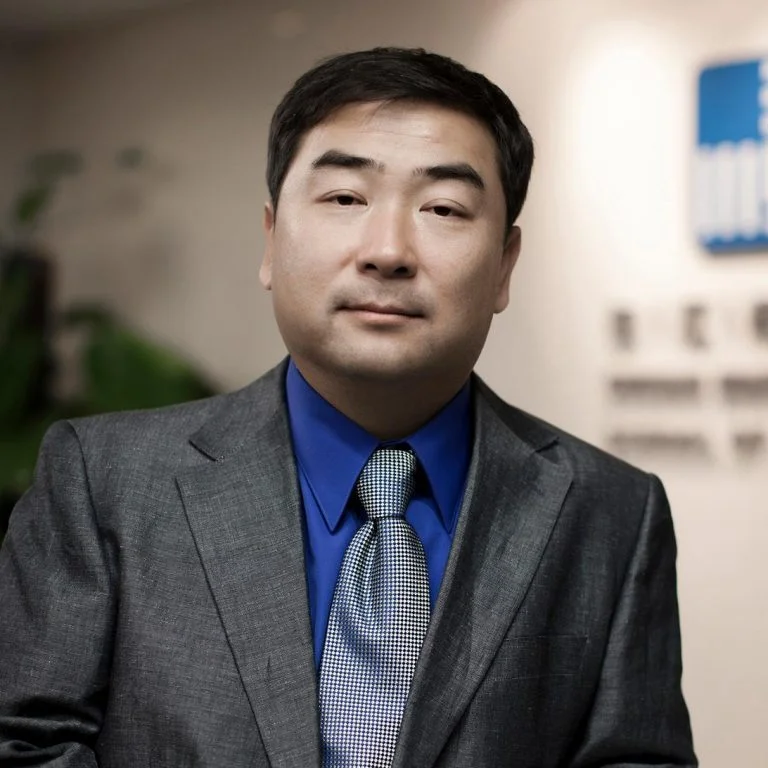
LIU Jing
Professor of Accounting and Finance and Director of Investment Research Department, Cheung Kong Graduate School of Business (CKGSB)
PhD, Columbia University




Related Articles



Our Programs

Emerging Tech Management Week: Silicon Valley
Global Unicorn Program Series
In partnership with UC Berkeley College of Engineering
A technology management program for leaders looking to turn emerging technologies into business opportunities.
Combining proven strategies and cutting-edge research, the program helps participants fuel innovation, seize opportunities in emerging technologies, and catalyze transformation within their organizations. Designed for managers, start-up leaders, and technology investors, it includes visits to venture capital firms and technology companies, alongside mentored group projects.
LocationUC Berkeley, California, United States
Date01 - 06 Nov, 2026
LanguageEnglish

Stanford & Silicon Valley Immersion Program
Global Unicorn Program Series
In partnership with Stanford Engineering Center for Global & Online Education
A Silicon Valley immersion for entrepreneurs, intrapreneurs, and investors leading and scaling AI-driven companies.
The program combines academic learning with visits to AI and robotics labs and Silicon Valley companies, giving participants direct exposure to emerging technologies and the businesses developing and applying them.
LocationStanford University Campus, California, United States
Date06 - 11 Dec, 2026
LanguageEnglish with Chinese Translation

Emerging Markets: Innovation and Scaling for Exponential Growth – ASEAN
A China-focused innovation program for ASEAN executives and business owners responding to the impact of AI on their industries.
Gain insights from leading Chese thinkers in Jakarta, with an optional immersion in China and opportunities to connect with the business leaders driving innovation. The program offers a closer look at how developments in China could affect your industry and business.
LocationJakarta, Indonesia
Date23–26 March 2027
LanguageEnglish (with Chinese translation)

Asia Start: AI + Digital Ecosystem China Expedition
An immersive program for entrepreneurs and executives looking to understand China's AI and digital economy firsthand.
Gain the latest trends and insights, strategies, and connections to overcome challenges and support future business growth in Asia and beyond.
LocationChina (Beijing, Shanghai, Hangzhou & optional Shenzhen)
DateApril 19–24, 2027
LanguageEnglish

Intelligent China: AI, EVs & Smart Manufacturing
A three-part program examining China’s advances in AI, electric vehicles, and smart manufacturing.
Through faculty-led sessions, company visits, and exchanges with industry leaders, gain practical insights for your organization's strategy, partnerships, and investment decisions. Join an individual four-day program or complete the full 12-day series.
LocationBeijing, Shenzhen, Shanghai, and Hangzhou
DateSummer – Winter 2027 (three 4-day programs)
LanguageEnglish