

Four lessons for building companies that last: What Disney and Apple’s succession stories reveal
July 10, 2026
Dean, Dean’s Distinguished Chair Professor of Finance, and Director of the Research Department on Family Business and Wealth Management, Cheung Kong Graduate School of Business (CKGSB)
In April 2026, Apple announced that Tim Cook would step down as CEO in September, after 15 years at the helm. His successor: John Ternus, a veteran hardware engineering executive, who becomes Apple’s third leader after Steve Jobs and Cook.
A month earlier, in March 2026, Josh D’Amaro took over as CEO of Disney — the entertainment giant’s fifth chief executive.
Two iconic companies. Both have now navigated three or more leadership transitions. But the paths they took couldn’t be more different. One broke free of its founder’s shadow and built an institution. The other clung to its founder’s legacy and nearly destroyed itself — before clawing its way back.
Apple and Disney’s contrasting paths point to the same underlying truth: succession is not about finding the right person. It’s about building the right system.
Lesson 1: Break the cult of the founder. Build real institutions.
Startup cultures naturally gravitate towards founder worship. When a company is small, that reverence can be useful — it rallies people, speeds up decisions, provides clarity. But as the business scales, as operations grow complex, as the demand for innovation multiplies, one person’s instincts are no longer enough. You need systematic decision-making. You need diverse talent. You need governance that functions whether the founder is in the building or not.
Walt Disney and his brother Roy founded the company in 1923. Walt was the ultimate founder — he controlled every creative decision, every strategic call. Inside the company, his authority was absolute. The culture was built around one man.
When Walt died in 1966, Roy took over briefly, then passed away himself in 1971. What followed was nearly 20 years of stagnation. The professional managers who ran Disney treated Walt’s every past decision as scripture. “Walt is always right” hardened into dogma. Suggesting otherwise was betrayal. The company’s internal machinery seized up. Talent walked. Morale collapsed.
This would have been damaging in any era. But the 1960s through the 1980s were a period of breakneck change in entertainment — television went mass-market, computer animation emerged, audience tastes splintered. Disney, paralyzed by its own reverence for the past, produced no defining animated hits for two decades. Profitability eroded. Creative talent drained away. Global expansion ground to a halt. The company that had invented modern entertainment had fallen behind the industry.
The turnaround began in 1984. Roy E. Disney — Walt’s nephew, a third-generation family member — pushed for change. Michael Eisner, a professional manager with no emotional attachment to the old ways, became Disney’s third CEO.
Eisner abandoned the old approach.
He built a professional management structure with clear divisions of authority. He greenlit a wave of animated blockbusters, blending computer graphics with Broadway-style storytelling. He commercialized the theme parks, built Disneyland Paris, and pioneered immersive, movie-themed attractions. He created the direct-to-video market for classic animation and built a systematic IP licensing machine. He acquired ABC and ESPN, constructing a full-spectrum media operation.
Over 21 years, Disney’s revenue and market cap multiplied many times over. The company was back on top.
Breaking the cult of the founder matters especially for family businesses. Chinese family firms, shaped by cultural tradition and their stage of development, often carry deep founder-worship cultures. But the environment is changing. The business is growing. If the next generation doesn’t innovate, the company fails. First-generation founders — and their successors — need to build modern governance structures before the handover: clear decision mechanisms, professional HR systems, proper incentive and accountability frameworks. They must deviate from one person calling every shot.
Lesson 2: No succession is perfect. Make sure you can correct course.
Disney lost two decades and still came back. Apple stumbled through Cook’s early years as he found his footing. Both of them survived because they had deep institutional foundations — operational muscle, organizational architecture, accumulated capabilities — that could absorb a rough patch without collapsing.
Founded in 1976, Apple grew from zero to one under the leadership of Steve Jobs for 25 years across two stints — the purest form of founder-driven creation. Tim Cook took over in 2011, inheriting a company at its peak but riddled with structural vulnerabilities. His 15-year transformation turned a founder-dependent startup into an institution. And John Ternus, set to take over in late 2026, inherits a different challenge: closing the technology gap in AI and hardware that has emerged in recent years.
Cook’s tenure is the pivotal chapter. When Jobs died in 2011, the conventional wisdom was merciless: Apple was finished. The caricature wrote itself — Jobs was the visionary, Cook was the operations wonk. Markets braced for “innovation death.” The stock swung wildly. Brand confidence cratered.
The sceptics had reason to worry. Jobs-era Apple was a textbook case of founder-driven governance: no standardized decision-making processes, deep departmental silos, collaboration bottlenecks everywhere. Cook, an operations specialist with no product-design pedigree, faced an immediate internal trust crisis.
The business was frighteningly brittle. The iPhone generated over 60% of revenue. The supply chain was concentrated and fragile. And innovation — Jobs’s innovation — had been entirely personal, driven by one man’s instincts and aesthetic judgements. There was no innovation system. When that man was gone, what would fill the void?
Meanwhile, the smartphone market was turning into fierce competition. Samsung leveraged its full-stack hardware advantage to attack the high end. Huawei and Xiaomi swarmed the mid-to-low range with aggressive pricing and localized services. Android’s ecosystem was maturing fast, eating into iOS market share. Apple had to defend its premium positioning against a pincer movement from all sides.
Cook’s response was deft. He understood his own strengths — and his limits. He wasn’t a product visionary. He was an operator. So he attacked on two fronts simultaneously.
Supply chain first. Cook diversified component sourcing across multiple top-tier manufacturers. He built digital, end-to-end control systems and introduced lean inventory management. He spread production across regions, hedging against geopolitical and trade risks.
Then the product portfolio. He abandoned high-risk, category-defining moonshots — Jobs’s signature move — in favor of steady iteration. iPhones and Macs got better every year. He opened whole new hardware categories: Apple Watch, AirPods. And he engineered the shift from a single-product hardware company to a three-engine profit machine: device sales, subscription services, and ecosystem monetization.
On brand and markets, he held the line on premium positioning, steering clear of price wars while doubling down on quality and user experience. He led Apple’s deep push into China and Southeast Asia, adapting products for local users and building regional market share from scratch.
The results are clear. From 2011 to 2025, Apple’s market cap rocketed from $350 billion to $4 trillion. Revenue and net profit each rose more than 300%. The company maintained its stranglehold on the global premium smartphone market throughout. Cook didn’t just preserve Apple. He made it dramatically bigger — and structurally stronger — than it had ever been under Jobs.
No succession is flawless. Cook moved too slowly on some reforms in the early years, constrained by the weight of Jobs’s legacy. More recently, hardware innovation has slowed, AI investment has lagged, and growth has shown signs of topping out. That’s precisely why Ternus is taking over in 2026.
Ternus joined Apple in 2001. Over 25 years, he has led the development of multiple generations of Apple’s in-house chips and core product lines. He is the company’s technical dean. And he’s 51 — exactly the age Cook was when he took over in 2011. He’s entering his prime as a leader, with the runway to guide Apple through a long-term technology transition.
The three-generation pattern is now complete: Jobs the creator (zero to one), Cook the operator (one to a hundred), Ternus the technologist (closing the gap, adapting to the AI era). Different leaders. Different mandates. One continuous evolution.
For family businesses, governance structures, organizational design, and operating systems aren’t optional luxuries. They’re insurance. Without them, a single botched succession can tip a company into irreversible decline.
Lesson 3: Know what to keep and what to change.
Breaking the founder cult doesn’t mean abandoning the company’s DNA. Values are the genetic code. Abandon them, and “built to last” becomes meaningless.
The key is knowing what to preserve and what to change. Preserve the values. Evolve the capabilities.
Cook practiced selective inheritance at Apple: preserve the core values, transform everything else.
He kept Apple’s DNA intact — the obsession with product excellence, the user-first ethos. But he dismantled Jobs’s one-man rule. He decentralized authority across R&D, supply chain, marketing, and finance, building a genuine leadership team. He retained Apple’s best designers and engineers while aggressively hiring commercial and operational talent. He broke down departmental walls and built cross-functional collaboration into the company’s daily rhythm. He channeled the organization’s energy away from founder worship and towards a single shared goal: building the best products on earth.
The founder creates. The second-generation leader builds systems and commercial foundations. The third attacks the next technology frontier. Different jobs, same values.
Lesson 4: Industry context shapes succession choices.
Creative and cultural businesses need leaders who can sustain the creative spark and protect IP value — not leaders who freeze a particular formula. They also need to balance commercial returns with content quality. Over-commercialize, and you torch the brand.
High-tech companies face the opposite problem: rapid iteration, short cycles. They need institutionalized innovation systems, not lone geniuses. They need leaders who can balance preservation with relentless renewal.
Disney’s third CEO Eisner’s approach had flaws. Over-commercialization ate into creative quality. Management infighting intensified. Overseas park missteps and cost overruns dragged on growth. By 2005, Disney needed another reset.
Robert Iger stepped in as the fourth CEO. His strategy had three pillars: IP acquisition, ecosystem expansion, and digital transformation. He bought Pixar, Marvel, and Lucasfilm — not just acquiring franchises but importing creative cultures and technical capabilities. He opened Shanghai Disney Resort, locking in Disney’s global physical footprint. He launched Disney+, pushing the company into direct-to-consumer streaming. Under Iger, Disney’s market cap nearly tripled in 15 years.
Then came a setback. Iger stepped down in 2020, handing the reins to Bob Chapek. However, Chapek struggled to gain traction. Two years later, the board brought Iger back — at 71 — to repair the damage. He restored creative autonomy, recalled departed talent, streamlined the organization, cut costs, and turned the streaming business around.
In early 2026, Josh D’Amaro became CEO. His brief: focus Disney on parks, streaming, and IP monetization. The post-Iger era had begun.
Disney’s arc is stark: a second generation that worshipped the founder and nearly wrecked the company; a third-generation reformer who shattered the cult; a fourth-generation leader who extended the renovation. Twenty lost years, then recovery. The pattern is unambiguous. Holding onto the past nearly destroyed the company; reinvention brought it back.
Most Chinese family businesses operate in traditional industries. Deep industry knowledge and supply-chain relationships are critical assets that must be handed down. But in an era of digital transformation and global competition, successors must also be able to lead technological upgrading and international expansion. That’s no longer optional.
The key lesson from both Disney and Apple is clear. Succession is never a one-time transfer of power. It is continuous strategic iteration. It is ongoing capability renewal. Public companies learn this the hard way. Family businesses must learn it, too.
The formula is demanding but not mysterious: hold fast to your core values, relentlessly upgrade your key capabilities, and build the institutional scaffolding — the governance, the strategy, the operating systems — that lets the company evolve beyond any single leader.
That’s how you build something that actually lasts.
This article originally appeared in the June 2026 issue of Family Business magazine.
Enjoying what you’re reading?
Article Subscribe (1)
Professor profile
LI Haitao
Dean, Dean's Distinguished Chair Professor of Finance, and Director of Research Department on Family Business and Wealth Management, Cheung Kong Graduate School of Business (CKGSB)
PhD, Yale University





Our Programs

Emerging Tech Management Week: Silicon Valley
Global Unicorn Program Series
In partnership with UC Berkeley College of Engineering
A technology management program for leaders looking to turn emerging technologies into business opportunities.
Combining proven strategies and cutting-edge research, the program helps participants fuel innovation, seize opportunities in emerging technologies, and catalyze transformation within their organizations. Designed for managers, start-up leaders, and technology investors, it includes visits to venture capital firms and technology companies, alongside mentored group projects.
LocationUC Berkeley, California, United States
Date01 - 06 Nov, 2026
LanguageEnglish
Stanford & Silicon Valley Immersion Program
Global Unicorn Program Series
In partnership with Stanford Engineering Center for Global & Online Education
A Silicon Valley immersion for entrepreneurs, intrapreneurs, and investors leading and scaling AI-driven companies.
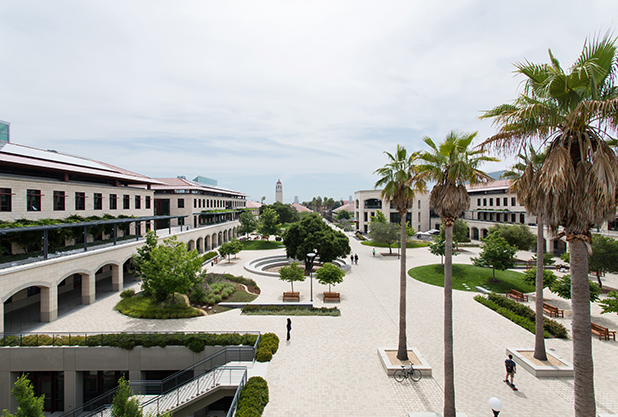
The program combines academic learning with visits to AI and robotics labs and Silicon Valley companies, giving participants direct exposure to emerging technologies and the businesses developing and applying them.
LocationStanford University Campus, California, United States
Date06 - 11 Dec, 2026
LanguageEnglish with Chinese Translation

Emerging Markets: Innovation and Scaling for Exponential Growth – ASEAN
A China-focused innovation program for ASEAN executives and business owners responding to the impact of AI on their industries.
Gain insights from leading Chese thinkers in Jakarta, with an optional immersion in China and opportunities to connect with the business leaders driving innovation. The program offers a closer look at how developments in China could affect your industry and business.
LocationJakarta, Indonesia
Date23–26 March 2027
LanguageEnglish (with Chinese translation)

Asia Start: AI + Digital Ecosystem China Expedition
An immersive program for entrepreneurs and executives looking to understand China's AI and digital economy firsthand.
Gain the latest trends and insights, strategies, and connections to overcome challenges and support future business growth in Asia and beyond.
LocationChina (Beijing, Shanghai, Hangzhou & optional Shenzhen)
DateApril 19–24, 2027
LanguageEnglish

Intelligent China: AI, EVs & Smart Manufacturing
A three-part program examining China’s advances in AI, electric vehicles, and smart manufacturing.
Through faculty-led sessions, company visits, and exchanges with industry leaders, gain practical insights for your organization's strategy, partnerships, and investment decisions. Join an individual four-day program or complete the full 12-day series.
LocationBeijing, Shenzhen, Shanghai, and Hangzhou
DateSummer – Winter 2027 (three 4-day programs)
LanguageEnglish