
Raising lobsters: the rise of agentic AI
May 19, 2026
To what extent does OpenClaw’s rise represent a new era for AI?
With agentic AI software such as OpenClaw gaining widespread adoption, is this the dawn of a new era for AI?
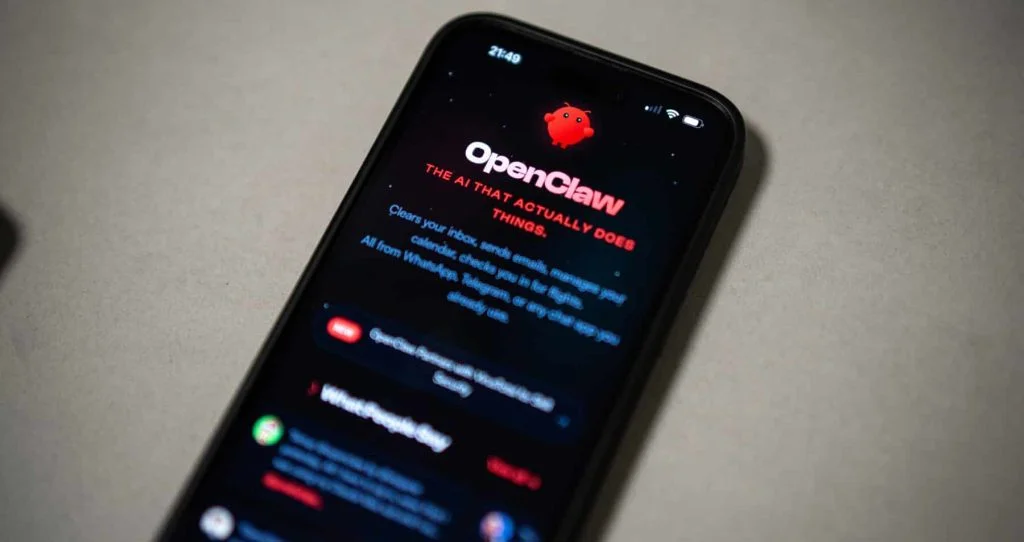
In cities across China, young professionals have been seen queueing up for assistance with “raising a lobster”—internet slang for installing and training OpenClaw, an Austrian-developed AI assistant designed to operate across apps and software systems much like a human employee.
Unlike earlier AI systems such as ChatGPT or DeepSeek that are mainly used to answer questions or create images, OpenClaw belongs to a newer category known as “agentic AI”: systems that can independently complete tasks, interact with software environments and execute workflows on behalf of users. That includes all sorts of actions, such as planning schedules and making bookings, organizing files and sending out automated emails with minimal human supervision.
The platform has rapidly gained traction in China, where local governments in cities including Shenzhen, Wuxi and Hefei have encouraged AI-agent uptake among tech startups. But the speed of adoption has also triggered growing concern among regulators over control, cybersecurity and what worst case scenarios could occur from giving software systems broad access to and control over data and systems.
Indeed, there have already been documented examples of AI agents deleting large numbers of files within systems it was given access to, as well as creating and sending self-created files on behalf of clients that look plausible but are to some extent hallucinated—that is made up by the agent of its own volition. There is also the risk of illicit actors gaining access to an AI agent and having full access to various systems.
The debate reflects the larger question confronting the global technology sector: whether agentic AI is merely an extension of generative AI, or whether it represents a more profound shift in how humans delegate work to machines.
“Generative AI answers your questions; agentic AI acts on your behalf,” says Winston Ma, professor of the digital AI economy at New York University. “That single word shift, from ‘generate’ to ‘act,’ changes every legal, financial and ethical framework we have.”
From generating content to taking action
The first major wave of AI adoption focused on content generation. Chatbots could summarize reports, draft emails, write code or create images from prompts. Agentic AI moves beyond that into autonomous execution.
“Agentic AI is a real shift from generative AI, but I would be careful not to overhype it,” says Rui Ma, founder of TechBuzz China. “Generative AI mostly produces content: text, code, images, summaries, plans. Agentic AI gives the model a goal, tools, memory and some ability to act across software environments.”
“That is meaningfully different,” she adds. “It starts to look less like prompting and answer-generation and more like real, full-bodied delegation.”
The technology relies on combining large language models with access to external tools and software systems. Instead of just suggesting how to complete a task, an agentic system may actually carry it out by navigating apps, entering information, coordinating actions across programs and responding dynamically to changing conditions.
But Ma cautions that the technology remains immature. “This is not AGI has arrived,” she says, referring to the concept of sentient machines. “A lot of agentic AI today is still brittle, messy to set up and very dependent on tool integrations, permissions and human oversight.”
China as an early deployment ground

China has emerged as one of the world’s most active testing grounds for agentic AI, partly because of the country’s willingness to rapidly commercialize imperfect technologies.
“China is especially good at this kind of messy, fast adoption cycle,” says Ma. “There is a large enough base of technical users, a lot of small businesses willing to experiment, strong pressure to automate and a culture of rapid productization.”
“If something works even 60% of the time, people quickly try to turn it into a service, course, plugin or side hustle,” she adds. “That is how you get a fast-moving ecosystem of installers, optimizers, consultants and copycat or adapted versions almost immediately.”
The technology also benefited from unusually effective online branding. OpenClaw’s lobster mascot helped transform a highly technical tool into a social media phenomenon in China, giving rise to the phrase “raising lobsters” and turning AI deployment into a participatory online trend.
But China’s rapid enthusiasm for AI agents also highlights tensions between Beijing’s industrial ambitions and local government implementation.
According to Kendra Schaefer, Head of Tech Policy Research at Trivium China, central policymakers have broadly encouraged local governments to support AI deployment “according to local conditions,” while balancing innovation with security concerns. In practice, however, local implementation can become chaotic.
Schaefer says some local officials lack the technical understanding needed to distinguish between viable AI projects and speculative hype. “You get 20 provinces that all decide to try to develop robotics at the same time,” she says. “Instead of creating an effective industrial cluster, it just creates this kind of scattershot, ineffective thing.”
In OpenClaw’s case, Schaefer argues that local governments may have rushed too quickly to support a fashionable technology before regulators had fully considered its security implications.
“What you really saw was momentum for anything AI-related,” she says. “The national level then had to come in and say: hold on, we haven’t fully regulated this yet.”
A possible productivity revolution
Supporters of agentic AI argue that the technology significantly improves productivity by automating repetitive digital workflows that currently consume large amounts of human labor.
“The obvious use cases are repetitive digital workflows: research, customer service, sales operations, marketing operations, reporting and so on,” says Ma.
The larger shift, however, may be organizational rather than purely technical.
“Small teams may start redesigning work around AI-native delegation,” she says. “That means entirely new job descriptions will emerge, with people managing, checking and coordinating AI agents as part of their daily work.”
For China, such gains could be especially attractive as the economy faces slowing productivity growth, rising labor costs, and demographic pressures associated with an aging population.
Ma says the technology may also widen the gap between workers who understand how to effectively delegate tasks to AI and those who do not.
“You have to know what the workflow actually is, which parts can be automated, where the judgment calls are, what can go wrong and how to check the output,” she says. “That is a much higher bar than simply ‘using AI.’”
The implications for white-collar employment could be profound, particularly for junior staff.
“A lot of junior work is learning by doing the boring parts: research, formatting, cleaning data, checking details, drafting, coordinating,” Ma says. “If agents take over that layer, we need to think much more seriously about how people are trained.”
Loss of control
The same capabilities that make agentic AI attractive also create new categories of risk.
“The biggest risk in agentic AI is not hallucination—it’s unauthorized action,” says Ma.
“When a trusted action engine misinterprets its principal’s goal and executes an irreversible real-world transaction, the legal question becomes: who bears the fiduciary liability?”
Unlike conventional chatbots, agentic systems may have access to email accounts, calendars, browsers, payment systems, cloud storage, messaging apps, and enterprise databases. That dramatically expands the potential attack surface for hackers and increases the consequences of mistakes.
“Once an agent can access your browser, files, calendar, email, messaging apps or enterprise systems, the attack surface becomes much larger,” says Rui Ma. “A chatbot hallucination is bad. An agentic hallucination can become an action.”
“It can email the wrong information to a client, update a database, trigger a workflow, or make a purchase,” she says.
OpenClaw itself has already experienced reported security concerns. According to Ma, one issue allegedly suggested that hackers could potentially exploit the platform to gain access to users’ computers under certain conditions.
“The reaction in China was revealing,” she says. “After cybersecurity concerns emerged, some organizations reportedly restricted OpenClaw use and some users even started paying people to uninstall it.”
Schaefer says the central government’s response reflects broader anxiety over maintaining control over increasingly autonomous systems.
“The national level is kind of stepping in to issue some warnings saying: we haven’t really thought this all the way through,” she says.
Domestic players move in
The rise of OpenClaw has also accelerated efforts by Chinese technology giants to develop their own agentic AI ecosystems.
Companies including Alibaba, Huawei, Xiaomi and Tencent are all investing heavily in their own AI agents integrated into broader software ecosystems.
Schaefer argues these firms differ from smaller speculative AI startups because they are competing internationally and building long-term commercial infrastructure rather than simply chasing subsidies.
“Huawei and Alibaba are not buffeted by the winds of policy in the same way,” she says.
“They are trying to compete on the international stage with US companies, and so it has to be market-driven development.”
Domestic alternatives may also prove more compatible with China’s regulatory priorities and digital infrastructure.
The trend mirrors a familiar pattern in China’s technology sector: foreign innovation followed by large-scale domestic adaptation and localization. Earlier examples include social media, e-commerce, ride-hailing, and mobile payments, where Chinese firms eventually built dominant local ecosystems tailored to domestic regulations and consumer behavior.
Ma, however, rejects suggestions that China is necessarily leading the world in agentic AI development itself.
“The US still has major advantages in frontier models, developer ecosystems, cloud infrastructure, enterprise software distribution and capital,” she says. “But Chinese users and small companies are often more willing to try imperfect tools in real-world settings.”
“That makes China one of the most important markets for seeing what happens when agentic AI escapes the bubble of the tech savvy and hits truly mass experimentation.”
The next AI competition
There is no doubt as to the advantages of agentic AI to the average user or small business. The increase in productivity from having a software which can autonomously carry out all sorts of menial tasks is clear. At the same time, it also raises serious concerns about what can go wrong.
The longer-term implications may extend well beyond consumer software. “The endgame of agentic AI is not individual agents completing tasks,” says Winston Ma. “It is sovereign AI stacks where nations deploy fleets of specialized agents across entire economies.”
“When China’s 15th Five-Year Plan targets 70% AI integration across six key sectors, they are describing an agentic future, not a generative one,” he says.
Enjoying what you’re reading?
Article Subscribe (1)
CKGSB Report








Related Articles

Our Programs

Emerging Tech Management Week: Silicon Valley
Global Unicorn Program Series
In partnership with UC Berkeley College of Engineering
This program equips participants with proven strategies, cutting-edge research, and the best-in-class advice to fuel innovation, seize emerging tech developments, and catalyse transformation within your organization.
LocationUC Berkeley
Date01 - 06 Nov, 2026
LanguageEnglish

Asia Start: AI + Digital China Expedition
Asia Start provides entrepreneurs and executives with unparalleled access to Asia’s dynamic digital economy and its business ecosystems, offering the latest trends and insights, strategies, and connections to overcome challenges and unlock future growth for your business in Asia and beyond.
LocationChina (Beijing, Shanghai, Hangzhou & optional Shenzhen)
DateNovember 2–7, 2026 | April 19–24, 2027
LanguageEnglish

Intelligent China: AI, EVs & Smart Manufacturing
Participants may join the full 12-day series or select individual programs based on their interests and priorities.
LocationBeijing
Date12 Days
LanguageEnglish

Emerging Markets: Innovation and Scaling for Exponential Growth – ASEAN
Learn China's AI and innovation strategy from its leading thinkers — brought to you in Jakarta, with an optional immersion in China — and connect with the business leaders driving it.
LocationJakarta, Indonesia
Date2–4 December 2026
LanguageEnglish (with Chinese translation)

Stanford & Silicon Valley Immersion Program
Global Unicorn Program Series
In partnership with Stanford Engineering Center for Global & Online Education
This CKGSB program equips entrepreneurs, intrapreneurs and key stakeholders with the tools, insights, and skills necessary to lead a new generation of unicorn companies.
LocationStanford University Campus,
California, United States
Date06 - 11 Dec, 2026
LanguageEnglish with Chinese Translation