
Building beyond borders: Holley’s global industrial ecosystem
September 08, 2026
How Holley’s shift from exporting to localized industrial ecosystems is creating opportunities for Chinese manufacturers and host economies alike.
How Holley is building industrial ecosystems across global markets
As tariff barriers rise and global supply chains are reconfigured, Chinese manufacturers face increasingly complex decisions about where and how to operate internationally. Choosing between Southeast Asia, Europe, the Americas or emerging markets is no longer simply a question of manufacturing costs. Political stability, supply chains, market access and the long-term sustainability of an investment all need to be considered.
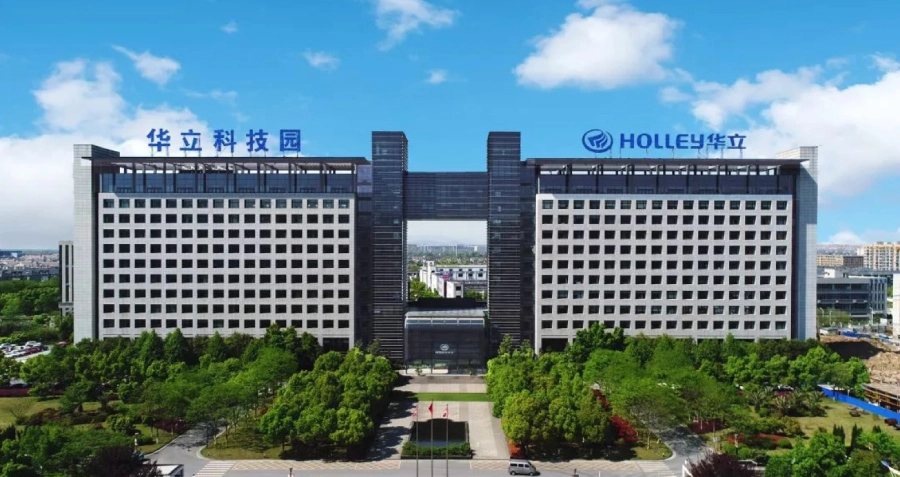
Holley Group offers a case study in how one Chinese manufacturer has responded. Founded in 1970, the Zhejiang-based company recorded revenue of RMB 24.8 billion in 2024, while its products are now sold in more than 120 countries and regions. Over three decades, Holley’s international strategy has evolved from exporting electricity meters to establishing local manufacturing and, eventually, building overseas industrial platforms for other companies.
At the center of this evolution is an increasingly localized model of international expansion. Holley’s overseas operations have required the company to adapt to host-country laws, tax systems, labor policies and cultural differences while integrating supply chains locally. Its industrial parks have taken the process further by encouraging local employment, developing local supply chains and promoting deeper localization of capital, talent and technology.
The scale of this model is most visible in Thailand. The Thai-Chinese Rayong Industrial Zone has attracted around 280 Chinese manufacturers, representing approximately $5.5 billion in cumulative investment and more than $36 billion in cumulative industrial output, while creating more than 60,000 jobs.
From exporting to local manufacturing
Holley’s globalization began with its core electricity meter business. In 1995, the company obtained independent import and export rights and established an international trade department, allowing it to enter overseas markets under its own brand.
By around 2000, however, Holley began experimenting with what it called a “sell where you produce” model: establishing manufacturing capacity in target markets to support the expansion of its sales network.
Thailand became the first testing ground. Holley initially rented factory space in Bangkok and used semi-knocked down and completely knocked down assembly methods to manufacture products for the local market. After testing the market, it purchased land in the Amata City Chonburi Industrial Estate and constructed its own manufacturing base in 2004. Although localized production increased manufacturing costs to some extent, it also supported higher pricing and strengthened the company’s competitiveness in the local market.
Holley’s experience in Thailand convinced the company that selling products alone would not be sufficient to support its international development. Production, service and investment needed to move closer to overseas markets.
This brought benefits for Holley, including market and revenue growth, but it also required the company to become embedded more deeply in its host economy. Holley accumulated experience dealing with local laws, taxation, labor policies and cultural differences while promoting the localization of its supply chains.
From factory to industrial platform
As Holley accumulated overseas experience, its management concluded that the capabilities it had developed could be applied more widely.
At the time, many Chinese manufacturers—particularly small and medium-sized enterprises—faced significant obstacles when investing overseas. Regulatory environments were unfamiliar, compliance was costly and reconstructing supply chains was difficult. Holley therefore began exploring whether its overseas experience could be turned into a platform that lowered these barriers for other companies.
The idea was first put into practice in Thailand. After establishing its own manufacturing operations, Holley partnered with a Thai industrial park developer to launch the Thai-Chinese Rayong Industrial Zone in 2005. The project marked a shift from building factories for Holley itself to providing a platform through which groups of manufacturers could establish overseas operations.
The park subsequently developed beyond industrial real estate. Between 2007 and 2014, its business was primarily based on selling and leasing land and factories. From 2015, it began developing a wider range of services for companies. In its current phase, the objective is to encourage companies in the park to establish regional headquarters and deepen the localization of capital, talent and technology.
Holley describes this evolution as a transition from being a provider of physical space to becoming a builder of an industrial ecosystem.
As the platform model matured, Holley made overseas industrial parks a core part of its globalization strategy. In 2020, it established Holley Overseas to coordinate overseas industrial parks, international industrial investment and cross-border services. The company now describes its target as a ‘Three Large, Three Small’ global park network. Alongside its established large-scale parks in Thailand and Mexico, it began construction of the Central Asia Huata Industrial Park in Uzbekistan in 2024. It is also advancing a China–Vietnam border industrial park, while projects in Central and Eastern Europe and North Africa remain at the preparation or early planning stage.
The approach also gives host economies a more direct stake in the investment. Beyond the more than 60,000 jobs created by companies in the Rayong park, Holley has encouraged companies operating in its overseas parks to increase local employment and participate in community development through job creation and public-interest activities. The aim is to strengthen their integration into local society and reduce long-term operating friction.
Mexico and the changing global supply chain
As international trade conditions changed, Holley also recognized the limitations of relying on a single overseas production base.
Manufacturing in Thailand did not automatically eliminate exposure to trade disputes. US anti-dumping measures affecting tires produced in Thailand, for example, demonstrated that changing a product’s country of origin could not necessarily remove trade barriers in sensitive industries.
For companies targeting the US market, Mexico emerged as another option. Holley began planning the Hofusan Industrial Park in Mexico in 2015 and formally began attracting tenants in 2018, as escalating China-US trade tensions encouraged manufacturers serving North America to consider nearshore production.
Mexico combined lower manufacturing costs with geographic proximity to the US and access to the North American industrial system through the United States-Mexico-Canada Agreement. Furniture manufacturers Sunon and Man Wah were among the companies that subsequently moved production lines into the park.
The park has since attracted more than 40 companies and approximately $2 billion in investment, developing clusters in home appliances and automotive components and creating around 10,000 jobs.
The Mexico experience also illustrates the risks inherent in international manufacturing. Changes in US tariff policy and the regional-content requirements of USMCA can affect both market access and production costs for companies operating there. Holley’s case therefore identifies US-Mexico policy changes as an important variable in the park’s development.
Choosing where to invest
Holley’s experience identifies five major factors in overseas location decisions: geopolitics, the business environment, industrial and supply-chain capabilities, production costs and market accessibility.
These factors do not always point in the same direction. Choosing a location is therefore a process of balancing competing considerations rather than simply identifying the country with the lowest costs.
The company’s European and Central Asian plans illustrate how that network can adapt when conditions change. Holley initially identified Ukraine as a potential Central and Eastern European foothold because of its industrial base, land resources and relatively low manufacturing costs. The war that began in 2022 slowed those plans, but Holley has not abandoned the proposed Ukraine park. In parallel, it turned to Uzbekistan as another node linking China, Central Asia and Europe. Uzbekistan’s close economic ties with China, established manufacturing base and improving transport links—including the China–Kyrgyzstan–Uzbekistan railway—supported the decision to begin developing the Central Asia Huata Industrial Park there in 2024.
Thailand provides a clear example. When Holley first entered the country, labor and industrial land were more expensive than in Cambodia or Vietnam. Holley nevertheless prioritized stability and security over the lowest possible costs. Thailand also provided policies supporting foreign investment, including provisions allowing foreign ownership of land in certain industrial zones and incentives such as tax reductions and equipment-import benefits.
Existing industrial ecosystems are another major consideration. Holley generally favors locations where companies can integrate into established industrial networks rather than creating production systems entirely from scratch.
Thailand’s Eastern Economic Corridor already contains significant automotive, electronics and petrochemical clusters. Rayong itself hosts multinational manufacturers and their suppliers. Mexico similarly has mature automotive and home-appliance industries, particularly around Nuevo León and Monterrey.
Connecting with these existing industrial networks allows companies entering Holley’s parks to access supply chains more rapidly, reduce initial operating costs and contribute to further industrial clustering.
Looking beyond the lowest cost
Holley’s location strategy also challenges the assumption that manufacturers expanding overseas simply seek the cheapest labor.
The company instead emphasizes overall cost-effectiveness, balancing costs against workforce quality, infrastructure, industrial capabilities and institutional stability, as was the case with Thailand.
Infrastructure also matters. The Rayong park is close to Laem Chabang deep-sea port and therefore connected to international shipping networks. Mexico, meanwhile, combines relatively competitive costs for ordinary workers, land and energy with a workforce shaped by longstanding integration with the North American industrial system. Its proximity to the US also reduces logistics time and costs.
Holley’s approach is therefore to balance cost, efficiency and stability rather than pursue the lowest-cost location.
Localization as part of risk management
Establishing a factory is only the beginning of overseas investment. Holley’s experience has shown that maintaining stable operations in different regulatory and cultural environments can be the greater challenge.
Corporate law, taxation, environmental requirements and labor rules differ significantly between markets. Mexico, for example, has a complex labor system in which unions play an important role, while foreign investors in Thailand must navigate administrative procedures relating to land use and approvals.
Holley has responded by developing a “one-stop” service system within its industrial parks, covering company registration, tax consultation, labor compliance, environmental assessments, construction permits and relations with local governments.
Localization also extends to management and community relations. Holley’s experience emphasizes the need for companies to understand local business practices, social norms and cultural traditions. It has therefore promoted local recruitment and community engagement among companies in its parks.
Supply chains and infrastructure present another set of risks. Holley has sought both to strengthen infrastructure within its parks and to encourage cooperation between companies and the development of local supply chains, gradually reducing reliance on external supply systems.
From manufacturer to ecosystem builder
Holley Chairman Wang Licheng argues that international expansion should not simply be understood as relocating manufacturing. Instead, it involves allocating markets, capital, talent and technology across different locations.
Holley’s own evolution reflects that idea. Its international development began with exporting products, progressed through local manufacturing and eventually produced a business focused on providing infrastructure and services to other companies.
That transition has been costly. Holley estimates that the trial and error involved in more than three decades of globalization has cost the company as much as $70 million.
Nor does the company regard any single market as permanently secure. Thailand faces the potential spill-over from trade barriers, while Mexico is exposed to changes in US policy. The war in Ukraine slowed Holley’s planned Central and Eastern European Park; Uzbekistan has instead become an additional Central Asian node in the wider network.
The result is a model based increasingly on networks rather than individual factories. Holley now describes its core capability as organizing and coordinating cross-border industrial ecosystems, providing standardized industrial parks and infrastructure alongside legal, compliance and local business support.
The company’s experience also points to a broader principle for international investment. Holley Chairman Wang has argued that companies operating overseas need to learn to see cooperation from the other side’s perspective: long-term mutually beneficial relationships require understanding what partners need and taking their interests into account.
The numbers from Thailand and Mexico provide the clearest illustration of what that can mean in practice. Overseas investment has given Chinese manufacturers new production bases and access to international markets, while the industrial parks have brought billions of dollars of investment and tens of thousands of jobs to their host economies.
In an increasingly uncertain global economy, Holley’s experience suggests that overseas expansion is becoming less about simply exporting products from one country to another and more about building industrial networks across several markets. Whether this platform-based approach can be replicated and scaled in different environments remains something that only time and practice will determine.
Enjoying what you’re reading?
Article Subscribe (1)
CKGSB Report





Related Articles
Our Programs

Emerging Tech Management Week: Silicon Valley
Global Unicorn Program Series
In partnership with UC Berkeley College of Engineering
A technology management program for leaders looking to turn emerging technologies into business opportunities.
Combining proven strategies and cutting-edge research, the program helps participants fuel innovation, seize opportunities in emerging technologies, and catalyze transformation within their organizations. Designed for managers, start-up leaders, and technology investors, it includes visits to venture capital firms and technology companies, alongside mentored group projects.
LocationUC Berkeley, California, United States
Date01 - 06 Nov, 2026
LanguageEnglish
Asia Start: AI + Digital China Expedition
An immersive program for entrepreneurs and executives looking to understand China's AI and digital economy firsthand.
Gain the latest trends and insights, strategies, and connections to overcome challenges and support future business growth in Asia and beyond.
LocationChina (Beijing, Shanghai, Hangzhou & optional Shenzhen)
DateNovember 2–7, 2026 | April 19–24, 2027
LanguageEnglish

Intelligent China: AI, EVs & Smart Manufacturing
A three-part program examining China’s advances in AI, electric vehicles, and smart manufacturing.
Through faculty-led sessions, company visits, and exchanges with industry leaders, gain practical insights for your organization's strategy, partnerships, and investment decisions. Join an individual four-day program or complete the full 12-day series.
LocationBeijing, Shenzhen, Shanghai, and Hangzhou
Date December 2026 – July 2027 (three 4-day programs)
LanguageEnglish
Emerging Markets: Innovation and Scaling for Exponential Growth – ASEAN
A China-focused innovation program for ASEAN executives and business owners responding to the impact of AI on their industries.
Gain insights from leading Chese thinkers in Jakarta, with an optional immersion in China and opportunities to connect with the business leaders driving innovation. The program offers a closer look at how developments in China could affect your industry and business.
LocationJakarta, Indonesia
Date2–4 December 2026
LanguageEnglish (with Chinese translation)
Stanford & Silicon Valley Immersion Program
Global Unicorn Program Series
In partnership with Stanford Engineering Center for Global & Online Education
A Silicon Valley immersion for entrepreneurs, intrapreneurs, and investors leading and scaling AI-driven companies.
The program combines academic learning with visits to AI and robotics labs and Silicon Valley companies, giving participants direct exposure to emerging technologies and the businesses developing and applying them.
LocationStanford University Campus, California, United States
Date06 - 11 Dec, 2026
LanguageEnglish with Chinese Translation