


How companies in China can escape the race to the bottom
June 16, 2026
In China, there is a word for the kind of competition where everyone works harder and harder but no one ends up better off: involution. Firms cut prices, copy each other, and pour in more effort, yet profits keep shrinking. It is exhausting, and it is everywhere—so much so that in 2026 the government made cleaning it up an official priority, writing the goal of “rectifying involutionary competition” into its annual work report.
The market is sending the same message. When China’s statisticians updated the basket of goods used to track consumer prices in early 2026, they gave less weight to cheap, traditional products and more to things that signal an economy moving upmarket—smart devices, electric-vehicle charging, online healthcare. Recent price data tells the same story: prices for basic manufactured goods are flat, while prices for services and experiences are rising. The takeaway is simple. Chinese shoppers increasingly want quality, and the old playbook—squeeze your suppliers, sell cheap, sell a lot—is running out of room.
Governments can help by regulating competition and shutting down excess factory capacity. But a company stuck in a brutal market cannot afford to sit and wait for that to happen. For an individual firm, escaping involution is not about following rules. It is about survival—and it raises one hard question: how do you make your business genuinely harder to copy?
This guide draws on six Chinese companies we have studied closely—Gaofan, Ziroom, Milkground, OATLY, Linglong Tire, and Suqian Liansheng. Their experiences point to three moves that, taken together, let a company break out: redefining what it sells, rebuilding how it works with partners, and digging defenses that rivals cannot quickly match.
Move 1: Change What You’re Selling
A price war looks like the problem, but it is really a symptom. The deeper issue is that everyone is competing on the exact same thing. When every company uses the same suppliers to make the same product for the same customers, the only lever left to pull is price. So the first move is to change the game you are playing.
Walk away from the crowded middle
In a flooded market, the instinct is to sell everything to everyone. Gaofan, a Chinese down-jacket brand, did the opposite. Its industry is shaped like a dumbbell: pricey international brands at the top, a crowd of cheap domestic brands at the bottom, and a vicious fight in the middle. With marketing costs rising and margins thinning, Gaofan made a risky call—it cut the budget product lines that brought in most of its sales and walked away from anything under 1,000 RMB. That freed it to put everything into the 2,000–5,000 RMB range. It rebranded around premium goose down, technical fabrics, and a sleek black-and-gold look. Sales prices and profits climbed. The lesson: sometimes you grow by selling less, not more.
Create a new category and own it
Milkground, a Chinese cheese maker, took a different route. When it started, almost no one in China ate cheese on its own—it was just a pizza topping. Some advisers said the company should sell cheese as a children’s snack. Milkground refused, because the snack aisle is crowded, fragmented, and hard to dominate. Instead it set out to build “cheese” into a category of its own. Its way in was a single clever product: the children’s cheese stick, which answered a real concern of Chinese parents—getting more calcium into their kids. Backed by heavy advertising and the relentless slogan “For cheese, choose Milkground,” one product pulled an entire category into being—and Milkground became the name attached to it.
Pick the right first customers
Where you sell something first shapes what people think it is worth. OATLY, the Swedish oat-milk brand, learned this in China. The plant-drink market there was already crowded and seen as cheap; selling in supermarkets would have put OATLY next to bargain soy milk. So it skipped supermarkets entirely and sold only through high-end coffee shops in big cities. Oat milk froths well and pairs beautifully with coffee, and being the “barista’s choice” gave OATLY an image of quality and good taste. Customers happily paid more than 30 RMB for an oat-milk latte—a price unthinkable on a supermarket shelf. Choosing the right battlefield is the first key to escaping the race to the bottom.
Move 2: Fix How You Work With Partners
Standing out to customers is only the start. If your suppliers and sales channels are still fighting each other for scraps, the extra money you earn at the front gets eaten up by friction and poor service behind the scenes. The second move is to change the relationships along your supply chain so everyone has a reason to do better work.
Turn a tug-of-war into teamwork
Ziroom, one of China’s biggest rental-housing platforms, shows how. The old rental model was a three-way standoff: landlords would not spend money to improve their flats, tenants would not pay more than the minimum for flats they expected to be shabby, and rental companies just pocketed the gap in between. Everyone lost. Ziroom changed the deal. Now landlords pay for proper, standardized renovations, which lifts quality from the start. In return, they get a guaranteed base rent plus a share of anything extra—so the landlord becomes a partner, not just a supplier. Young renters are glad to pay a fair premium for a nice flat. The pie gets bigger, and everyone gets a better slice.
Compete on delivery, not just the product
If a manufacturer only ships goods to distributors and walks away, all that is left to compete on is price. Linglong Tire, one of China’s largest tire makers, refused to play that way. Instead it rebuilt how its products reach customers. It connected its factories, stores, and buyers on one digital platform. It set up more than 3,000 local warehouses and shops so a tire could reach a customer within 30 minutes. And it gave its stores digital tools to attract customers directly. The point: a manufacturer does not escape the price war just by building a smarter factory—it can also win by delivering faster and serving customers better.
Move 3: Build Defenses Rivals Can’t Copy
Once a company breaks out, it usually enjoys a stretch of fast, profitable growth. But success attracts imitators, and a fresh price war is never far off. Unless a company has built real defenses, its early lead can vanish fast. The third move is to dig in.
Make a price war pointless
The best defense is to make rivals not even want to start a fight. After Milkground’s cheese sticks took off, copycats flooded in and a price war loomed. Rather than slug it out, Milkground brought in Mengniu—China’s dairy giant—as its biggest shareholder. That one deal gave it cheaper, more reliable milk supply, the money to expand production, and a powerful brand backing it. Once a company has that kind of advantage across the whole supply chain, attacking it on price simply does not work, and rivals know it.
Know what to say no to
Sometimes the defense is discipline. When oat milk became a fad, the plant-drink market was swamped and margins collapsed; OATLY’s China business hit a rough patch. Instead of chasing every opportunity, the team asked what it was genuinely best at—oat milk in coffee—and focused hard. It pulled back from trying to sell everywhere and through every channel, and recommitted to the coffee-shop business it knew best, building deep partnerships with major coffee chains. That ability to expand when it makes sense and pull back when it does not is itself a kind of protection.
Own the hard part nobody else can do
The strongest defense of all is mastering something rivals cannot. Linglong Tire bet big on electric vehicles, investing heavily in tires built specifically for them, and worked its way into the supply chains of top global carmakers. Being chosen by a premium automaker is a stamp of credibility that carries over to ordinary customers—and it chips away at the old assumption that Chinese tires can only compete on price. Suqian Liansheng (known internationally as Unitechem) went even deeper. It makes the additives that stop plastics and rubber from aging—and it is the world leader in that niche. Rather than just mixing additives, it mastered the core chemistry behind them, ending up with more production capacity than the German giant BASF. In 2023 it took that same know-how into energy storage, so it no longer depends on a single market. The deepest moat is being the company everyone else relies on.
Putting It Together: Three Moves That Reinforce Each Other
Looking at all six companies—across very different industries and stages of growth—their escape from the race to the bottom was not luck. Underneath the surface differences, they followed the same logic. We sum it up as three things a company has to get right at the same time.
First, give customers a new reason to value you
A price war starts when everyone defines value the same way. The fix is to change what customers have in mind when they think of you, so you are no longer judged on price alone. That takes nerve—the nerve to drop easy, low-quality sales that cheapen your brand, as Gaofan and OATLY did, or to bet on one sharp product and own a whole new category, as Milkground did. The goal is to stop chasing size for its own sake and earn the right to set your own prices.
Second, make your partners win when you win
A strong brand still bleeds money if the supply chain behind it is dysfunctional. So a company has to redesign how it shares work and rewards with suppliers and sales channels—shifting from squeezing partners to helping them succeed, the way Ziroom turned landlords into partners and Linglong gave its stores real support. When partners win alongside you, the whole chain gets healthier and the pie grows.
Third, build defenses for the long haul
Every profitable market eventually attracts imitators and runs into tough times. Surviving that depends on defenses that take years to build and cannot be copied overnight—deep pockets and a strong backer, as Milkground gained with Mengniu; the discipline to stay focused, as OATLY showed; or hard technology and control of the supply chain, as Linglong and Suqian Liansheng built. In an unpredictable market, lasting strength comes from real assets, hard know-how, and partners locked in for the long term.
Why the three work together
These moves are not a menu to pick from—they feed each other. A clear, distinctive value gives you room to make a profit. Healthy partnerships let that profit flow through the supply chain instead of leaking away. And the resources you build up over time become defenses that, in turn, make your brand even harder to dislodge. It is a flywheel.
In the end, involution is usually just strategic laziness dressed up as hard work—lots of effort, no real thinking about how to be different. Both the government’s crackdown and the shift in what Chinese consumers want point to the same conclusion: the era of winning on price alone is over. The only way forward is to go back to business basics—find real needs that no one is meeting, fix the things that make an industry inefficient, and create value that genuinely makes the whole system better, not just your own slice of it.
Original published in the China Business Journal, May 19, 2026
Teng Bingsheng, Professor of Strategic Management and Associate Dean for Strategic Research at the Cheung Kong Graduate School of Business (CKGSB)
Enjoying what you’re reading?
Article Subscribe (1)
Professor profile
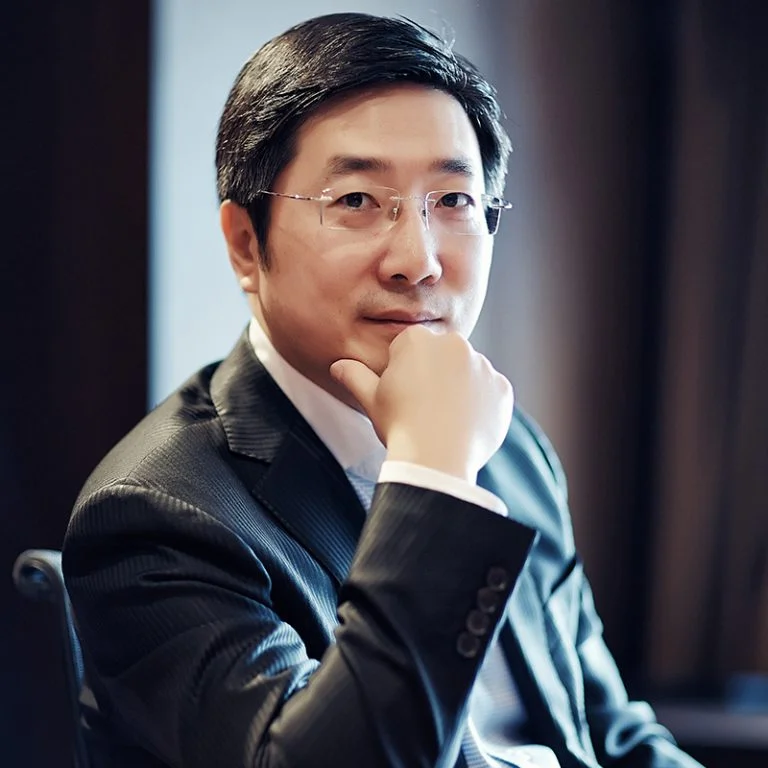
TENG Bingsheng
Professor of Strategic Management and Associate Dean for Strategic Research, Cheung Kong Graduate School of Business (CKGSB)
PhD, City University of New York








Our Programs

Emerging Tech Management Week: Silicon Valley
Global Unicorn Program Series
In partnership with UC Berkeley College of Engineering
A technology management program for leaders looking to turn emerging technologies into business opportunities.
Combining proven strategies and cutting-edge research, the program helps participants fuel innovation, seize opportunities in emerging technologies, and catalyze transformation within their organizations. Designed for managers, start-up leaders, and technology investors, it includes visits to venture capital firms and technology companies, alongside mentored group projects.
LocationUC Berkeley, California, United States
Date01 - 06 Nov, 2026
LanguageEnglish

Stanford & Silicon Valley Immersion Program
Global Unicorn Program Series
In partnership with Stanford Engineering Center for Global & Online Education
A Silicon Valley immersion for entrepreneurs, intrapreneurs, and investors leading and scaling AI-driven companies.
The program combines academic learning with visits to AI and robotics labs and Silicon Valley companies, giving participants direct exposure to emerging technologies and the businesses developing and applying them.
LocationStanford University Campus, California, United States
Date06 - 11 Dec, 2026
LanguageEnglish with Chinese Translation

Emerging Markets: Innovation and Scaling for Exponential Growth – ASEAN
A China-focused innovation program for ASEAN executives and business owners responding to the impact of AI on their industries.
Gain insights from leading Chese thinkers in Jakarta, with an optional immersion in China and opportunities to connect with the business leaders driving innovation. The program offers a closer look at how developments in China could affect your industry and business.
LocationJakarta, Indonesia
Date23–26 March 2027
LanguageEnglish (with Chinese translation)

Asia Start: AI + Digital Ecosystem China Expedition
An immersive program for entrepreneurs and executives looking to understand China's AI and digital economy firsthand.
Gain the latest trends and insights, strategies, and connections to overcome challenges and support future business growth in Asia and beyond.
LocationChina (Beijing, Shanghai, Hangzhou & optional Shenzhen)
DateApril 19–24, 2027
LanguageEnglish

Intelligent China: AI, EVs & Smart Manufacturing
A three-part program examining China’s advances in AI, electric vehicles, and smart manufacturing.
Through faculty-led sessions, company visits, and exchanges with industry leaders, gain practical insights for your organization's strategy, partnerships, and investment decisions. Join an individual four-day program or complete the full 12-day series.
LocationBeijing, Shenzhen, Shanghai, and Hangzhou
DateSummer – Winter 2027 (three 4-day programs)
LanguageEnglish