
The new space race: Can China close the gap?
August 27, 2026
China’s space sector is taking aim at SpaceX and US dominance
China’s space ambitions are accelerating, but can it rise to challenge US dominance?
When the Soviet Union launched Sputnik 1 in 1957, the first space race began as two superpowers vied for dominance. Twelve years later, American astronauts walked on the Moon. But even at the height of Cold War rivalry, competition did not entirely exclude cooperation. The United States and Soviet Union exchanged scientific information, signed agreements governing activity in space and, in 1975, docked Apollo and Soyuz spacecraft in orbit in the first international human spaceflight.
The second space race looks different. China, rather than Russia, is now the principal challenger to the United States, and the competition extends well beyond headline-grabbing missions to the Moon and Mars. Space is becoming infrastructure: a source of communications, navigation and data, and an industry that the World Economic Forum and McKinsey estimate could grow from $630 billion in 2023 to $1.8 trillion by 2035.
China has moved remarkably quickly to secure a place in it. “It’s been a very impressive rise,” says Blaine Curcio, founder of Orbital Gateway Consulting. “China’s first crewed space mission was only in 2003, and today, they are clearly one of the world’s leading space powers, and by some measures, the world’s leading space power.”
Having built a formidable state space program, Beijing now needs to develop a commercial ecosystem capable of producing its own answer to SpaceX. And the obstacles to doing so may come as much from within China’s space industry as from its American competitors.
From latecomer to space power
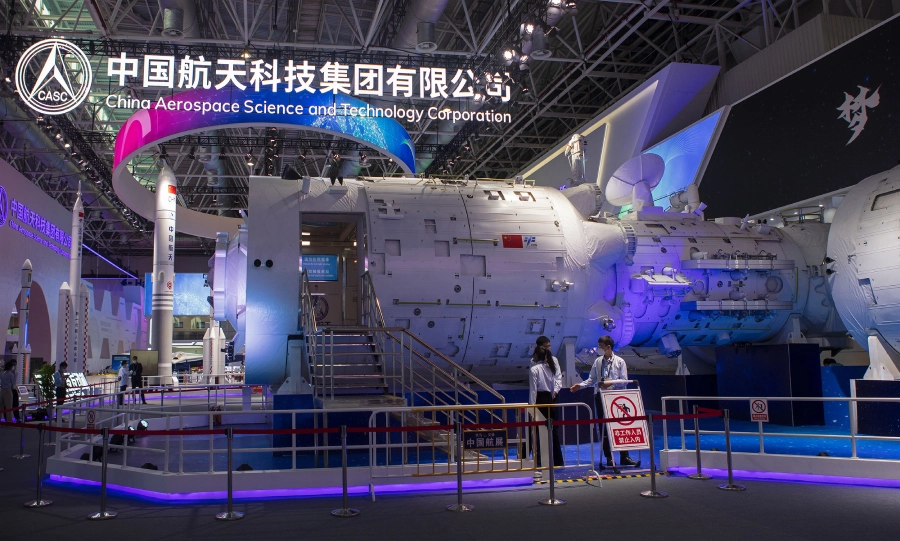
China’s space program stretches back decades, but its rise into the top tier of space powers has largely taken place this century. China became only the third country to independently send a human into space when Yang Liwei orbited Earth in 2003. It has since built the permanently crewed Tiangong space station, completed a series of increasingly ambitious Chang’e lunar missions and successfully reached Mars with Tianwen-1.
Clayton Swope, deputy director of the Aerospace Security Project and senior fellow in the Defense and Security Department at the Center for Strategic and International Studies (CSIS), says Beijing has “doubled down on space, across the whole spectrum of human activities in orbit.”
“Beijing has made big financial bets to make significant strides in space, supported the work of scientists and engineers to plan, build, and launch sophisticated space technology, encouraged the development of [a] broad space sector beyond state-owned enterprises, and sought to enhance its military space power,” he says.
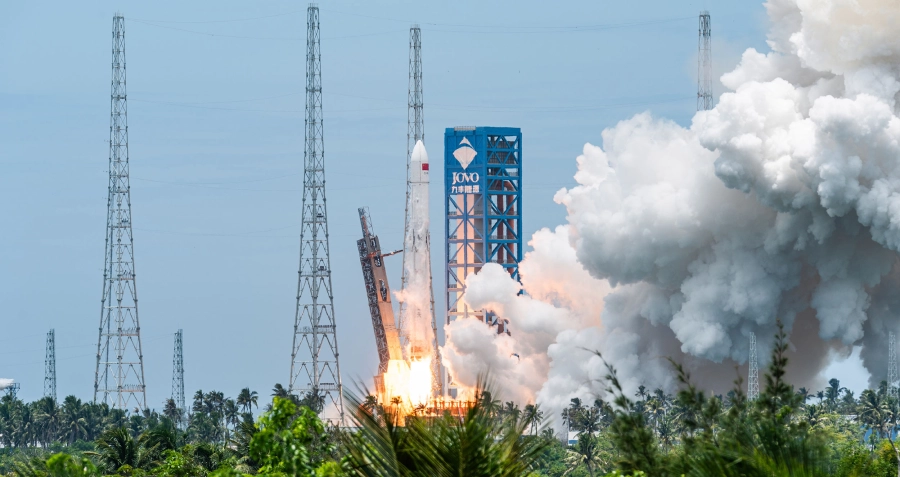
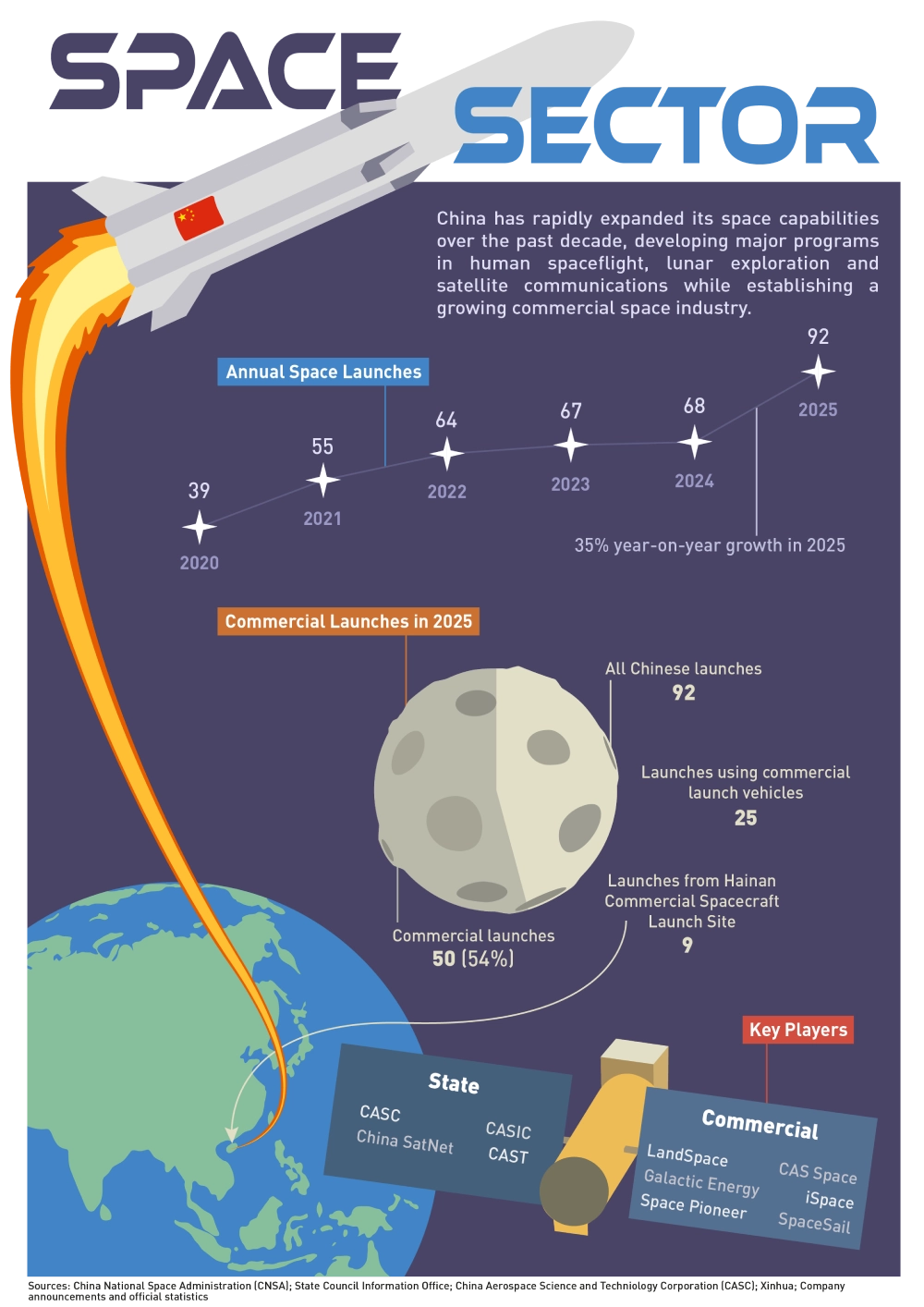
The numbers underline the acceleration. China conducted 92 space launch missions in 2025, according to the China National Space Administration (CNSA), up 35% from the previous year. Fifty were classified as commercial launches, while 311 commercial satellites reached orbit.
Some of the technological milestones are more significant still. The Chang’e-6 mission became the first in history to return samples from the far side of the Moon. Tiangong has given China a permanent human presence in orbit, with Pakistan preparing for what is expected to become the first visit by a foreign astronaut to the station.
And on August 18, private rocket maker LandSpace successfully landed the first stage of its Zhuque-3 orbital rocket, making it the first commercial Chinese company to recover an orbital-class booster and putting China into a technological club previously occupied by SpaceX and Blue Origin.
Why space matters now
Prestige remains part of the equation, just as it did during the Cold War. But the stakes have expanded considerably.
“For all nations, including China, space is an arena in which nations compete for prestige,” says Swope. “No doubt that Beijing sees space as a domain in which money can be made.”
Space-based communications, navigation and Earth observation already support activities ranging from agriculture and logistics to weather forecasting and disaster response. The expanding commercial market creates opportunities not only for rocket and satellite manufacturers but for businesses supplying components, data and specialized manufacturing technologies.
Curcio describes the latter as the “picks and shovels” of the current space gold rush, including companies producing satellite components or using technologies such as 3D printing to manufacture rocket parts.
But national security has become an increasingly powerful driver. “Since around 2015, and more so since 2020, it has become a higher priority, seemingly in large part due to the rapid growth in SpaceX and Starlink overall, and the increase in SpaceX and Starlink’s usage by military customers in the West,” says Curcio.
The war in Ukraine demonstrated particularly clearly the strategic importance of resilient satellite communications. Curcio says Chinese competitors received a boost after Starlink began being used on the battlefield, while its expansion into Belt and Road markets has added a commercial and geopolitical dimension.
Space assets can provide communications, positioning, navigation, intelligence and surveillance to modern militaries. “Military operations do not require satellites, but they are enhanced by them,” says Swope.
That increasingly makes space another component of the wider US-China strategic rivalry.
China’s commercial dilemma
Beijing has been opening more room for commercial space companies since the mid-2010s. Firms including LandSpace, Galactic Energy, Space Pioneer and Orienspace are now pursuing launch services and reusable rockets, while enormous satellite constellations are creating potential customers for those launchers.
The government is also formalizing the sector. CNSA’s 2025-2027 commercial space action plan calls for commercial companies to be incorporated into China’s overall national space development framework and for greater access to civilian research programs. But China’s model differs fundamentally from the one that helped produce SpaceX.
“The biggest difference is that China provides substantial support on the supply side, whereas the US provides support on the demand side,” says Curcio.
Local governments in China may provide land, factories, subsidies or investment to help companies establish themselves. What commercial firms have historically had less access to, Curcio says, are the large contracts that allow them to prove technologies and build sustainable businesses.
In the US, NASA and the Department of Defense can instead act as anchor customers, contracting private companies to provide capabilities rather than necessarily developing everything themselves.
This distinction has produced its own problems on both sides. The US system helped SpaceX grow into a formidable competitor, but it has also become extraordinarily concentrated. SpaceX’s dominance has only become more pronounced as Starlink created a huge source of commercial demand for its launch business. The company’s record $75 billion IPO in June 2026 valued it at $1.77 trillion, illustrating the extraordinary scale it has achieved—even if that includes non-rocket related business such as xAI.
China risks the opposite problem: too much capacity chasing too little demand. “There are far too many factories—for example, there are nearly 100 rocket factories—and not enough demand yet to justify them,” says Curcio.
That distinction also challenges a common assumption about China’s industrial strengths. Making rockets cheaply is not simply a matter of applying the country’s huge manufacturing base. SpaceX’s cost reductions have depended heavily on engineering advances, particularly reusable launch vehicles and material choices. LandSpace’s Zhuque-3, for instance, uses stainless steel and methane fuel and is designed ultimately to fly its booster repeatedly.
The next stage of competition is therefore likely to depend less on who can build the most factories than on who can develop, test and repeatedly improve complex technologies fastest.
The limits of the new race
China’s commercial firms consequently face an unusual problem. They operate within one of the world’s most ambitious state space programs, but the institutions that made that program successful can also restrict the room available to private competitors.
“The biggest challenge for commercial firms in China vying to compete with SpaceX is actually internal to China,” says Curcio, pointing to limited government contracts, regulatory hurdles, risk aversion and powerful state-owned enterprises intent on protecting existing positions. Foremost among them is China Aerospace Science and Technology Corporation (CASC), the state conglomerate that has dominated the sector for decades.
“The vested interests that have controlled China’s space sector for so long are having a very hard time giving up that power,” he adds. “This makes it very difficult for commercial firms to flourish.”
International expansion presents another obstacle. “Trust between China and the West is low,” says Swope. Satellite services are deeply intertwined with communications, data and national security, making Western governments unlikely customers for Chinese launch or satellite providers.
Chinese companies may therefore find greater opportunities in emerging markets, particularly countries seeking to establish or expand their own space capabilities at lower cost. Curcio sees potential for Chinese suppliers to “level up space programs of developing nations or commercial firms by buying cheaper Chinese systems.”
But Swope warns that these markets spend considerably less on space than the US and its allies, potentially limiting their ability to support China’s expanding commercial capacity.
The geopolitical divide is also striking compared with the first space race. Even Washington and Moscow eventually found areas where cooperation was possible, culminating in Apollo-Soyuz. Today’s US-China relationship has produced few comparable mechanisms.
“There is a real need for an understanding between the United States and China on space rules of the road,” says Swope. “Competition can exist alongside cooperation and coordination, particularly when it comes to setting the playing field and rules of the road for space.”
For now, competition is advancing faster than cooperation. China has already demonstrated that a state-led system can build a space station, reach Mars, return samples from the far side of the Moon and field a rapidly expanding satellite infrastructure. Its emerging private companies are now beginning to demonstrate technologies that were until recently overwhelmingly associated with American competitors.
The next space race, however, will not be decided by planting another flag on the Moon. It will depend on which system can turn scientific achievement into sustained technological and commercial innovation.
For China, that may require the state not to retreat from space, but to change how it participates in it: moving from building capacity toward creating customers, opening contracts and giving commercial companies more room to fail, compete and ultimately succeed.
As Swope says, the question need not be whether one country wins and the other loses. “The good news is that space is very big.”
Enjoying what you’re reading?
Article Subscribe (1)
CKGSB Report




Related Articles
Our Programs

Emerging Tech Management Week: Silicon Valley
Global Unicorn Program Series
In partnership with UC Berkeley College of Engineering
A technology management program for leaders looking to turn emerging technologies into business opportunities.
Combining proven strategies and cutting-edge research, the program helps participants fuel innovation, seize opportunities in emerging technologies, and catalyze transformation within their organizations. Designed for managers, start-up leaders, and technology investors, it includes visits to venture capital firms and technology companies, alongside mentored group projects.
LocationUC Berkeley, California, United States
Date01 - 06 Nov, 2026
LanguageEnglish
Stanford & Silicon Valley Immersion Program
Global Unicorn Program Series
In partnership with Stanford Engineering Center for Global & Online Education
A Silicon Valley immersion for entrepreneurs, intrapreneurs, and investors leading and scaling AI-driven companies.
The program combines academic learning with visits to AI and robotics labs and Silicon Valley companies, giving participants direct exposure to emerging technologies and the businesses developing and applying them.
LocationStanford University Campus, California, United States
Date06 - 11 Dec, 2026
LanguageEnglish with Chinese Translation

Emerging Markets: Innovation and Scaling for Exponential Growth – ASEAN
A China-focused innovation program for ASEAN executives and business owners responding to the impact of AI on their industries.
Gain insights from leading Chese thinkers in Jakarta, with an optional immersion in China and opportunities to connect with the business leaders driving innovation. The program offers a closer look at how developments in China could affect your industry and business.
LocationJakarta, Indonesia
Date23–26 March 2027
LanguageEnglish (with Chinese translation)
Asia Start: AI + Digital Ecosystem China Expedition
An immersive program for entrepreneurs and executives looking to understand China's AI and digital economy firsthand.
Gain the latest trends and insights, strategies, and connections to overcome challenges and support future business growth in Asia and beyond.
LocationChina (Beijing, Shanghai, Hangzhou & optional Shenzhen)
DateApril 19–24, 2027
LanguageEnglish

Intelligent China: AI, EVs & Smart Manufacturing
A three-part program examining China’s advances in AI, electric vehicles, and smart manufacturing.
Through faculty-led sessions, company visits, and exchanges with industry leaders, gain practical insights for your organization's strategy, partnerships, and investment decisions. Join an individual four-day program or complete the full 12-day series.
LocationBeijing, Shenzhen, Shanghai, and Hangzhou
DateSummer – Winter 2027 (three 4-day programs)
LanguageEnglish