


Chinese innovation “overtakes by changing lanes”
August 18, 2026
For some time, China has been known for its ability to go “from 1 to n”, i.e., replicating original ideas and scaling them up. This is in contrast to the so-called “0 to 1”, which implies “original innovation”. The notion that the Chinese only know how to copy and cannot innovate has been embedded in many people’s minds. But Chinese innovators began to emerge in greater numbers as the mobile internet became prevalent. They were quick to adopt it as a platform for creating new products and services.
Some might argue, not entirely incorrectly, that a number of early Chinese internet business models drew inspiration from those in the United States. However, in many circumstances, Chinese internet companies always adapted those models to China’s distinctive market conditions and developed products, operating models and digital ecosystems that differed substantially from their original references to create their own products or services catering to the Chinese context, often with great success.
While many Chinese firms continue to excel at going “from 1 to n”, they have increasingly become capable of going “from 0 to 1”.
Of course, no one can create something from absolutely nothing. Everyone starts with something. It is only a matter of degree.
But Chinese innovators are increasingly doing two things that are not adequately captured by the simple two-axes model of “0 to 1” and “1 to n”. First, they are opening alternative technological and commercialization paths. Second, they are increasingly redefining not only technical standards but also product paradigms, business models and industrial ecosystems.
Chinese innovators have been innovating by redefining a path away from the original one. The Chinese often call it, “overtaking by changing lanes”.
Recently, Chinese artificial intelligence models’ adoption of open-source and open-weight approaches has become a much-discussed example. Over the years, we have seen many other examples. China’s approach to “overtaking by changing lanes” is not simply about continuing to catch up along the same technological path. In some industries, when competitors have already established a mature system, Chinese innovators pursued a different technological or commercialization route, generating new products and, at times, a new industrial ecosystem around that route.
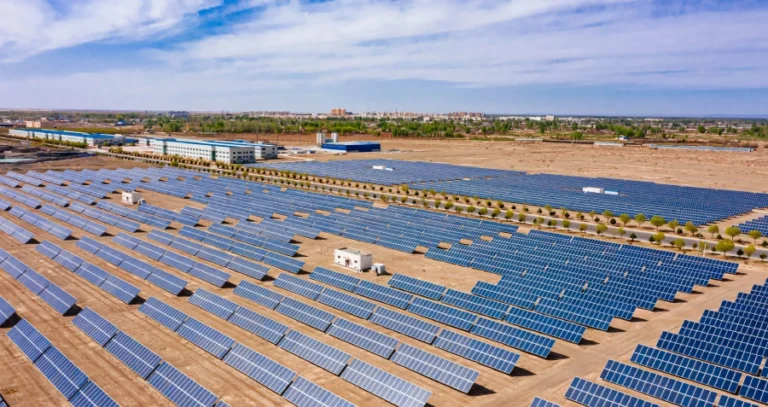
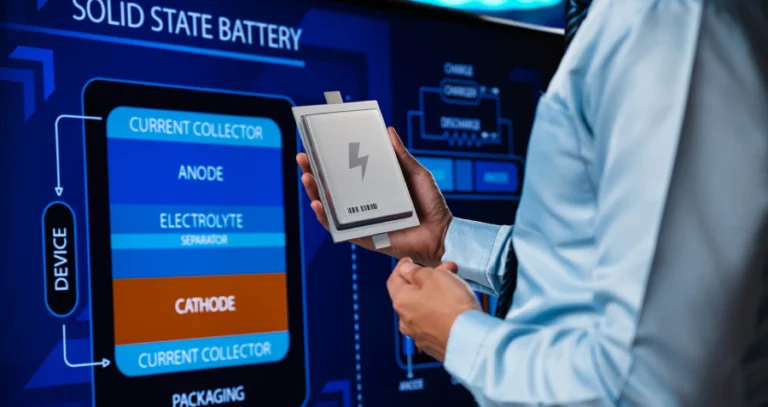
In the solar photovoltaic industry, China did not limit itself to laboratory-based advances in solar-cell efficiency. Instead, it built a complete industrial chain and used industrial-scale production to continually reshape the cost curve. In mobile payments, China developed mass-market smartphone- and QR-code-based payment infrastructure before credit cards had reached the level of penetration seen in many advanced economies. In China’s drone sector, DJI moved away from the Western focus on large military and research drones, defined and globalized the modern ready-to-fly camera-drone market by integrating flight control, hardware, imaging and user-friendly software. In lithium-ion batteries and energy storage, rapid electric vehicle demand — reinforced by industrial policy, manufacturing scale and an increasingly integrated supply chain — accelerated the development of capabilities spanning materials, cells, packs and energy-storage systems.
The impact of Chinese innovation is extending beyond individual technologies and products into the way that entire industries operate. For example, Chinese developers such as DeepSeek and Kimi have helped accelerate the global shift toward more accessible open-source AI models. Their significance lies not only in model performance but also in demonstrating that advanced capabilities can be distributed through lower-cost and more deployable architectures.
The common feature of these examples is not simply making existing products cheaper or producing them in larger quantities. It is about redefining how technologies are scaled, how products are used and how industrial ecosystems are formed. This differs from the traditional notion of “catching up”, which means competing on the same track, gradually narrowing the gap and eventually moving ahead. “Overtaking by changing lanes” means no longer following a competitor’s established route, but instead building a new technological path, product paradigm and industrial system.
A case in point is 5G, which represented an important stage in China’s transition from being primarily an adopter of international telecommunications standards to becoming a major co-contributor to them. Chinese firms and research institutions participated extensively — alongside companies and standards bodies from many other countries — in the formulation of communications protocols, network architectures, coding methods, patents and technical specifications.
Increasingly, Chinese innovators are moving beyond setting technical standards to redefine broader product paradigms, business models and industrial ecosystems. Take China’s new energy vehicle industry as an example. Chinese firms are competing in batteries, electric motors, advanced driver-assistance systems, software and vehicle integration. They have also scaled and recombined models involving direct sales, online services, continuous over-the-air software updates, battery swapping, battery leasing, smart-cockpit services and vehicle-road coordination.
Under this emerging paradigm, a car is no longer merely a piece of hardware sold in a one-off transaction. It can become an intelligent, connected product that is continuously upgraded. Companies’ sources of revenue may extend beyond vehicle sales to software, energy and digital services.
Open-source large language models reflect a similar change. Many leading commercial American foundation models have been offered primarily through closed systems, API access and usage-based pricing. China, however, has produced major open-source models — including DeepSeek, Kimi, and Qwen — with a large open-source AI ecosystem. These Chinese AI companies have released model weights that enable private deployment and local fine-tuning, while generating revenue through hosted inference, enterprise deployment, and industry-specific customization.
This is not simply about developing models whose performance approaches that of leading American models. It can also change how value and capabilities are distributed across the AI industry and among customers.
Chinese innovation is now entering a new stage. From the early 2000s through the 2010s, many Chinese companies largely progressed through benchmarking Western companies, catching up and technological accumulation, gradually moving from followers of standards to co-creators of technical standards. During the 2020s, a larger group of companies has become more visible in opening alternative technological paths and reshaping product paradigms, business models and industrial ecosystems.
The wider implication is that decisions about model access, deployment and cost structures can shape who is able to use AI and where value accumulates. Understanding this requires attention not only to supply and demand, but also to technological architecture, ecosystem governance, security, social impact and the distribution of capabilities.
Chinese innovations are entering a new phase, and their impact is being felt increasingly across the world. The simple notion of either “0 to 1” or “1 to n” is insufficient. We need a more sophisticated framework to capture what is happening, what may happen in the future, and how we can properly calibrate the important role of China in the new world.
Policymakers and business leaders also need to better understand what has enabled this shift. For many observers, it will take time to absorb China’s evolution from being widely seen as a “copycat”, to becoming an innovator that adapts and builds on ideas from around the world, and increasingly to one that contributes original technologies, standards and alternative development paths.
The root causes of all this lie in China’s long history, rich culture and civilization, as well as its centuries-long search for modernity with Chinese characteristics.
This article was originally published in China Daily on August 5, 2026.
Enjoying what you’re reading?
Article Subscribe (1)
Professor profile

Edward TSE
Professor of Managerial Practice, Cheung Kong Graduate School of Business (CKGSB)
PhD University of California, Berkeley






Our Programs

Emerging Tech Management Week: Silicon Valley
Global Unicorn Program Series
In partnership with UC Berkeley College of Engineering
A technology management program for leaders looking to turn emerging technologies into business opportunities.
Combining proven strategies and cutting-edge research, the program helps participants fuel innovation, seize opportunities in emerging technologies, and catalyze transformation within their organizations. Designed for managers, start-up leaders, and technology investors, it includes visits to venture capital firms and technology companies, alongside mentored group projects.
LocationUC Berkeley, California, United States
Date01 - 06 Nov, 2026
LanguageEnglish

Intelligent China: AI, EVs & Smart Manufacturing
A three-part program examining China’s advances in AI, electric vehicles, and smart manufacturing.
Through faculty-led sessions, company visits, and exchanges with industry leaders, gain practical insights for your organization's strategy, partnerships, and investment decisions. Join an individual four-day program or complete the full 12-day series.
LocationBeijing, Shenzhen, Shanghai, and Hangzhou
Date December 2026 – July 2027 (three 4-day programs)
LanguageEnglish

Emerging Markets: Innovation and Scaling for Exponential Growth – ASEAN
A China-focused innovation program for ASEAN executives and business owners responding to the impact of AI on their industries.
Gain insights from leading Chese thinkers in Jakarta, with an optional immersion in China and opportunities to connect with the business leaders driving innovation. The program offers a closer look at how developments in China could affect your industry and business.
LocationJakarta, Indonesia
Date2–4 December 2026
LanguageEnglish (with Chinese translation)

Stanford & Silicon Valley Immersion Program
Global Unicorn Program Series
In partnership with Stanford Engineering Center for Global & Online Education
A Silicon Valley immersion for entrepreneurs, intrapreneurs, and investors leading and scaling AI-driven companies.
The program combines academic learning with visits to AI and robotics labs and Silicon Valley companies, giving participants direct exposure to emerging technologies and the businesses developing and applying them.
LocationStanford University Campus, California, United States
Date06 - 11 Dec, 2026
LanguageEnglish with Chinese Translation

Asia Start: AI + Digital China Expedition
An immersive program for entrepreneurs and executives looking to understand China's AI and digital economy firsthand.
Gain the latest trends and insights, strategies, and connections to overcome challenges and support future business growth in Asia and beyond.
LocationChina (Beijing, Shanghai, Hangzhou & optional Shenzhen)
DateApril 19–24, 2027
LanguageEnglish