


China’s new engines of domestic demand: Six industries with RMB 10 trillion potential
August 31, 2026
China’s next phase of consumer growth will be created on the supply side — and won by companies that turn core technology into use cases rather than capacity
After more than four decades of rapid growth, China’s economy is entering a deeper phase of transition in its growth drivers. The old model – relying heavily on traditional domestic consumption and fixed-asset investment – is running into a bottleneck. Demographic change is accelerating, technology is advancing at speed and demand is fragmenting across consumer groups. At the same time, a broad shift towards greener, smarter, more convenient and more experience-led consumption is reshaping the market.
Six emerging pillar industries have come to the forefront: integrated circuits, aerospace and aviation, biopharmaceuticals, the low-altitude economy, new-energy storage and intelligent robotics. These technology-intensive sectors can strengthen the resilience of industrial and supply chains and improve China’s capacity for high-quality supply, reinforcing domestic circulation and its interaction with international markets. They are also important to supply-chain security and the continued expansion of the consumer market. For companies, the logic of growth is changing fundamentally: the old advantages of production scale and distribution barriers no longer suffice. Competitive advantage will increasingly rest on core technology, commercialization, the ability to identify and create specialized use cases, and the capacity to operate hardware, software and services as an integrated whole. China’s consumer market is entering a new growth paradigm.
01 Domestic Consumption Is the Core Growth Engine
In 2025, the final year of China’s 14th Five-Year Plan, total retail sales of consumer goods reached RMB 50.12 trillion, crossing the RMB 50 trillion mark for the first time. On a purchasing-power-parity basis, China is already the world’s largest consumer market. Household consumption as a share of GDP has also been rising. It stood at 38.4% in 2021, slipped to 37.8% in 2022 amid pandemic disruption, then climbed in each of the following three years to 40.0% in 2025. The steady rise underscores the growing contribution of domestic consumption to economic growth.
Large economies tend to rely primarily on domestic demand rather than external trade for growth. In 2024, total trade in goods and services amounted to 25.4% of GDP in the United States and 35.09% in Japan, according to World Bank data. By comparison, global merchandise trade alone was equivalent to about 41.9% of GDP, although the two measures are not strictly comparable.
China’s consumption mix is also changing markedly. Greener and smarter products are moving into everyday life: the market penetration of new-energy passenger vehicles rose from 5.7% in 2020 to 53.9% in 2025. Between 2022 and 2025, retail sales of services grew by an annual average of 10.4%, with experience-led consumption particularly strong; during the 15th Five-Year Plan period, the services sector is expected to exceed RMB 100 trillion in scale. In 2025, high-tech manufacturing, with a 17% share, contributed 26% of industrial growth.
As the marginal returns from the old growth model – driven by traditional manufacturing, real estate and infrastructure – diminish, domestic demand, and household consumption in particular, is becoming the core growth engine. Green, smart, convenient and experience-led consumption will form an important part of the market’s base for decades to come. It will also be a principal avenue through which Chinese companies compete in global consumer markets, because consumption trends worldwide are moving in similar directions. In recent years, high-end smart and green, low-carbon products – robots included – have become new calling cards for Chinese trade. China ranked first globally in new-energy vehicle exports in 2025, while it accounts for about 80% of global production capacity in solar power and energy storage.
This is the logic behind China’s effort to build a new development paradigm in which domestic circulation is the mainstay and domestic and international circulation reinforce each other. The shift is not simply about moving the emphasis between domestic and overseas markets; it is a more fundamental change in the logic of development. Within this framework, the six emerging pillar industries have a key role in connecting supply and demand: they are both the main arena for technological breakthroughs and a catalyst for expanding consumption.
02 Three Structural Shifts on the Demand Side
The shift towards greener, smarter, more convenient and experience-led consumption is more than a conventional upgrade. It is changing products, consumer groups and consumption settings at the same time – a deeper structural shift in demand.
Products: domestic brands are increasingly replacing foreign supply at the premium end of the market. An Accenture survey in 2025 found that across beauty and skincare, nutrition and health products, consumer electronics, mother-and-baby products and toys, apparel and footwear, food and beverages, and home appliances, the share of consumers giving priority to domestic brands had risen markedly from 2021. In beauty and skincare, consumer electronics and home appliances, the increase exceeded 30%. This suggests that the ‘premium overflow’ once directed towards international brands is easing: more high-end consumer spending is now being met by domestic supply.
Consumption settings: products are becoming ‘hardware + experience + service’. As remote consultations, AI-powered digital assistants and other new services develop, consumption is expanding beyond a single physical product into a combination of hardware, experience and service. New settings include digital commerce, such as AI shopping assistants; outdoor activities, such as drone photography and storage-powered camping; health and wellness, including smart elder care and wellness travel; and mobility, including low-altitude sightseeing and logistics. These are becoming more than consumption settings; they are gateways to new ways of living. According to the National Bureau of Statistics, services accounted for 46.1% of per-capita household consumption expenditure in 2025, making them a major engine of growth. More new consumption settings are still being created.
Consumer groups: the mass market is giving way to finer segmentation. Demographics are a decisive influence on the structure of consumption. National Bureau of Statistics data for 2025 put China’s population at 1.404 billion, including 323 million people aged 60 or above. More than 400 million people belong to the middle-income group; for a three-person household, annual household income is between RMB 100,000 and 500,000. Together, these two groups form the base of the consumer market, but their needs differ sharply.
Older consumers. Older consumers have strong demand for age-adapted design, health management and convenient services, from companion-care robots to home medical-monitoring devices.
Middle-income consumers. Middle-income consumers place greater emphasis on quality, technology and personalization, and are willing to pay a premium for innovation – for example, outdoor energy-storage products and intelligent robots.
The changes in products, consumption settings and consumer groups are not happening in isolation. They reinforce and intertwine with one another, forming the basic coordinates for corporate growth under China’s new development paradigm.
03 Supply Must Correct a Structural Mismatch
The potential for domestic demand is real, but much of it has yet to be released. That helps explain why growth in the domestic market can feel slow and incremental. There are many causes, but one is a structural mismatch on the supply side: some areas lack sufficient high-end supply, while in others effective supply is disconnected from what consumers actually want.
Commercial aerospace and smart, self-service elder care are examples. Demand exists, but industrial supply is not yet strong enough to meet it. The core logic of the new development paradigm is therefore to use high-quality industrial supply to clear these bottlenecks, bringing supply capacity into line with consumers’ willingness to spend.
The difficulty is that greener, smarter, more convenient and experience-led consumption is itself a product of rapid technological and social change. Much of it is still taking shape, with no ready template in past production experience. The next phase of consumer-industry growth will therefore follow a different logic. In the past, demand largely determined supply: producers made what the market asked for. Rapid technological change is partly revising that relationship. Technology, together with production, will help define some of the consumption trends of the future.
The six industries show how that can work:
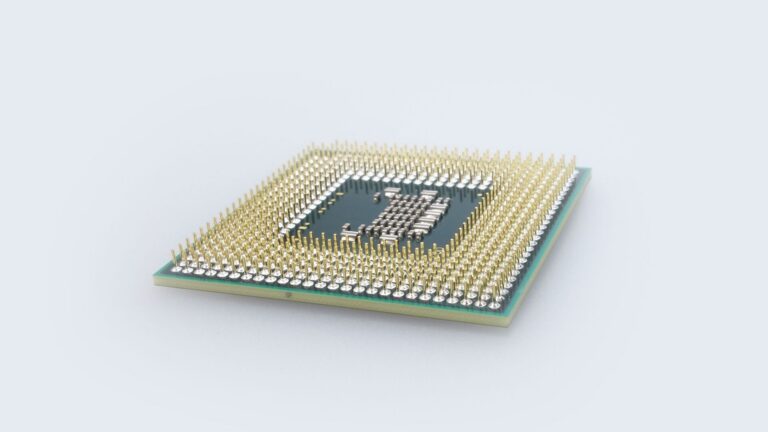
Digital products from smartphones and smart homes to wearables and in-car systems increasingly depend on domestic chips. Local control of chip architecture, computing allocation and energy efficiency strengthens supply-chain security and restores autonomy in product design.
Gene testing, precision nutrition and chronic-disease management are shifting health consumption towards prevention and the home, creating a relatively resilient consumer segment with high user retention. This includes predictive health services, such as using genetic screening to identify disease risks before or at an early stage, and participatory health management, such as daily monitoring through personal smart devices.
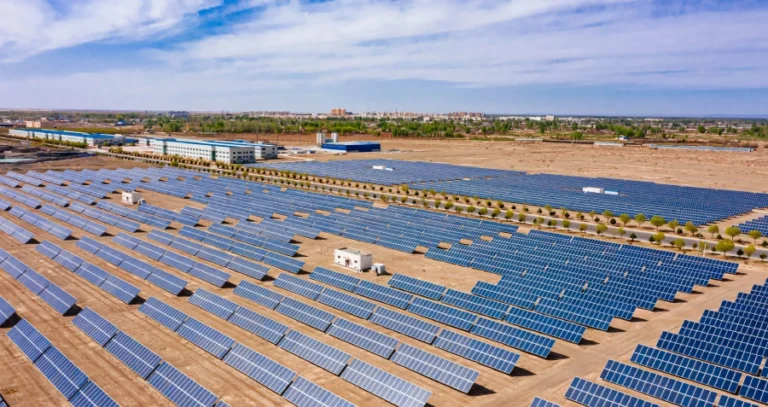
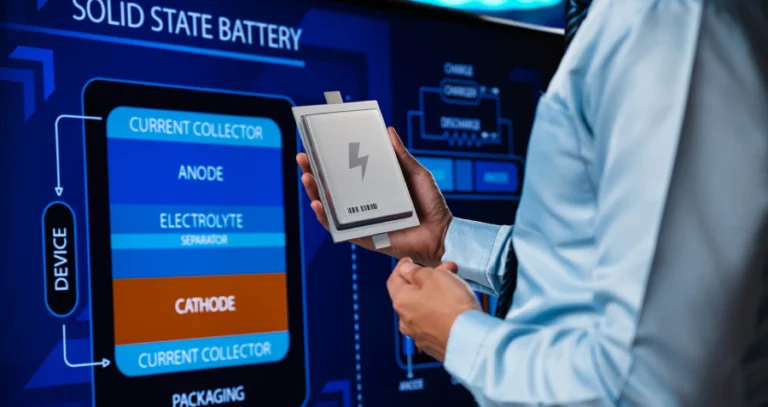
Scale is lowering the cost of clean-energy storage and dispatch, bringing industrial-grade systems into homes, outdoor settings and rural communities. Examples include home solar-plus-storage and portable power for camping.
Embodied intelligence and lower production costs are opening a path into homes. Robots can reshape service provision in the home, elder care and education, including repetitive tasks and companionship-based needs.
Low-altitude sightseeing and drone applications open new spatial uses, including aerial photography, inspection, general-aviation transport and emergency rescue.
Aerospace is moving from strategic national capability towards mass-market consumption, including space tourism and aerospace-themed cultural and travel experiences.
Policy support for the six emerging pillar industries is already showing results. Zheng Shanjie, director of the National Development and Reform Commission, said during China’s 2026 Two Sessions that their combined output was close to RMB 6 trillion in 2025 and could roughly double – or more – by 2030, reaching more than RMB 10 trillion. In both scale and quality, these sectors will help define the shape of China’s economy, and especially its consumer market, for decades to come.
04 Opportunities and Challenges for Companies
For large enterprises. The first priority is to secure a technological high ground and build genuine competitive barriers, especially in technology-intensive sectors such as integrated circuits and biopharmaceuticals. In integrated circuits, the foundation of digital consumption, companies need control of core technologies if they are to innovate around real local consumer use cases rather than adapt within a technical framework controlled by others.
For smaller businesses. The shift in consumption creates opportunities, but it also means ever more fragmented customer groups and fiercer competition. The first priority is to identify an area of durable advantage and go deep, using specialized technology and long-term operations to build barriers that are hard to replicate. Rather than crowding into the main tracks where large companies already dominate, smaller firms can target vertical ‘blue-ocean’ markets centered on everyday household needs, specific family essentials and ageing. For example:
- New-energy storage: develop small household storage units and balcony solar-plus-storage kits
- Intelligent robotics: develop home companion robots and small commercial cleaning robots
- Ageing-related products: develop lightweight mobility aids and smart health-monitoring wearables
Whatever their size, companies in the new consumer market need a different capability model from the past: the ability to turn technology into commercial products, to specialize in and create use cases, and to operate hardware, software and services as an integrated whole. These three capabilities need to work together.
1. Turning technology into products. Companies should move away from a blunt strategy of simply adding capacity. Core technology patents, process R&D and hardware innovation need to be translated into tangible products consumers can perceive and experience, and into standardized services that can be commercialized at scale.
CATL offers an example. Building on its battery technology, it has developed energy-storage and traction-battery products, translating upstream materials technology into vehicle applications and end products such as household energy storage – a closed loop from technology to commercial product.
2. Specializing in – and creating – use cases. As consumption settings proliferate, the competitive objective is shifting towards winning a share of consumers’ discretionary time and building sustainable functional and emotional value. Companies need both the ability to break down demand within existing settings such as tourism, the home and elder care, and the ability to use industrial technology to incubate entirely new forms of consumption. Home robots, now an emerging consumer market in their own right, are one example created by technological progress.
3. Integrated hardware-software-service operations. As consumption moves from a single physical product to a combination of hardware terminals, software systems and long-term services, the center of business operations must shift from the one-off sale of a product to managing the customer relationship across its full life cycle. That requires companies to connect hardware R&D and production, software iteration, and after-sales maintenance and value-added services. NIO illustrates the model: vehicle hardware, smart-cockpit software, battery swapping and maintenance, and owner-community services combine into a business model built around the initial purchase plus ongoing service and recurring payments.
Under China’s new development paradigm, these RMB 10 trillion emerging industries are not isolated sector plays. They are central levers for expanding domestic demand and reshaping the consumer ecosystem.
From improving supply to creating new demand, and from reinforcing domestic circulation to enabling two-way interaction with international markets, industrial upgrading and consumption renewal are moving together. This can provide the internal momentum to help China’s economy navigate economic cycles and strengthen its growth base. It also gives domestic companies an opportunity to build long-term value and move up the global industrial value chain.
Companies that choose the right niche, build core capabilities and align supply with demand will be best placed to seize the opportunities created by this structural shift. By using industrial progress to unlock consumption, they can position themselves for the next “golden cycle” of China’s high-quality development.
Enjoying what you’re reading?
Article Subscribe (1)
Professor profile

LI Haitao
Dean, Dean's Distinguished Chair Professor of Finance, and Director of Research Department on Family Business and Wealth Management, Cheung Kong Graduate School of Business (CKGSB)
PhD, Yale University




Related Articles


Our Programs

Emerging Tech Management Week: Silicon Valley
Global Unicorn Program Series
In partnership with UC Berkeley College of Engineering
This program equips participants with proven strategies, cutting-edge research, and the best-in-class advice to fuel innovation, seize emerging tech developments, and catalyse transformation within your organization.
LocationUC Berkeley
Date01 - 06 Nov, 2026
LanguageEnglish
Asia Start: AI + Digital China Expedition
Asia Start provides entrepreneurs and executives with unparalleled access to Asia’s dynamic digital economy and its business ecosystems, offering the latest trends and insights, strategies, and connections to overcome challenges and unlock future growth for your business in Asia and beyond.
LocationChina (Beijing, Shanghai, Hangzhou & optional Shenzhen)
DateNovember 2–7, 2026 | April 19–24, 2027
LanguageEnglish

Intelligent China: AI, EVs & Smart Manufacturing
Explore how China is advancing AI, electric vehicles and smart manufacturing through faculty-led sessions, company visits and exchanges with industry leaders. Build practical insights for your organization’s strategy, partnerships and investment decisions, with the flexibility to join individual four-day programs or the full 12-day series.
LocationBeijing
Date12 Days
LanguageEnglish

Emerging Markets: Innovation and Scaling for Exponential Growth – ASEAN
Learn China's AI and innovation strategy from its leading thinkers — brought to you in Jakarta, with an optional immersion in China — and connect with the business leaders driving it.
LocationJakarta, Indonesia
Date2–4 December 2026
LanguageEnglish (with Chinese translation)

Stanford & Silicon Valley Immersion Program
Global Unicorn Program Series
In partnership with Stanford Engineering Center for Global & Online Education
This CKGSB program equips entrepreneurs, intrapreneurs and key stakeholders with the tools, insights, and skills necessary to lead a new generation of unicorn companies.
LocationStanford University Campus,
California, United States
Date06 - 11 Dec, 2026
LanguageEnglish with Chinese Translation