
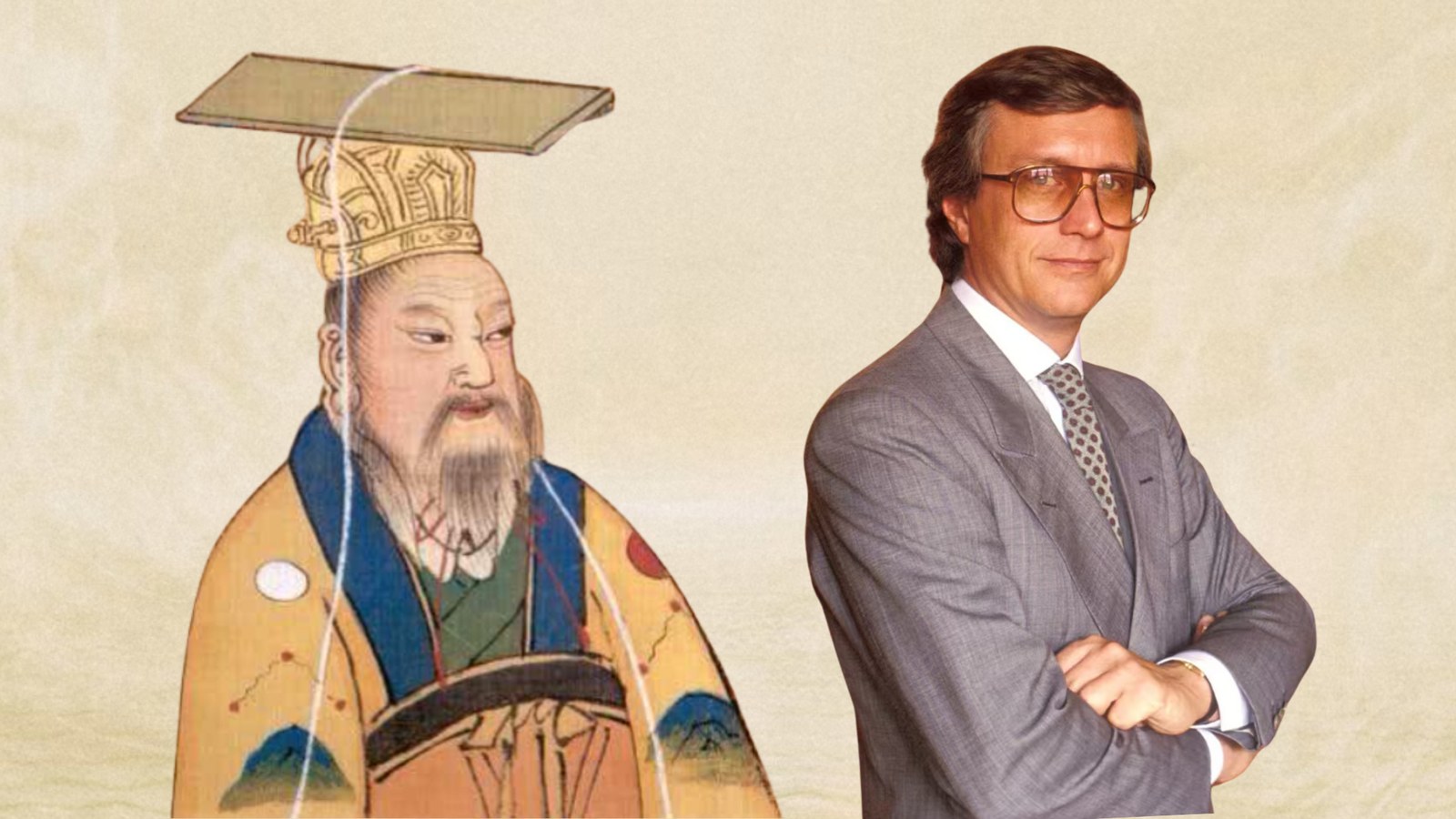

Succession tragedies: What Emperor Yang of Sui and Maurizio Gucci can teach family businesses
August 31, 2026
Both heirs diagnosed exactly what was wrong with what they inherited — and both were destroyed by how fast they tried to fix it
Across history — whether in imperial courts or corporate boardrooms — heirs have faced the same essential challenge: how can an heir take over a legacy that contains both achievement and hidden risk, preserve what works, address the weaknesses and carry the enterprise successfully into the next generation?
History does not repeat itself exactly, but it often follows remarkably similar patterns.
Emperor Yang of Sui (Yang Guang), the second emperor of China’s Sui dynasty, inherited the foundations laid by his father, Emperor Wen (Yang Jian). He set out to extend the dynasty through sweeping reform and even create an era of prosperity without precedent. The attempt failed: he was killed and the dynasty collapsed.
Nearly 1,400 years later in Italy, Maurizio Gucci, the third-generation heir to Gucci, inherited the luxury empire built by his grandfather Guccio Gucci and the second generation of the family. Determined to reverse the brand’s decline through reform, he also failed. He was forced out, and the Gucci family ultimately lost control of the company.
The two men seem to have nothing in common: one a medieval emperor, the other a modern executive; one commanding an agrarian feudal order, the other inheriting a business empire in the global luxury market. Yet each faced a strikingly similar succession dilemma. Emperor Yang took over a Sui empire that appeared strong but whose foundations were not yet secure: powerful aristocratic clans remained deeply entrenched, institutions were incomplete and a population worn down by years of war needed time to recover. Maurizio inherited a famous brand weakened by family infighting, excessive licensing, diluted positioning, confused management and poor efficiency.
Both men diagnosed the central problems in what they had inherited with unusual clarity. Both were ambitious reformers who wanted to ‘break first and build later’ in order to restore or create greatness. Yet similar errors in decision-making and governance, reinforced by personal shortcomings, intensified conflict, cost them support and ultimately destroyed both their own positions and the family legacies they had set out to preserve. The comparison matters today because many Chinese family businesses are now moving from the founding generation to the second. They face difficult operating conditions, pressure to transform and still-developing systems of family governance – challenges that make the lessons from these two failures especially relevant.
01 – Similar Dilemmas: Unstable Foundations and Hidden Risks
Every serious reform begins with an honest diagnosis. What distinguished Yang Guang and Maurizio from lesser inheritors was precisely their ability to see what was wrong. What undid them was everything that came after.
Emperor Yang of Sui
Emperor Yang’s father, Emperor Wen, founded the Sui dynasty in 581. In 589 he defeated the Chen dynasty in the south, ending more than three centuries of division and reunifying China. During his reign from 581 to 604, Emperor Wen introduced sweeping reforms. Politically, he established the Three Departments and Six Ministries system to centralize authority. Economically, he implemented the equal-field system and rent-service-cloth tax to ease the peasant burden. In education, he introduced examinations by subject, laying the foundations for the imperial examination system. Militarily, he reformed the fubing militia system, linking soldiers more closely to agricultural production. Population grew, social order stabilized and the state’s military capacity strengthened during what became known as the Kaihuang era of good governance.
When Emperor Yang took the throne in 604, he therefore inherited what looked like a strong and unified empire. That strength became the starting point for his later drive to reform on an even larger scale. But the foundation had three serious cracks. First, the great noble families of the northwest — the Guanlong aristocracy — had dominated Chinese political life for centuries, and their monopoly on office, land, and culture meant any aggressive reform would face organized, well-resourced resistance. Second, after three centuries of division and prolonged warfare, the social and economic base remained fragile despite over two decades of recovery. Third, the institutional reforms of his father — the administrative system, the equal-field system, the early examinations — were all unfinished, requiring patient, incremental work rather than decisive strokes.
Maurizio Gucci
Maurizio Gucci inherited a legacy that was similarly impressive on the surface and troubled underneath.
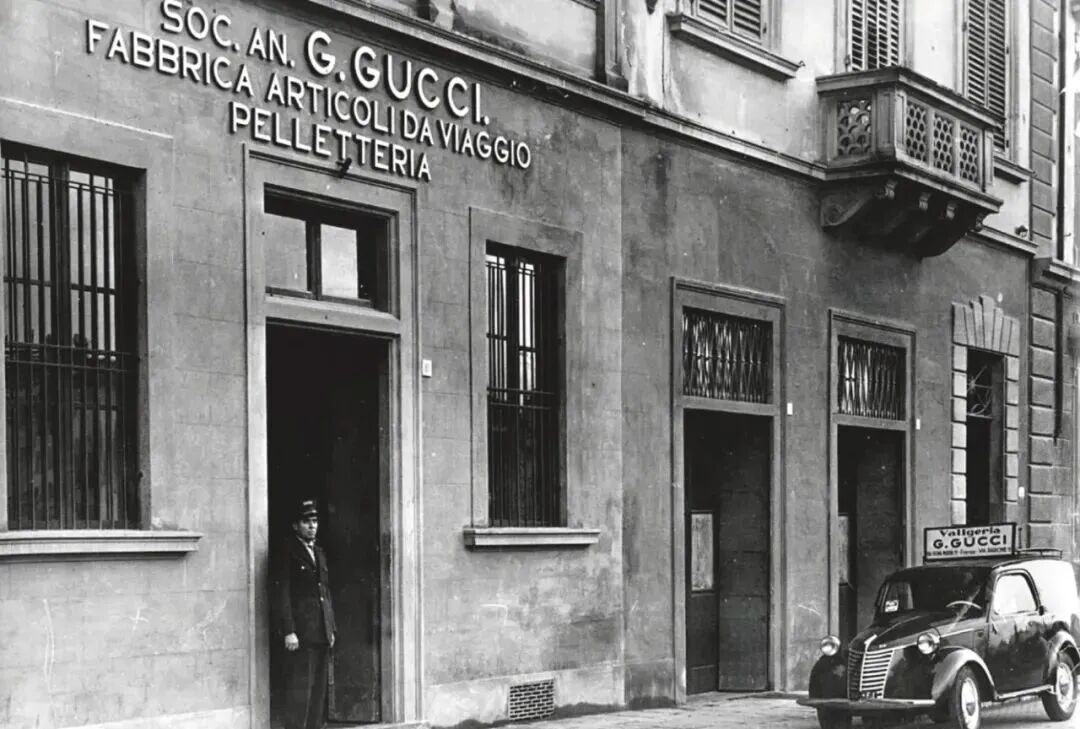
His grandfather Guccio Gucci founded the company in Florence in 1921 as a small leather-goods workshop. Craftsmanship and distinctive design turned it into one of Italy’s leading luxury leather brands. After Guccio’s death in 1953, his sons Aldo, Rodolfo and Vasco took over. Aldo, in particular, was a gifted businessman who drove Gucci’s international expansion and helped turn it into a global luxury benchmark.
Yet the success concealed mounting problems. The shareholding structure had fragmented across the three brothers and their children, with competing interests at every level — Aldo’s son Paolo Gucci was openly trying to seize control, while other family members were primarily interested in their dividends. Beneath that, management was unprofessional, supply chains chaotic, and aggressive licensing had blurred the brand’s luxury positioning and eroded its competitiveness.
Like the Sui empire inherited by Emperor Yang, Gucci was therefore a celebrated legacy that required systematic reform – but one whose underlying structure made reform difficult.
02 – Similar Reforms, Similar Backlash
Both Emperor Yang and Maurizio saw clearly what needed to change. Both chose the same approach: tear down the old order, then build the new one. Their reforms weren’t unreasonable in principle. They were catastrophic in execution.
Emperor Yang’s Reform Agenda
Emperor Yang launched comprehensive change across politics, economics, and the military. He formalized the imperial examination system — a genuine blow against aristocratic monopoly on talent. He began construction of a new eastern capital at Luoyang, partly to escape the physical stronghold of the Guanlong aristocracy. He dug the Grand Canal, linking north and south for grain transport and exchange. He reformed taxation and population administration, strengthened state monopolies over salt, iron and alcohol, and limited land concentration while encouraging cultivation. Militarily, he reformed the fubing system, standardized supplies and training, and pursued ambitious external campaigns.
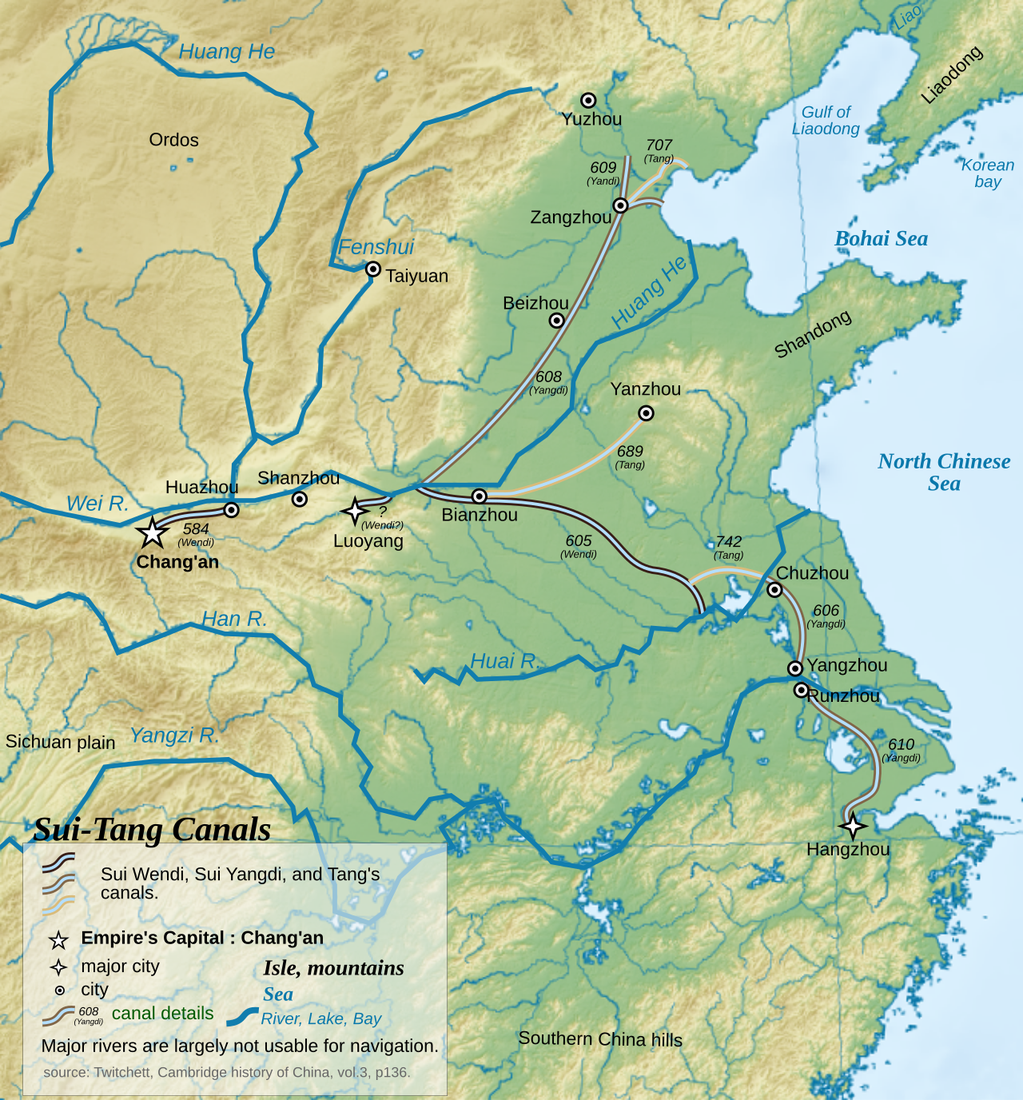
Many of these measures addressed genuine weaknesses, and some represented important advances in Chinese political and economic institutions. The problem was their cost and the speed with which they were imposed. Vast construction projects and repeated military campaigns exhausted resources and imposed heavy burdens on ordinary people. Farmers were driven into bankruptcy and displacement; the social cost was severe.
At the same time, reforms to examinations, the capital and landholding directly threatened aristocratic privilege, generating elite opposition that Emperor Yang compounded with his own temperament. He was self-willed and suspicious, resisted advice and failed to balance the interests of the groups on whose support the regime depended. When his palace guard mutinied, he was forced to take his own life. The dynasty soon fell.
Maurizio Gucci’s Reform Agenda
Maurizio’s approach was structurally similar, aiming to break the family’s entrenched interests and professionalize the company. He stopped extending new licenses and systematically revoked hundreds of existing ones, closing low-end product lines to concentrate resources on core luxury offerings. He hired internationally recognized designers, raised quality standards, and brought in professional management — including luxury industry talent like Domenico De Sole. Inside the family, he allied with his cousin Paolo Gucci to push uncle Aldo out.
The reforms, however, intensified family conflict and weakened Maurizio’s authority. Revoking licenses too quickly created supply gaps that drove customers away. Brand reinvestment required cash the business wasn’t generating. With cash flow deteriorating, outside investor Investcorp pressed for control. Maurizio — having alienated his family and without sufficient loyal support inside the business — was forced to sell his entire stake. The Gucci family lost the brand permanently.
Maurizio’s personal life was also troubled. He lived extravagantly, his marriage broke down and, several years after leaving Gucci, he was murdered by a hitman hired by his former wife.
Why Both Reforms Failed
Both men identified real problems and built reform agendas that were directionally sound. Both failed for the same reasons. First, their reforms went straight at entrenched interests without first securing the coalitions needed to withstand the inevitable counterattack — they ended up fighting alone. Second, although many of their reforms were reasonable in intent and both laid good foundations for the development of the coming Tang Dynasty / Gucci brand, they were too radical, offered too little transition, and were poorly matched to the realities on the ground. Behind both failures was a character problem as much as a strategic one. Both men were highly intelligent, but they lacked a holistic perspective and a long-term view. Both were impatient and prone to overreach; both preferred to break before they had built; and both were too self-willed to manage the relationships among competing interest groups. Their limitations of judgment and character were not incidental to the outcome – they were among its deepest causes.
03 – Lessons for Succession: How the Next Generation Should Reform
China’s family businesses are largely mid-transfer right now, moving from founders to their children. The heirs inheriting these businesses face a similar structural challenge: assets built by founding generations who combined genuine achievement with incomplete institution-building and unresolved risks. Many successors want not merely to preserve what their parents built but to surpass it, yet they can easily run into the same problems: insufficient authority, overly aggressive reform and an imbalance of interests. The failures of Emperor Yang and Maurizio therefore offer practical lessons for succession today.
Three principles stand out.
Principle 1: Prepare thoroughly before taking over
Succession should not begin with a rush to prove oneself. Preparation must be long-term and practical. First, successors need deep operational experience, which builds the ability to solve real operating problems, gives the successor a genuine understanding of the company and creates authentic links with employees. Cao Hui of Fuyao Glass entered the factory floor at eighteen, rose through supervisor roles, spent years opening markets in Hong Kong and managing government affairs in the United States, before formally taking over the group. Maurizio, by contrast, had little hands-on experience in Gucci’s core business before assuming control and had not spent time working alongside front-line employees. He had strategic vision but struggled to control the reform process or win employee support. Emperor Yang’s reforms likewise failed to take sufficient account of the actual condition of the population, contributing to hunger, displacement and social unrest.
Second, successors should build strong family relationships and an internal support system before taking over. The strength of a family business is family cohesion; its weakness is the risk of conflict when family interests and business interests are not handled well. Recent succession disputes involving families behind Chinese companies such as Wahaha and Shanshan have underscored how important family harmony can be. Before succession, the incoming generation needs to work with the founders to establish the right structures: fair dividend arrangements, family trusts, clear rules about who may hold which roles in the company, and defined processes for resolving disagreements. Burning family bridges in the name of reform tends to create the same dangerous isolation that undid both of our case studies.
Third, successors need to develop the thinking that complexity demands. The skills that created these businesses won’t be sufficient to sustain them. Successors need systems thinking, long-term orientation, and the capacity to hold competing priorities simultaneously. The failures of Emperor Yang and Maurizio show the danger of lacking that broader view.
Principle 2: After succession, reform gradually
Reform and innovation are often unavoidable after succession. But Emperor Yang and Maurizio made the same central mistake: they pushed change too aggressively. Their long-term direction was not necessarily wrong; the failure lay in moving before they had properly managed relationships inside the family, business or state, and before they had won support through trust and tangible results. For a new successor, the better sequence is to build before breaking: first establish relationships and a secure position, then introduce reforms gradually. Once the reforms produce results and earn recognition, move to the next stage.
Cash flow is particularly important in this process. What’s obsolete but still profitable buys time for what’s new to prove itself. New businesses, meanwhile, should aim to produce positive cash flow as early as possible, both to demonstrate results and to build support. Maurizio shut down his licensing business — which was generating revenue, however unglamorous — before his repositioning could replace that cash flow. The timing gap almost bankrupted him. Emperor Yang’s reforms similarly drained the state’s resources faster than they could be replenished.
Successors should build their own team while developing new businesses and maintaining relationships with family members and long-serving executives. Two criteria matter. The first is shared values: the team must be committed to the same direction and willing to work for the long-term development of the business. The second is complementary capability: the successor and the team, and the members of the team among themselves, should bring different strengths that together support sustainable growth.
Without such a support base, even a capable successor can become isolated. That was one of the clearest common features of both Emperor Yang’s and Maurizio’s failures.
Principle 3: Character and integrity are indispensable
Leadership of a family and leadership of a business ultimately depend on more than strategy. Character and conduct matter.
Emperor Yang lived extravagantly, ignored counsel, and treated the empire’s resources as instruments of personal ambition. Maurizio was similarly self-indulgent — his personal life grew increasingly disconnected from the pressures his business was facing. Both men, when the crisis came, had exhausted the goodwill their positions had initially conferred. Strategic ability cannot fully compensate for a lack of self-discipline and integrity.
The next generation of family business leaders starts fortunate. They inherit assets their parents spent lifetimes building. But that inheritance is a starting condition, not a guarantee. Sustaining it requires capability; sustaining it across time requires character.
Families – and especially founding-generation entrepreneurs – should treat the development of values and a sense of responsibility in their successors as seriously as any technical or operational preparation. And successors themselves should hold to high ethical standards. While that does not guarantee an easy transition, it greatly improves the chances of a successful succession. Leaders without that standard tend to end up, one way or another, where Emperor Yang and Maurizio Gucci ended.
History doesn’t repeat itself exactly. But the logic of succession often does.
This article originally appeared in Family Business magazine in August 2026: https://www.ckgsb.edu.cn/faculty/article/detail/157/25285.html
Enjoying what you’re reading?
Article Subscribe (1)
Professor profile
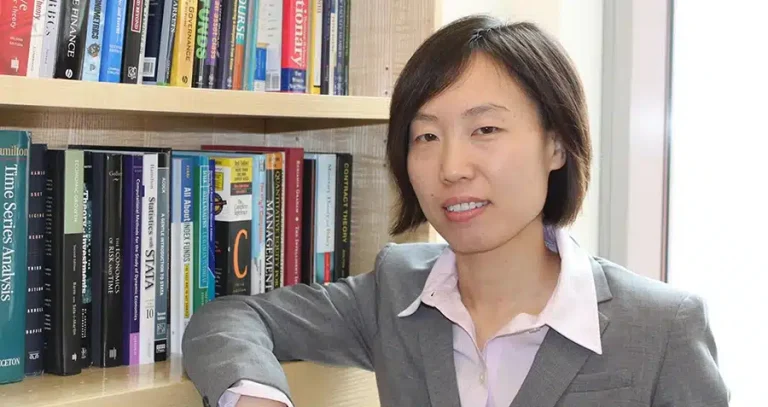
LI Haitao
Dean, Dean's Distinguished Chair Professor of Finance, and Director of Research Department on Family Business and Wealth Management, Cheung Kong Graduate School of Business (CKGSB)
PhD, Yale University



Related Articles




Our Programs

Emerging Tech Management Week: Silicon Valley
Global Unicorn Program Series
In partnership with UC Berkeley College of Engineering
This program equips participants with proven strategies, cutting-edge research, and the best-in-class advice to fuel innovation, seize emerging tech developments, and catalyse transformation within your organization.
LocationUC Berkeley
Date01 - 06 Nov, 2026
LanguageEnglish

Asia Start: AI + Digital China Expedition
Asia Start provides entrepreneurs and executives with unparalleled access to Asia’s dynamic digital economy and its business ecosystems, offering the latest trends and insights, strategies, and connections to overcome challenges and unlock future growth for your business in Asia and beyond.
LocationChina (Beijing, Shanghai, Hangzhou & optional Shenzhen)
DateNovember 2–7, 2026 | April 19–24, 2027
LanguageEnglish

Intelligent China: AI, EVs & Smart Manufacturing
Explore how China is advancing AI, electric vehicles and smart manufacturing through faculty-led sessions, company visits and exchanges with industry leaders. Build practical insights for your organization’s strategy, partnerships and investment decisions, with the flexibility to join individual four-day programs or the full 12-day series.
LocationBeijing
Date12 Days
LanguageEnglish

Emerging Markets: Innovation and Scaling for Exponential Growth – ASEAN
Learn China's AI and innovation strategy from its leading thinkers — brought to you in Jakarta, with an optional immersion in China — and connect with the business leaders driving it.
LocationJakarta, Indonesia
Date2–4 December 2026
LanguageEnglish (with Chinese translation)

Stanford & Silicon Valley Immersion Program
Global Unicorn Program Series
In partnership with Stanford Engineering Center for Global & Online Education
This CKGSB program equips entrepreneurs, intrapreneurs and key stakeholders with the tools, insights, and skills necessary to lead a new generation of unicorn companies.
LocationStanford University Campus,
California, United States
Date06 - 11 Dec, 2026
LanguageEnglish with Chinese Translation