


Anti-Involution, Overcapacity and China’s Domestic Demand Problem
October 08, 2026
China’s anti-involution drive and its overcapacity debate both risk obscuring the deeper problem of weak domestic demand
In July, Volkswagen said it could need to cut another 50,000 jobs, on top of reductions already agreed with labor representatives across its core Volkswagen brand and subsidiaries including Audi and Porsche. For the world’s second-largest automaker, the announcement was another sign of the enormous pressures facing a company that was once one of the dominant forces in the global automotive industry.
Volkswagen has pointed to three major challenges: rising costs in Europe, new US tariffs and the emergence of globally competitive Chinese technology. The first is a longstanding problem, exacerbated by European energy policies and the Russia-Ukraine war. US tariffs have added another source of pressure. But neither poses as fundamental a challenge as the rise of Chinese automakers.
Chinese companies can increasingly manufacture technologically advanced vehicles at lower prices, particularly in new energy vehicles (NEVs). This represents a profound competitive threat to established international manufacturers.
China was once Volkswagen’s most important market. In 2014, the company generated $5.2 billion in profit in China, accounting for around half of its total. By 2025, that figure had fallen to $960 million, and industry estimates suggest it could fall below $500 million this year.
Volkswagen is far from alone. Almost every foreign automaker in China faces similar pressures, with some, including General Motors, in an even more difficult position. In 2014, domestic Chinese automakers held only 41% of the Chinese market and were concentrated largely in lower-margin segments. By 2025, their share had risen to 67%.
Companies such as BYD are also globalizing rapidly. Chinese automakers now compete with established multinationals across virtually every market segment and are increasingly challenging them in their home markets, including Europe.
A changing competitive landscape
Volkswagen’s difficulties are closely connected to the rise of NEVs. The company became extraordinarily successful at manufacturing internal combustion engine vehicles, but consumer preferences have changed. The shift toward electric and other new energy vehicles provided Chinese manufacturers with a rare opportunity to overtake established competitors.
Volkswagen recognized the potential of NEVs relatively early and invested heavily in developing them. Germany and the European Union also provided substantial subsidies and tax incentives for research and consumer purchases, while Volkswagen’s electric vehicles benefited from incentives in markets including China and the US.
But NEVs are fundamentally different from conventional vehicles. Volkswagen attempted to reproduce the advantages it had developed in the internal combustion era, yet struggled to transform itself quickly enough. As Shanghai-based automotive consultant Bill Russo recently observed, the challenge is not simply to “build better EVs,” but to become “a completely different type of company.”
The problem, in other words, is not simply technological. Volkswagen has struggled with the process of reinventing itself.
The speed of the rise of Chinese automakers has surprised both international competitors and many observers within China. Chinese private-sector manufacturers were once associated primarily with low prices and relatively low quality. Increasingly, they offer both competitive prices and sophisticated products. Technology and quality have improved even as prices have continued to decline.
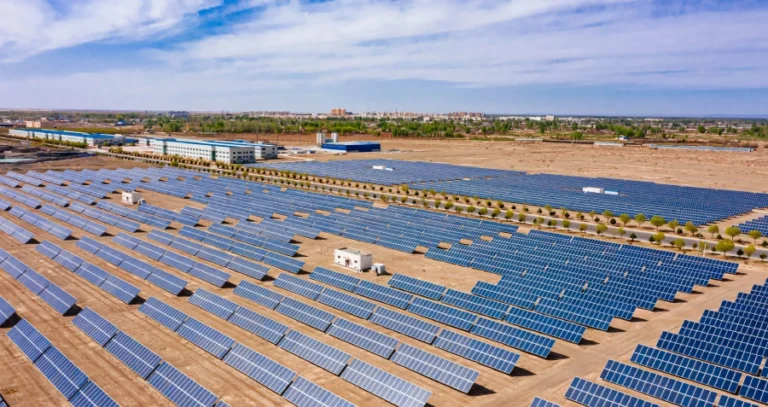
Nor is the automobile industry an isolated example. China has established leading positions in photovoltaics, lithium-ion batteries and wind power. Western economies increasingly depend on products from these industries while simultaneously worrying about the competitive pressure created by Chinese manufacturing.
It is against this background that terms such as “overcapacity” and “involution” have become prominent in discussions of the Chinese economy. Western governments increasingly criticize Chinese industrial capacity, while China itself has launched policies intended to address excessive competition.
The Chinese government therefore finds itself in an unusual position: attempting to tackle overcapacity and involution domestically while rejecting many of the criticisms of Chinese industrial policy coming from Europe and the US.
The danger is that poorly designed responses could suppress legitimate market competition. Policies intended to tackle overcapacity must distinguish between genuinely inefficient capacity and the normal competitive process through which industries develop.
What does overcapacity actually mean?
Overcapacity occurs when an industry’s productive capacity significantly exceeds market demand, producing excess supply, falling prices and unused factories or equipment.
It generally has three causes. The first is the economic cycle: when demand temporarily falls, existing capacity exceeds immediate requirements. The second is excessive investment, when high profits attract too many companies and factories into the same sector. The third is structural change, when technology or consumer preferences make older products less desirable.
These different forms of overcapacity require different responses. When overcapacity results from cyclical fluctuations, companies often retain unused capacity because demand can recover more quickly than new capacity can be built. Some firms may even expand during downturns in anticipation of future demand. Such temporary overcapacity is therefore an unavoidable feature of modern economies.
Overinvestment can also be resolved through market mechanisms. When too many companies enter an industry, weaker producers are eventually forced out while more efficient competitors expand. Overall capacity may fall even as the strongest companies increase production.
Structural overcapacity is similarly addressed as obsolete technologies and products disappear. Some degree of excess capacity is therefore normal in a market economy. Capital is relatively inexpensive, while the opportunity cost of being unable to satisfy strong demand can be considerable. Older Chinese readers will remember the shortage economy that existed before the development of the socialist market economy, when consumers frequently encountered shops unable to supply even basic products.
Markets have mechanisms for correcting excess capacity. Where entry and exit mechanisms function effectively, unusually severe overcapacity should be difficult to sustain indefinitely. Persistent overcapacity is more likely when governments, state-owned enterprises or companies considered “too big to fail” prevent inefficient capacity from exiting the market.
China’s NEV industry illustrates the distinction. BYD, Geely, Huawei and newer manufacturers including NIO, XPeng and Li Auto have been among the sector’s most dynamic companies.
They continuously introduce new products and reduce prices. Several have become profitable after achieving sufficient production scale. By comparison, many state-owned automakers and their multinational joint ventures have struggled to keep pace. There are many explanations, but institutional constraints and the reluctance of established multinationals’ managers to embrace creative destruction have undoubtedly played a role.
Legacy manufacturers also possess valuable patents, technical expertise, supply chains and brands built around conventional vehicles, giving them more to lose from technological disruption.
In a functioning market, leading NEV companies should increase production, reduce prices and expand market share. Less competitive manufacturers should either improve or gradually withdraw capacity.
Volkswagen’s planned job cuts are, from this perspective, a form of corporate self-preservation. They also represent the industrial restructuring and efficiency improvements that competition produces.
The more serious overcapacity problem arises when weaker companies cannot catch up with industry leaders but are nevertheless prevented by non-market forces from reducing capacity or exiting.
When “anti-involution” punishes the winners
One possible response to companies that cannot compete is to improve their efficiency. Another is to slow down the strongest competitors. The latter risks turning “anti-involution” policy into a mechanism that effectively punishes the fastest runners.
“Involution” — neijuan (内卷) in Chinese — has increasingly become shorthand in China for excessive competition. In the automotive industry, competition has undoubtedly become intense. Chinese manufacturers have continuously improved vehicle specifications while reducing prices, and Tesla and Chinese automakers have engaged in repeated price wars.
But consumers have benefited enormously. Cars in China now offer some of the best value for money anywhere in the world, while manufacturers constantly introduce new technologies and models.
Innovation also requires engineers, designers and other skilled workers. Fierce product-market competition forces successful companies to recruit and retain talent, expand production and build sales networks. This creates demand for labor.
Competition may therefore benefit consumers and workers even when it creates enormous pressure on less efficient companies. This does not mean governments should ignore problems associated with intense competition. Rather, they should distinguish between competition itself and abuses that undermine a fair marketplace.
First, governments should enforce market rules. Some large automakers, for example, have used their bargaining power to impose payment periods of 150 to 180 days on suppliers. China introduced regulations in 2025 to strengthen payment protections for small and medium-sized enterprises, and several major automakers subsequently committed to shortening payment periods to 60 days. This is an appropriate role for government: regulating the rules of competition rather than determining companies’ individual commercial decisions.
Second, complaints about excessive workloads should be addressed through labor law rather than by restricting product-market competition. China already has laws protecting employees’ rights to remuneration, rest, leave and safe working conditions, alongside arbitration mechanisms and courts capable of resolving labor disputes. The priority should be enforcing these protections.
Third, China must recognize the international implications of its domestic discussion of “involution.” Foreign governments can cite Chinese concerns about excessive competition as evidence supporting allegations that Chinese manufacturers are dumping products overseas.
Yet claims that Chinese automakers systematically sell vehicles abroad below cost do not correspond with their pricing strategies. Chinese vehicles are generally considerably more expensive overseas than at home. BYD’s Yuan Plus, marketed internationally as the ATTO 3, sells for RMB119,800–147,800 in China, while prices in many overseas markets are substantially higher.
Competition is essential to technological progress, productivity growth and the creation of high-income industries. Except where companies manipulate markets, abuse dominant positions or engage in predatory pricing designed to eliminate future competition, competition generally generates economic benefits.
Chinese companies became internationally competitive through competition, just as China’s economy developed through integration into global competition. Anti-involution policies should therefore target unfair practices rather than competition itself.
Otherwise, policies intended to address overcapacity could produce the opposite result. If legitimate competition is restrained, inefficient producers may survive for longer, delaying the elimination of obsolete capacity and potentially worsening overcapacity.
The deeper problem is domestic demand
Western governments increasingly argue that China is exporting its excess industrial capacity to the rest of the world, pointing to the country’s enormous trade surplus as evidence.
But the trade balance has a broader macroeconomic explanation. A country’s current account position reflects, among other things, the relationship between domestic savings and investment. China already invests heavily, but its savings rate is even higher. Domestic investment therefore cannot absorb all available savings, contributing to persistent external surpluses.
If China wants to reduce its trade surplus, it must either increase investment or increase consumption, particularly household consumption.
Given that China’s investment rate is already extremely high and the marginal returns on investment have declined, increasing household consumption is the more attractive option.
That, however, requires structural reform.
The fundamental objective should be to increase the share of national income available to households rather than government and corporations. One important element of China’s economic success since reform and opening-up has been its willingness to allow households to benefit from economic development.
There is also still room for productive private investment. Some industries remain relatively closed to private companies. Lowering barriers to entry could attract new investment in the same way that opening the NEV industry encouraged private-sector participation.
New investment creates employment, employment creates income, and income is one of the most important determinants of household consumption.
Opening protected industries would inevitably increase competition and therefore face resistance from incumbent companies. One way of overcoming such resistance is greater external opening.
Tesla’s entry into China accelerated the development of the domestic NEV industry. Similarly, the rapid development of SpaceX helped demonstrate the potential of commercial spaceflight, while China has increasingly opened its own space sector to private companies.
Emerging industries including artificial intelligence, robotics and biomedicine are likewise attracting private capital and skilled workers.
Tesla’s importance to China’s NEV industry goes beyond the competitive pressure created by its Shanghai factory. Its rise also demonstrated the potential returns available to investors. Tesla went public in June 2010 with a market capitalization of $2.23 billion. By the end of 2015, that figure had reached $30.77 billion.
Those returns encouraged investors and entrepreneurs to enter the electric-vehicle industry. Chinese entrepreneurs crossed into the sector from other industries, while domestic funds, local-government industrial funds and international dollar-denominated funds provided capital to emerging manufacturers.
This combination of competition, entrepreneurship and capital helped create today’s Chinese NEV industry. Policies targeting overcapacity can alter the composition of China’s trade surplus, but they cannot by themselves eliminate its underlying macroeconomic causes. Doing that requires structural reform.
This leads to an important question. Economic development is normally measured in terms of output, most obviously through gross domestic product. If greater output is normally considered desirable, why should productive capacity itself become a source of anxiety?
The deeper issue facing China is arguably not excessive productive capacity but insufficient domestic demand. Addressing weak domestic demand requires structural reform. Treating productive capacity itself as the problem risks addressing the symptom rather than the cause.
Meanwhile, established Western companies facing stronger Chinese competitors have an obvious incentive to support tariffs and non-tariff barriers. The latest wave of competition from Chinese manufacturers is increasingly described as a “China Shock 2.0,” following the first “China Shock” associated with China’s accession to the World Trade Organization and its subsequent emergence as a manufacturing powerhouse.
The consequences of China’s manufacturing expansion are global, and developing economies may in some respects face even greater competitive pressure because their industrial structures overlap more directly with China’s.
For China, the priority should be to distinguish carefully between genuinely harmful market practices and the competitive forces that have driven its industrial development.
Overcapacity, involution and insufficient domestic demand are related issues, but they are not interchangeable.
Suppressing fair competition in an attempt to protect weaker companies would risk undermining precisely the forces that made Chinese industry competitive in the first place.
The more sustainable response is to allow markets to eliminate inefficient capacity, enforce fair competition and labor protections, open more sectors to private investment and pursue the structural reforms needed to raise household income and consumption.
The objective should not be less competition, but better competition—and an economy in which stronger domestic demand allows more of the benefits of China’s productive capacity to be enjoyed at home.
Enjoying what you’re reading?
Article Subscribe (1)
Professor profile

LI Wei
Professor of Economics, Associate Dean for Asia and Oceania, Director of Case Research Department and Director of Big Data Economic Research Department, Cheung Kong Graduate School of Business (CKGSB)
PhD, University of Michigan





Related Articles


Our Programs

Emerging Tech Management Week: Silicon Valley
Global Unicorn Program Series
In partnership with UC Berkeley College of Engineering
This program equips participants with proven strategies, cutting-edge research, and the best-in-class advice to fuel innovation, seize emerging tech developments, and catalyse transformation within your organization.
LocationUC Berkeley
Date01 - 06 Nov, 2026
LanguageEnglish

Asia Start: AI + Digital China Expedition
Asia Start provides entrepreneurs and executives with unparalleled access to Asia’s dynamic digital economy and its business ecosystems, offering the latest trends and insights, strategies, and connections to overcome challenges and unlock future growth for your business in Asia and beyond.
LocationChina (Beijing, Shanghai, Hangzhou & optional Shenzhen)
DateNovember 2–7, 2026 | April 19–24, 2027
LanguageEnglish

Intelligent China: AI, EVs & Smart Manufacturing
Participants may join the full 12-day series or select individual programs based on their interests and priorities.
LocationBeijing
Date12 Days
LanguageEnglish

Emerging Markets: Innovation and Scaling for Exponential Growth – ASEAN
Learn China's AI and innovation strategy from its leading thinkers — brought to you in Jakarta, with an optional immersion in China — and connect with the business leaders driving it.
LocationJakarta, Indonesia
Date2–4 December 2026
LanguageEnglish (with Chinese translation)

Stanford & Silicon Valley Immersion Program
Global Unicorn Program Series
In partnership with Stanford Engineering Center for Global & Online Education
This CKGSB program equips entrepreneurs, intrapreneurs and key stakeholders with the tools, insights, and skills necessary to lead a new generation of unicorn companies.
LocationStanford University Campus,
California, United States
Date06 - 11 Dec, 2026
LanguageEnglish with Chinese Translation