

Decoupled but entangled: What the Trump-Xi summit means for the global economy
May 11, 2026
With the Iran war reshaping US-China dynamics and tariff battles entering a new legal phase, Professor Tao Zhigang of CKGSB explains why decoupling is now a fact—but cooperation remains essential
When President Donald Trump first went to China in 2017, the world was still riding the tide of globalization. Nearly nine years later, as he prepares for a return visit now expected in mid-May, the landscape has been transformed almost beyond recognition. The two largest economies in the world have effectively decoupled. A trade war that began with tariffs has escalated through technology export controls, rare earth restrictions, and port fees on Chinese-built ships. The US Supreme Court has struck down Trump’s emergency tariffs, triggering a scramble to rebuild them through Section 301 investigations. And a war in Iran has closed the Strait of Hormuz, sending oil prices above $100 a barrel and adding a volatile new dimension to every calculation in Washington and Beijing.
Against this backdrop, the postponed Trump-Xi summit carries enormous stakes—not just for the bilateral relationship, but for the shape of the global order. To make sense of what each side wants and what business leaders should watch for, we spoke with Tao Zhigang, Professor of Economics at CKGSB. Professor Tao, who earned his PhD from Princeton University and previously served on the faculty of the University of Hong Kong, specializes in international economics, trade frictions, and corporate strategy under geopolitical uncertainty. His research has shown that US tariffs, paradoxically, tend to make Chinese exporters more competitive while weakening American firms—a finding with profound implications as the two countries head into yet another round of negotiations.
Q. The Trump-Xi summit has been postponed and is now expected in mid-May. Given the Iran war, the Supreme Court tariff ruling, and the new Section 301 investigations, how has the context for this meeting changed? What does each side most want from it?
A. The context may have changed, but the fundamental issues between the US and China have not. Trump is taking actions in many different directions, and situations are changing on a daily basis, but the core issues remain.
Starting from Trump 1.0, the US wanted decoupling. China kept telling the US it was not in their best interest. But by now, China has accepted—and the whole world has accepted—that you have this decoupling of the two largest economies. It is a fact. So the issue now is how the two countries can stabilize the global economy while each pursues its own objectives, but respects the red lines set by the other side.
China’s red lines are clear: we have our right to grow, to compete, but the US cannot impose constraints on China’s ability to develop technologically or move up in value chains. You can’t say “you can’t do this, you can’t do that,” especially through long-arm jurisdiction. US laws are laws in the US, but they are also being applied as laws for all other countries. When the US tells the Netherlands it can’t sell advanced computer chip-making machines to China, China says, fine, I’ll develop my own. But imposing port fees on Chinese-built ships when they pass US ports? That is no different, in principle, from Iran’s control of the Strait of Hormuz.
China understands tariffs as part of American domestic politics—the US has decided to impose tariffs, which are effectively taxes on consumers, while reducing taxes for corporations. China’s response is symmetrical: if you impose tariffs, I impose tariffs. If you impose high tariffs, I impose high tariffs. And if you impose extra charges on Chinese-built ships, I restrict rare earths. We are now living in a world where it’s all about whether you have choke points—something that will stop the other side from doing something bad to you.
As for what the US wants, on the surface it seems clear: China buys soybeans, Boeing airplanes, energy products. These are things that make Trump look good, and China will do that—it was doing that, ironically, even before Trump 1.0. But perhaps more important is the re-industrialization of the US economy. I can see a valid point for that. The US used to operate on a “just in time” model; now it’s “just in case.” In this area, China could actually help the United States significantly.
For example, China’s battery maker CATL agreed to license technology to Ford, so the entity in Michigan is 100% owned by Ford, located in the US, employing Americans. Is that American or Chinese? The Chinese side is genuinely puzzled why this would be considered a Chinese operation. It makes us feel like we don’t understand what Americans really want.
Q. The US has imposed a naval blockade on Iranian ports in the Strait of Hormuz, and China has called it “dangerous and irresponsible.” With 98% of Iranian oil exports going to China and Beijing increasing imports from Russia to compensate, how does the Iran conflict reshape the power dynamics heading into the summit?
A. China has been remarkably quiet on this crisis. When China says it’s “dangerous,” it means dangerous not just for the rest of the world but for the United States—because Trump himself stated he doesn’t want the US dragged into another long war. “Irresponsible” because even US allies are suffering from higher energy costs.
Some Western commentators have tried to frame the war as part of a strategy to contain China, to make China’s life difficult. I disagree—I think that’s a bit overstretched.
China sees both challenges and opportunities. The challenges are obvious: China imports a lot of oil from the Middle East. But compared with Japan and South Korea, China is less impacted because it has a more diversified energy mix—oil from Russia, from Central Asia, and significant renewable energy, nuclear power, and hydroelectric capacity.
The opportunities are more interesting. China sees this as a paradigm shift for the future of energy. The future is renewable energy—wind, solar, batteries, electric vehicles. In contrast, the US is sticking with fossil fuels, oil and gas, and internal combustion engines. These are two different worlds.
So I would say China’s position is not much impacted by the Iran crisis. China doesn’t like any uncertainty, but its diversified energy sources and its leadership in renewable energy give it a degree of resilience that other countries lack.
Q. The Supreme Court struck down Trump’s emergency tariffs, and the administration has responded with Section 122 tariffs and sweeping Section 301 investigations. China has launched counter-investigations. How do you see this chess match playing out?
A. The Trump administration is obviously very upset with the Supreme Court ruling. What they are doing now is rushing through the paperwork for Section 301. The Section 122 tariffs only last until July, so Trump needs to get the 301 investigations completed quickly enough to restore the majority of the tariffs that were struck down. I have no doubt he will be able to do that.
But here is the key point: even with the weapon of Section 301, I don’t think Trump will impose tariffs on China at a level higher than what was agreed in the October trade truce. That truce represents a set of equilibrium that both sides are okay with. China was using rare earths, the US was using tariffs—and in the end, they reached a balance. The 301 investigations are tactics, but the equilibrium will hold.
The two economies have decoupled. China’s exports to the US declined significantly last year, and in the first few months of this year, they decreased further. We are living in two different worlds, basically. Each side has its own choke points—its own nuclear weapon, if you like—and eventually they will settle at a level that is reasonable. They will not repeat last year’s trade war.
Q. EVs and the auto sector remain a key flashpoint. Is a deal on automotive investment realistic?
A. Six months ago, I would have said yes—China could collaborate with US automakers to build EV capacity. Not anymore. The Trump administration is very happy with America’s abundance of oil and gas. The whole world is coming to the US to buy liquefied natural gas. The calculation has changed completely.
I actually feel sorry about that, because I think the US will miss the opportunity to embrace disruptive technologies before most other countries go green. It will be a battle of two different energy sources.
What is especially ironic is that the US invented the electric vehicle in the first place. General Motors did it in 1996 in California. Then came Tesla. The US was the leader, but it built from zero to one and then didn’t want to go from one to 100, because of domestic interest groups. I think it’s a real loss.
Q. Your research has shown that protectionism ultimately makes Chinese exporters more competitive while raising costs for US consumers. With the midterm elections approaching in November, does this constrain how aggressively Washington can push on tariffs?
A. Yes, but it’s part of US politics. Trump would argue that while consumers may pay higher prices, they are being protected in their jobs. He’s using high tariffs to attract foreign investment and create employment.
But my research tells a more complicated story. I looked at anti-dumping investigations, where the US was able to impose tariffs of 100% or more. What I discovered is that 40% of Chinese exporters simply vanish under those conditions. But the remaining 60%—the survivors—grow even stronger. It’s as if you raise the bar and those who can still clear it become more competitive in the process. The weak are weeded out, and the strong get stronger.
For US consumers, the news is bad: researchers at the Federal Reserve have shown that 90% of tariffs are paid by American consumers. But what is equally interesting is research by a co-author of mine, a senior economist at the Federal Reserve, which shows that this kind of protection actually makes American firms weaker. When you protect an industry, you’re protecting both the strong and the weak. The weaker firms survive when they shouldn’t, while the stronger ones have less room to grow. So the US steel industry, for example, cannot consolidate and become more efficient because the protection keeps inefficient producers alive.
Now imagine five or ten years down the road: Chinese firms are stronger, American firms are weaker. If there’s a rematch, the outcome is predictable. That’s the unintended consequence of protectionism.
Q. China recorded a trade surplus of nearly $1.2 trillion in 2025 by redirecting exports to Southeast Asia, Africa, and other markets. How sustainable is this pattern?
A. As I said, when you raise barriers, you make the surviving firms stronger and more competitive. That explains part of it. But this is not sustainable through exports alone. The real path forward is direct investment.
This is what the Japanese did in the 1980s, setting up auto factories in the United States. Chinese firms want to invest abroad—in fact, they want to invest in the US too. This is the part that puzzles us: if the US wants to make its economy stronger, why not let Chinese firms invest, bring in jobs and tax revenue? A laboratory in Princeton, New Jersey, is in your country. It’s yours.
Chinese overseas investment is already massive—in Indonesia, Kenya, Uganda, Central Asia, the UK, Switzerland. Chinese exporters realize their exports are not going to be sustainable in the long run. The way forward is direct investment. I sit on the board of a company called WOOK. It was set up by a former student of mine who went to Indonesia 15 years ago with just over $10,000. He started with small electric appliances, discovered the local products were low quality with no warranty, and built a brand. Now his company supplies about 90,000 small shops across Indonesia, the Philippines, Vietnam, and Thailand, and is about to list in Hong Kong. That’s how you do it—you want to be in Asia for Asia.
The country I like most as a model is Indonesia, because its trade with China is a loop—China buys resources and sells processed goods, while Indonesia sells its own resources to the US and buys Boeing aircraft. The two circles don’t intersect too much. It’s not like Vietnam or Cambodia, which are simply processors—buying parts from China, assembling, and re-exporting to the US. That doesn’t work in the long run. There’s a saying: when two elephants fight, you don’t want to be stuck in the middle.
Q. President Xi recently told Trump that Taiwan is the “most important issue” in US-China relations. Could a deal be struck—a better commercial package in exchange for a statement on Taiwan that Beijing could claim as a victory?
A. No. Taiwan is a red line, not a bargaining chip. A red line means: you cannot touch this, and if you do, I will retaliate. It is not something you can trade. China will not strike a deal with Trump on Taiwan.
What China wants is consistency. We had an agreement when we re-established diplomatic relations. Why do you keep changing your position? China would appreciate it if the US simply stuck to whatever commitments were already made.
People always say China will go to war to take back Taiwan. No. If you read The Art of War, what China has been doing is developing its economic and military power to a level where Taiwan will simply have no other option. That is the Chinese way—not war, because Chinese fighting Chinese leaves consequences that last for decades. As China grows bigger economically and militarily, it becomes a non-issue. What China wants is that no other country interferes by encouraging Taiwan to act in ways that complicate reunification.
Q. You have written about US strategic priorities—control of the Western Hemisphere, cost-shifting to Europe, freedom of navigation in East Asia. How does the Iran war affect Trump’s ability to pursue his agenda with China?
A. That framework comes from my reading of the US national security strategy document issued last November. If you read it, the priorities are very clear: control of the Western Hemisphere, burden-sharing with European allies, and freedom of navigation in Asia.
Interestingly, Trump has been making exactly the same argument since 1987, when he bought newspaper ads saying that European allies, the Japanese, and the Saudis had been taking advantage of the United States. What he has been doing is exactly what he said 39 years ago.
On Iran, I think Trump got into this war thinking he would win easily. Now he’s trying to figure out how to exit without losing his credibility or his allies. Yes, he got distracted. That’s why he postponed the summit. I hope he will make the trip in mid-May. The summit is important—for both countries and for the world. Face-to-face meetings matter.
Q. For C-suite executives navigating the Iran conflict, US-China trade tensions, and an increasingly fragmented global order, what is your single most important piece of strategic advice?
A. Embrace competition and globalization—and at the same time, do more on social responsibility.
If there are only two policies in the world for any government, the first is whether you want to pursue globalization or not. I believe globalization makes the pie bigger. It gives you access to global markets and global resources. But it can also make the world more unequal, which is why you also need redistribution. There are many things companies can do to help those who suffer from globalization—retraining programs, for instance, instead of simply laying people off.
Deng Xiaoping had a saying: globalization is like opening your window. Fresh air comes in, but so do mosquitoes. You face the world, you face the competition. It’s not comfortable living in an enclosed space, but in the long run, exposure to the world makes your immune system stronger.
Competition makes firms stronger in the long run. Globalization offers more opportunities. But corporations also have to carry out social responsibilities. At CKGSB, a core course for every student is “doing good.” Making the pie bigger while also helping those who are displaced by the process—those are the twin strategies.
About the Interviewee
Tao Zhigang is Professor of Economics at Cheung Kong Graduate School of Business (CKGSB). He holds a PhD in Economics from Princeton University and previously served on the faculty of the University of Hong Kong. His research focuses on international economics, China-US trade frictions, and corporate strategy under geopolitical uncertainty. He has published extensively on how trade barriers affect firm competitiveness and has served as an independent director of energy and technology companies in China.Enjoying what you’re reading?
Article Subscribe (1)
Professor profile
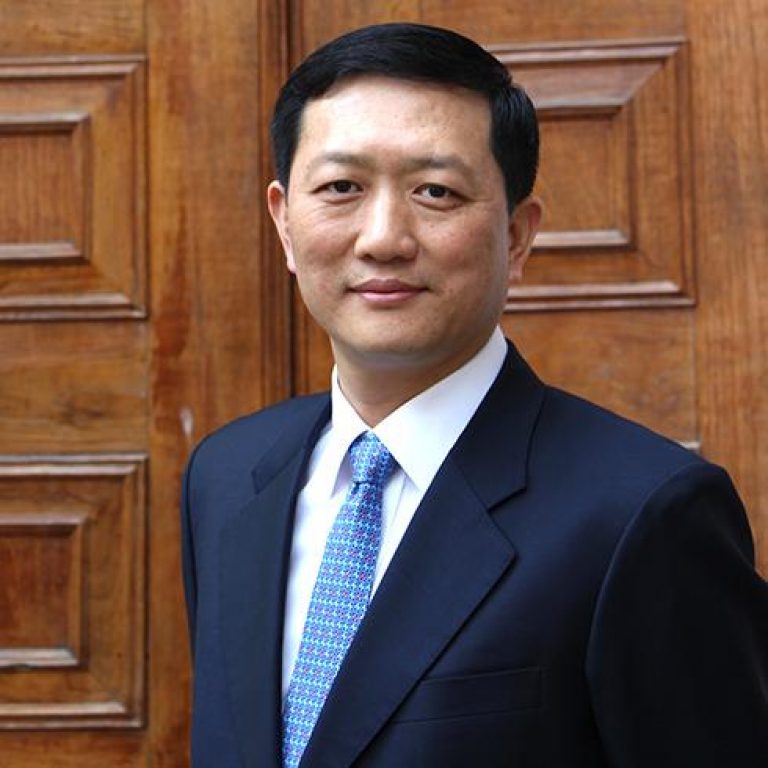
TAO Zhigang
Professor of Strategy and Economics and Associate Dean for Europe, Cheung Kong Graduate School of Business (CKGSB)
PhD, Princeton University



Related Articles

Our Programs

Emerging Tech Management Week: Silicon Valley
Global Unicorn Program Series
In partnership with UC Berkeley College of Engineering
A technology management program for leaders looking to turn emerging technologies into business opportunities.
Combining proven strategies and cutting-edge research, the program helps participants fuel innovation, seize opportunities in emerging technologies, and catalyze transformation within their organizations. Designed for managers, start-up leaders, and technology investors, it includes visits to venture capital firms and technology companies, alongside mentored group projects.
LocationUC Berkeley, California, United States
Date01 - 06 Nov, 2026
LanguageEnglish
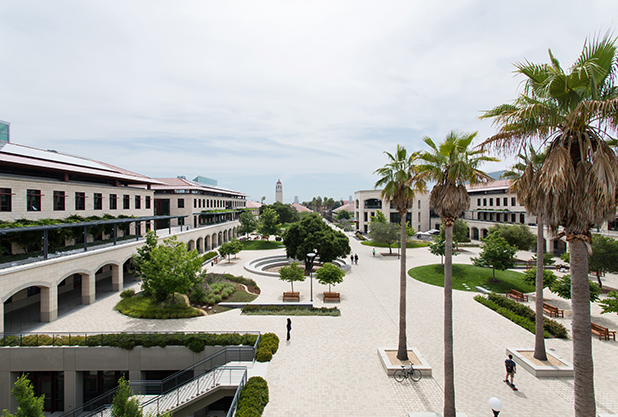
Stanford & Silicon Valley Immersion Program
Global Unicorn Program Series
In partnership with Stanford Engineering Center for Global & Online Education
A Silicon Valley immersion for entrepreneurs, intrapreneurs, and investors leading and scaling AI-driven companies.
The program combines academic learning with visits to AI and robotics labs and Silicon Valley companies, giving participants direct exposure to emerging technologies and the businesses developing and applying them.
LocationStanford University Campus, California, United States
Date06 - 11 Dec, 2026
LanguageEnglish with Chinese Translation

Emerging Markets: Innovation and Scaling for Exponential Growth – ASEAN
A China-focused innovation program for ASEAN executives and business owners responding to the impact of AI on their industries.
Gain insights from leading Chese thinkers in Jakarta, with an optional immersion in China and opportunities to connect with the business leaders driving innovation. The program offers a closer look at how developments in China could affect your industry and business.
LocationJakarta, Indonesia
Date23–26 March 2027
LanguageEnglish (with Chinese translation)
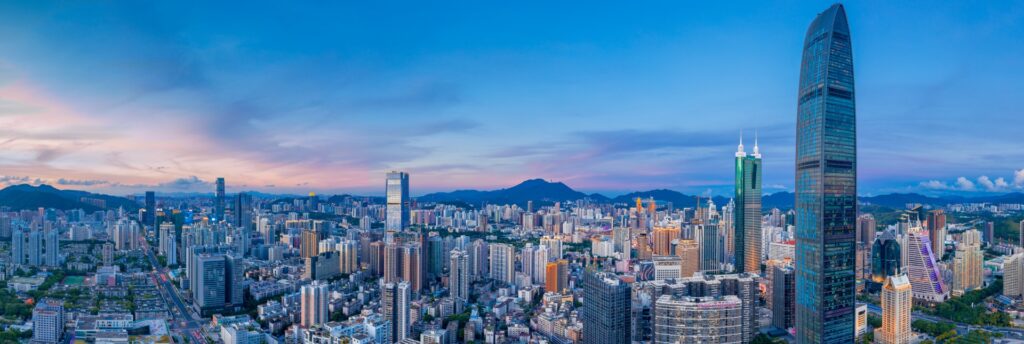
Asia Start: AI + Digital Ecosystem China Expedition
An immersive program for entrepreneurs and executives looking to understand China's AI and digital economy firsthand.
Gain the latest trends and insights, strategies, and connections to overcome challenges and support future business growth in Asia and beyond.
LocationChina (Beijing, Shanghai, Hangzhou & optional Shenzhen)
DateApril 19–24, 2027
LanguageEnglish

Intelligent China: AI, EVs & Smart Manufacturing
A three-part program examining China’s advances in AI, electric vehicles, and smart manufacturing.
Through faculty-led sessions, company visits, and exchanges with industry leaders, gain practical insights for your organization's strategy, partnerships, and investment decisions. Join an individual four-day program or complete the full 12-day series.
LocationBeijing, Shenzhen, Shanghai, and Hangzhou
DateSummer – Winter 2027 (three 4-day programs)
LanguageEnglish