

Succession in Southeast Asian Chinese Business Families
January 07, 2026
With longer corporate histories and early exposure to global markets, Southeast Asian Chinese business families offer useful lessons in balancing traditional values with modern systems of ownership and governance
In July 2025, Shangri-La Asia, which is headquartered in Hong Kong and listed in both Hong Kong and Singapore, announced that its current board chair and executive director, Kuok Hui Kwong, would take on the role of CEO from August 1.
The announcement marked a leadership change at the Shangri-La Group, which owns, operates and manages more than 100 hotels and resorts across nearly 80 countries and regions worldwide. The group will now be led by a woman whose father is Kuok Hock Nien, founder of the Kerry Group and Malaysia’s wealthiest individual.
Before Kuok Hui Kwong assumed leadership of the Shangri-La Group, her two elder brothers, Kuok Khoon Cheng and Kuok Khoon Ean, both children of Kuok Hock Nien and his first wife, had previously held senior roles, serving as director and group chair, respectively. Both later stepped away from the group’s core management for various reasons. Kuok Hui Kwong’s appointment has once again brought attention to how Southeast Asian Chinese business families approach succession.
Many founders of Southeast Asian Chinese family enterprises originally came from Guangdong, Fujian and Hainan and were deeply shaped by traditional Chinese culture. Kuok Hock Nien’s ancestral home is Fuzhou in Fujian. Chia Ek Chor, founder of Thailand’s Charoen Pokphand Group, was born in Chenghai, Guangdong. Oei Tjong Hauw, founder of Indonesia’s Kian Gwan Group, traced his roots to Quanzhou in Fujian. Henry Sy, founder of the Philippines’ SM Group, was born in Xiamen, Fujian. Goh Cheng Liang, founder of Nippon Paint, originated from Chaozhou, Guangdong.
Because of this background, it is often assumed that when it comes to passing on businesses and wealth, these families would follow traditional Confucian norms, with sons, especially eldest sons, inheriting control. In reality, however, Southeast Asian Chinese business families have generally taken a more modern approach. They rely heavily on trust structures, formal corporate governance systems and structured programmes to develop future leaders.
Mainland Chinese business families face many of the same questions. How should they balance deeply rooted cultural traditions with modern legal and governance systems when planning business and wealth succession?
Because many Southeast Asian Chinese business families left mainland China in the late Qing dynasty, their corporate histories are often at least a century longer than those of mainland families. Their experience, therefore, offers useful lessons.
Equity and management succession: combining trusts with modern corporate governance
When the first generation of Southeast Asian Chinese entrepreneurs built their businesses, they often used their home countries and the broader Southeast Asian market as a starting point. This meant they encountered western markets and business practices relatively early and adopted modern corporate governance systems sooner.
Kuok Hock Nien, for example, began his career in Malaysia’s sugar industry before expanding into Singapore and Indonesia and later entering Western markets such as the United Kingdom. This path eventually earned him the nickname “the world’s sugar king”. Along the way, he became familiar with Western ideas around management, governance and succession. As a result, when planning his own family’s succession, he was comfortable adopting modern tools such as trust-based ownership and structured governance arrangements.
Using family trusts and holding companies to retain control over business ownership is common among Southeast Asian Chinese families. In the Kuok family’s case, the Kuok Group, established in 1949, now functions primarily as a family holding company rather than an operating business. It holds stakes in listed companies including Wilmar International, Kerry Properties and Shangri-La Asia. Part of the family’s ownership is also held through trusts.
This structure brings several benefits:
First, it allows core family assets to be managed centrally, reducing the risk that ownership becomes fragmented across generations. Trusts can be designed to hold shares over the long term, preserving family control.
Second, legal documents such as family constitutions, trust deeds or shareholder agreements can restrict the transfer of shares to outsiders, helping maintain stability.
Third, ownership stakes can be linked to contribution. Family members’ equity can be adjusted based on their involvement and performance, encouraging active participation rather than passive inheritance.
According to media reports, Kuok Hock Nien introduced a points system in the family constitution. His children are assessed on factors such as business performance, charitable contributions, commercial judgment and risk management. Only those who meet set standards are allowed to enter the group’s core management. He also placed 35% of his assets, valued at approximately $120 billion, into a sustainability trust, aiming to combine social responsibility with the long-term development of the next generation.
Indonesia’s Kian Gwan Group uses a dual-layer trust structure. One trust focuses on asset protection and holds shares in the core businesses to ensure control remains concentrated. A second trust manages income distribution, providing family members with living support and start-up funding for new ventures. This approach protects long-term control while giving younger generations room to innovate.
Before his death, Nippon Paint founder Goh Cheng Liang transferred 55% of his stake in Tokyo-listed Nippon Paint Holdings to six of his eight third-generation grandchildren through a family investment company. The shares, valued at approximately $10 billion, immediately made the six beneficiaries billionaires. Actual control of the group, however, remains with Goh’s eldest son, Goh Hup Jin, who holds 91% of the voting rights in Nippon Paint Southeast Asia International.
Beyond trusts, many Southeast Asian Chinese families separate ownership from management, keeping control within the family while leaving day-to-day operations to professional managers.
The Kuok family, for example, uses a three-tier governance structure. A family council sets overall strategy and manages internal family interests. A board of directors, made up of family members, independent directors and industry experts, oversees the company, with independent directors accounting for around 40%. Daily operations are handled largely by professional management teams. This structure allows the family to retain influence without becoming overly involved in operations.
Other major Southeast Asian Chinese enterprises follow similar models. Charoen Pokphand introduced modern governance systems during the second generation under Dhanin Chearavanont. Independent directors make up more than 40% of the board, which also includes specialist committees overseeing areas such as strategy, audit and remuneration. While Dhanin’s three sons oversee different business segments, professional managers are responsible for daily operations.
Bangkok Bank offers another example. Founder Chin Sophonpanich had two sons. His younger son joined the bank in 1959, starting in a junior accounting role and gradually moving through senior positions. However, when Chin Sophonpanich stepped down as president in 1977, he did not appoint his son. Instead, he promoted an experienced professional manager. His son later became chairman, allowing for continuity without disrupting management stability.
Nippon Paint follows the same principle. At the group’s fiftieth anniversary in 2012, Goh Cheng Liang said that professional management, clear delegation of authority and respect for professional managers were key reasons the company had remained an industry leader. While ownership stays with the family, operations are fully entrusted to professional teams.
Developing successors: building structured training systems
Because ownership is firmly secured, Southeast Asian Chinese families are often more relaxed about who eventually runs the business. This allows them to focus on systematic training rather than rushing succession.
The Kuok family created comprehensive development plans for the next generation. Family members were encouraged to pursue top-tier education. Kuok Hui Kwong graduated from Harvard University, while Kuok Khoon Cheng earned an engineering degree from the National University of Singapore and later an MBA from Stanford University.
They also gained practical experience. Kuok Hui Kwong worked as an analyst at JPMorgan before joining the South China Morning Post Group as an executive director. She later served as board chair at Shangri-La before taking on the chief executive role.
Indonesia’s Kian Gwan Group established an even more structured approach. Successors must rotate across different countries and business units, spending at least two years in each role. They are required to speak Chinese, English and Indonesian and must work outside the family business for three to five years before joining.
Singapore’s so-called “spring roll king” Wee Chit Hui family requires all children to work at the grassroots level before promotion. The family has stated publicly that the company is not a charity and that underperformers must leave, regardless of family ties.
Even with careful planning, succession does not always proceed smoothly. Kuok Hui Kwong replacing her brothers is one example. Other families have faced unexpected events such as the early death of a planned successor or younger generations not being ready in time. In these cases, shared leadership between family members and professional managers often becomes unavoidable.
Family values and corporate culture: preserving Chinese traditions
Many first-generation Southeast Asian Chinese entrepreneurs were deeply influenced by traditional Chinese values, which shaped both family culture and corporate philosophy.
Kuok Hock Nien, for instance, was strongly influenced by his mother, who wrote a personal maxim advising that wealth is meaningless if descendants lack ability and unnecessary if they surpass their predecessors. The message emphasized moral conduct, social responsibility and restraint.
In his autobiography, Kuok described his relationships with political and business leaders across Southeast Asia. While commercial interests mattered, he was willing to prioritize loyalty and moral responsibility when friends faced difficulties. His businesses also supported national development efforts in Hong Kong and mainland China during critical periods, reflecting traditional values of obligation and gratitude.
Similar traditions appear across the region. One founding family of Thailand’s Siam City Bank traced its roots to early revolutionary movements supporting Sun Yat-sen. The family later funded the establishment of Thailand’s first fully Chinese-financed university, creating a platform for cultural exchange.
Other families emphasize cohesion through shared living arrangements. The Central Group founder’s family has lived together for four generations in a large ancestral compound since 1927. Growing up together has helped strengthen family bonds and cooperation within the business.
Ancestral worship is also common. The Chearavanont family regularly returns to Shantou to honor their ancestors, stressing the importance of remembering one’s roots. The Bangkok Bank founding family donates to the upkeep of ancestral halls and organizes annual homecoming ceremonies, where elders recount the family’s entrepreneurial history and emphasize values such as integrity, diligence and gratitude.
The Nippon Paint family places strong emphasis on values transmission. Family members are required to uphold four core principles: integrity, diligence, innovation and responsibility. Each year, the family gathers during the Lunar New Year to share stories about the company’s founding and reinforce shared values, supporting both cultural continuity and long-term business stability.
What Southeast Asian Chinese family succession can teach
Southeast Asian Chinese business families are shaped by both Chinese tradition and early exposure to Western corporate systems. Rather than rigidly following either, they have developed flexible approaches that draw on the strengths of both.
Traditional Chinese values help foster unity, collective responsibility and long-term thinking. Modern Western governance tools help reduce internal conflict and support sustainable growth. Together, they form a distinctive succession model that offers useful lessons for mainland Chinese families.
As leadership passes to second and third generations, particularly in places such as Singapore and Malaysia, cultural influences are becoming more diverse. Data from Cheung Kong Graduate School of Business show that more than 90% of younger mainland Chinese family business successors have studied overseas, accelerating this shift.
Across regions, the core challenge remains the same. How can families adopt effective modern governance systems while preserving the cultural values they see as essential? The answer will take time, experimentation and continued adjustment.
Enjoying what you’re reading?
Professor profile
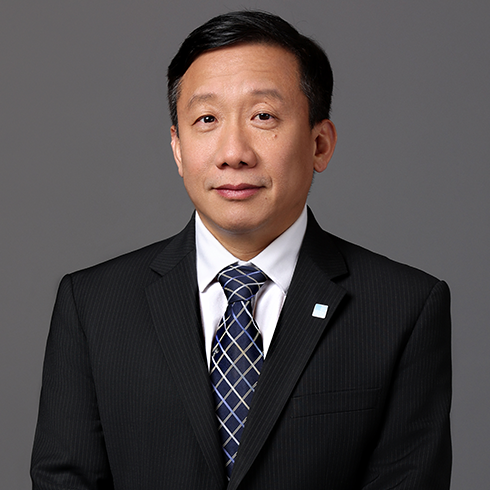
LI Haitao
Dean, Dean's Distinguished Chair Professor of Finance, and Director of the Family Business Research Center, Cheung Kong Graduate School of Business (CKGSB)
PhD, Yale University



Related Articles


Our Programs

Asia Start: AI + Digital China Expedition
Asia Start provides entrepreneurs and executives with unparalleled access to Asia’s dynamic digital economy and its business ecosystems, offering the latest trends and insights, strategies, and connections to overcome challenges and unlock future growth for your business in Asia and beyond.
LocationChina (Shanghai, Hangzhou, Shenzhen)
Date11 - 14 May, 2026
LanguageEnglish

Scaling Innovation: AI and Digital Strategies for Business Transformation
Global Unicorn Program Series
In partnership with Columbia Engineering
This program is designed to equip senior executives with the strategic insights and tools necessary to lead in this transformative era.
LocationNew York, USA
Date27 Sep - 02 Oct, 2026
LanguageEnglish

Emerging Tech Management Week: Silicon Valley
Global Unicorn Program Series
In partnership with UC Berkeley College of Engineering
This program equips participants with proven strategies, cutting-edge research, and the best-in-class advice to fuel innovation, seize emerging tech developments, and catalyse transformation within your organization.
LocationUC Berkeley
Date01 - 06 Nov, 2026
LanguageEnglish
Stanford & Silicon Valley Immersion Program
Global Unicorn Program Series
In partnership with Stanford Engineering Center for Global & Online Education
This CKGSB program equips entrepreneurs, intrapreneurs and key stakeholders with the tools, insights, and skills necessary to lead a new generation of unicorn companies.
LocationStanford University Campus,
California, United States
Date06 - 11 Dec, 2026
LanguageEnglish with Chinese Translation