







Generative Engine Optimization: Is AI Creating a New Playbook for Marketing?
January 20, 2026
Conversation with Li Yang, Associate Professor of Marketing and Associate Dean for MBA Program, Cheung Kong Graduate School of Business (CKGSB)
A new marketing buzzword is rippling through China’s capital markets: Generative Engine Optimization, or GEO. In recent weeks, the concept has ignited sharp rallies in so-called “GEO concept stocks.” Investors are betting that, in an AI-first world, the way brands compete for visibility is about to undergo a fundamental shift.
As consumers increasingly turn to large language models (LLMs) for explanations, opinions, and even advice, GEO is emerging as a potential successor to traditional search engine marketing (SEM). Instead of optimizing links and keywords, GEO focuses on shaping how AI systems generate answers themselves.
To unpack what this means for marketers—and for the broader business community—Cheung Kong Graduate School of Business spoke with Li Yang, Associate Professor of Marketing and Associate Dean for MBA Program, who offers a detailed look at GEO’s mechanics, its commercial boundaries, and how AI could reshape marketing at scale.
What fundamentally distinguishes GEO from traditional search marketing?
Li Yang: Traditional search engines rank links. GEO, by contrast, relies on large language models to synthesize information from multiple sources and generate answers. The objective is no longer to drive clicks, but to increase the visibility of specific content inside AI models such as Doubao or DeepSeek.
This represents a shift from optimizing for traffic to optimizing for what I call “share of voice in AI answers.” Instead of asking how often users click, marketers must ask how often their information is selected, quoted, or relied upon by generative models.
From a market perspective, GEO is not a complement to SEM but a potential replacement. The global SEM market is already worth tens of billions of dollars. GEO could absorb not only that spend, but also budgets historically allocated to content marketing, public relations, influencer marketing, and reputation management.
China’s platform-centric digital ecosystem may accelerate this shift. Unlike North America or Europe—where Google remains the dominant traffic gateway—China’s internet revolves around “super platforms” such as Douyin (TikTok’s Chinese sibling), WeChat, RED, Alibaba, and JD.com. As these platforms embed LLMs directly into search and recommendation functions, the importance of standalone website rankings may further weaken. In this environment, GEO influences cross-platform results by affecting a certain search keyword’s “share of voice in AI answers.”, not where links appear.
Who is best positioned to capture value in the GEO ecosystem?
Li Yang: Companies at different layers of the ecosystem have different strengths.
At the foundation are large language model providers such as DeepSeek or Doubao. They define how search, synthesis, ranking, and citation work. Their competitive boundary is essentially the capability of the model itself.
Next are traffic platforms—search engines and super apps like Baidu, WeChat, Douyin, Xiaohongshu, Alibaba, and JD.com—with large user bases and distribution power. Their scale gives them strong leverage.
Then come brands and enterprises, which remain the original source of factual information. Their effectiveness in GEO depends on whether they can provide accurate, authoritative, and continuously updated content, including product details, compliance disclosures, and service policies.
Finally, we will see GEO operators, a new generation of third-party service providers, similar to SEM agencies in the past. Their value lies in cross-platform optimization, authority building, and analytics.
For brands, the priority should be clear: get the facts right first. If a company does not control the accuracy of its own information, no amount of optimization will be sustainable. Over the long term, platforms that aggregate traffic—and foundation model providers—are likely to hold the strongest structural advantages.
How may GEO change content production?
Li Yang: As GEO adoption grows, it could feed back into how content is created in the first place. Generative engines tend to favor content with clear sourcing, citations, and data. Hence, we expect to see a move away from purely narrative-driven content.
In the AI era, it’s not just about keywords anymore. Models care more about who said something, on what basis, with what data, and how recently it was updated. This changes the definition of “quality content.”
This shift has ambiguous implications for originality. On one hand, AI engines favor standardized answers that may weaken creative expression. On the other, GEO may reward original data, rigorous analysis, and credible sources, raising the bar for professional and evidence-based content.
This tension is not new. Search engines once democratized access to information while also manipulating visibility. GEO may introduce a similar dynamic at a more advanced level.
What risks does GEO introduce, and how might regulators respond?
Li Yang: Whenever a new technology emerges, some actors will exploit it. Fake content, information laundering, and AI hallucinations are real risks, and they are likely to persist rather than disappear.
Regulatory responses will probably extend existing frameworks for search engines and generative AI. This includes requirements around source labeling, traceability, watermarking, and platform accountability. Platforms may be held responsible for detection, labeling, ranking adjustments, and content removal.
Problems such as coordinated manipulation will continue, but their technical forms will evolve alongside AI.
How should executives view GEO today?
Li Yang: GEO is a clear long-term trend as artificial general intelligence advances. But in the near term, its primary value is defensive rather than offensive.
Brands must ensure that AI systems produce accurate, compliant, and consistent answers about their products, policies, and positioning. Preventing mislabeling or misrepresentation is critical.
Offensive use—shaping user perception—is more relevant for high-value or reputation-sensitive products. For low-priced, highly standardized goods, the urgency is lower.
Looking ahead, what broader impact will AI have on marketing?
Li Yang: Marketing is one of the most immediately adoptable AI applications. It is data-intensive, close to revenue, and tolerant of experimentation.
Beyond GEO, AI will drive deeper personalization, new agency models, and tighter integration between marketing and sales. Algorithms will increasingly influence advertising, pricing, promotions, product portfolios, and inventory decisions.
The most important change may be in measurement. As marketing becomes more fully digitized, attribution will improve. Over time, decisions will shift from intuition-driven to evidence-driven—from “believe, then see” to “see, then believe.”
Exactly how AI and marketing will ultimately coevolve remains uncertain. As technology reshapes not only tools but human behavior itself, the future chapter of AI-driven marketing has yet to be written.
This article was originally published in Chinese on CKGSB’s website: https://www.ckgsb.edu.cn/faculty/article/detail/157/25190.html
Enjoying what you’re reading?
Professor profile
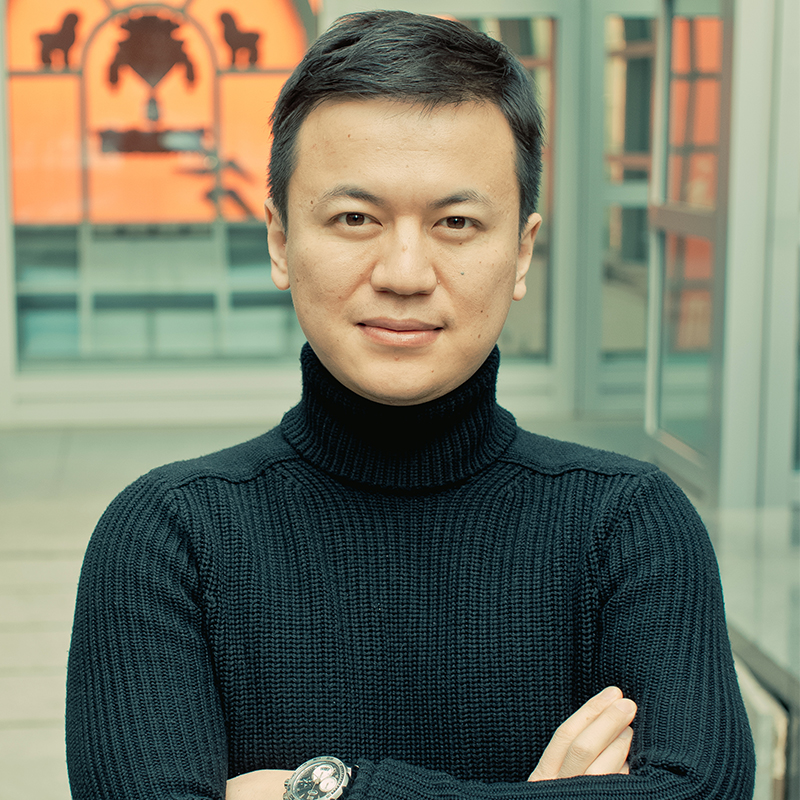
LI Yang
Associate Professor of Marketing and Associate Dean for MBA Program, Cheung Kong Graduate School of Business (CKGSB)
PhD, Columbia Business School

Related Articles


Related Articles




Our Programs

Opportunities in the Disruption of Traditional Industries
In partnership with The University of Sydney
Global Unicorn Program Series
The Global Unicorn Program in Disruption of Traditional Industries – presented jointly by CKGSB and University of Sydney – will emphasize Australia’s distinctive contributions.
LocationSydney, Australia
Date24 - 27 Feb, 2026
LanguageEnglish

Emerging Markets: Innovation and Scaling for Exponential Growth
Global Unicorn Program Series
A joint program by Cheung Kong Graduate School of Business and The South Africa Chamber of Commerce and Industry
LocationJohannesburg, South Africa
Date20 - 23 Apr, 2026
LanguageEnglish

AI-Driven Healthcare Innovation Program
In partnership with Johns Hopkins Carey Business School
Global Unicorn Program Series
The 2025 Artificial Intelligence (AI)-Driven Healthcare Innovation Program stands at the forefront of addressing the critical need for innovative healthcare solutions powered by artificial intelligence.
LocationJohns Hopkins University, Washington, D.C.
DateSummer 2026

Asia Start: AI + Digital China Expedition
Asia Start provides entrepreneurs and executives with unparalleled access to Asia’s dynamic digital economy and its business ecosystems, offering the latest trends and insights, strategies, and connections to overcome challenges and unlock future growth for your business in Asia and beyond.
LocationChina (Shanghai, Hangzhou, Shenzhen)
Date11 - 14 May, 2026
LanguageEnglish

Scaling Innovation: AI and Digital Strategies for Business Transformation
In partnership with Columbia Engineering
Global Unicorn Program Series
This program is designed to equip senior executives with the strategic insights and tools necessary to lead in this transformative era.
LocationNew York, USA
Date27 Sep - 02 Oct, 2026
LanguageEnglish