

A hedging of bets: are middle powers shifting towards China?
April 23, 2026
As uncertainties increase, are middle powers looking in a new direction?
With a rise in geopolitical uncertainties, to what extent are middle powers shifting towards China versus hedging their bets?
In recent months, a steady stream of leaders from Europe and Asia visited Beijing, each seeking trade deals and investment agreements. The meetings, with countries including Canada, South Korea, the UK all came under what feels like a very geopolitical climate from previous years.
The United States is viewed by some countries as becoming an increasingly unpredictable partner—wielding tariffs against allies, threatening territorial expansion and stepping back from multilateral commitments that once underpinned the global system.
“The tariffs that Trump has slapped on a bunch of countries, which are traditionally US allies, and his threat to annex Greenland as well as make Canada the 51st state are all threats that have taken a lot of allies by surprise, and quite frankly, offended a lot of countries,” says Lynette Ong, Distinguished Professor of Chinese Politics as the University of Toronto.
In contrast, China is increasingly presenting itself as a stable economic partner, one that maintains a consistent ‘business as usual’ foreign policy. This raises the question as to whether a real shift in diplomatic activity from Washington and towards Beijing is taking place, or is this simply a hedging of bets by various countries in an environment of uncertainty?
Uncertain times
The current geopolitical climate appears to be defined less by China’s rise than by the actions of the United States.
Trump’s approach to the imposition of tariffs on imports from other countries started in his first term between 2016-2020 but has been turbo boosted during the early part of his second term, creating many uncertainties for US trading partners, given the importance of the US market, still the largest in the world. Countries that once relied on preferential access to the US market have been facing unexpected, sudden barriers and costs.
At the same time, the rhetoric from the Trump administration has grown noticeably more confrontational. A confrontation with Denmark over the possible annexation by the US of Greenland has called into question the future of NATO, and other actions, such as the kidnapping of the Venezuelan president and other actions against Iran, have unsettled even the closest allies.
“The US has pulled out from dozens of international organizations in the past few months,” says Ong. “That is leaving hollow the traditional leadership occupied by the US on the international stage… if you don’t provide public goods, there is no reason why allies should look up to you or abide by your rules.”
Visitors to Beijing
One of the results of this has been a surge in diplomatic engagement with China by many countries.
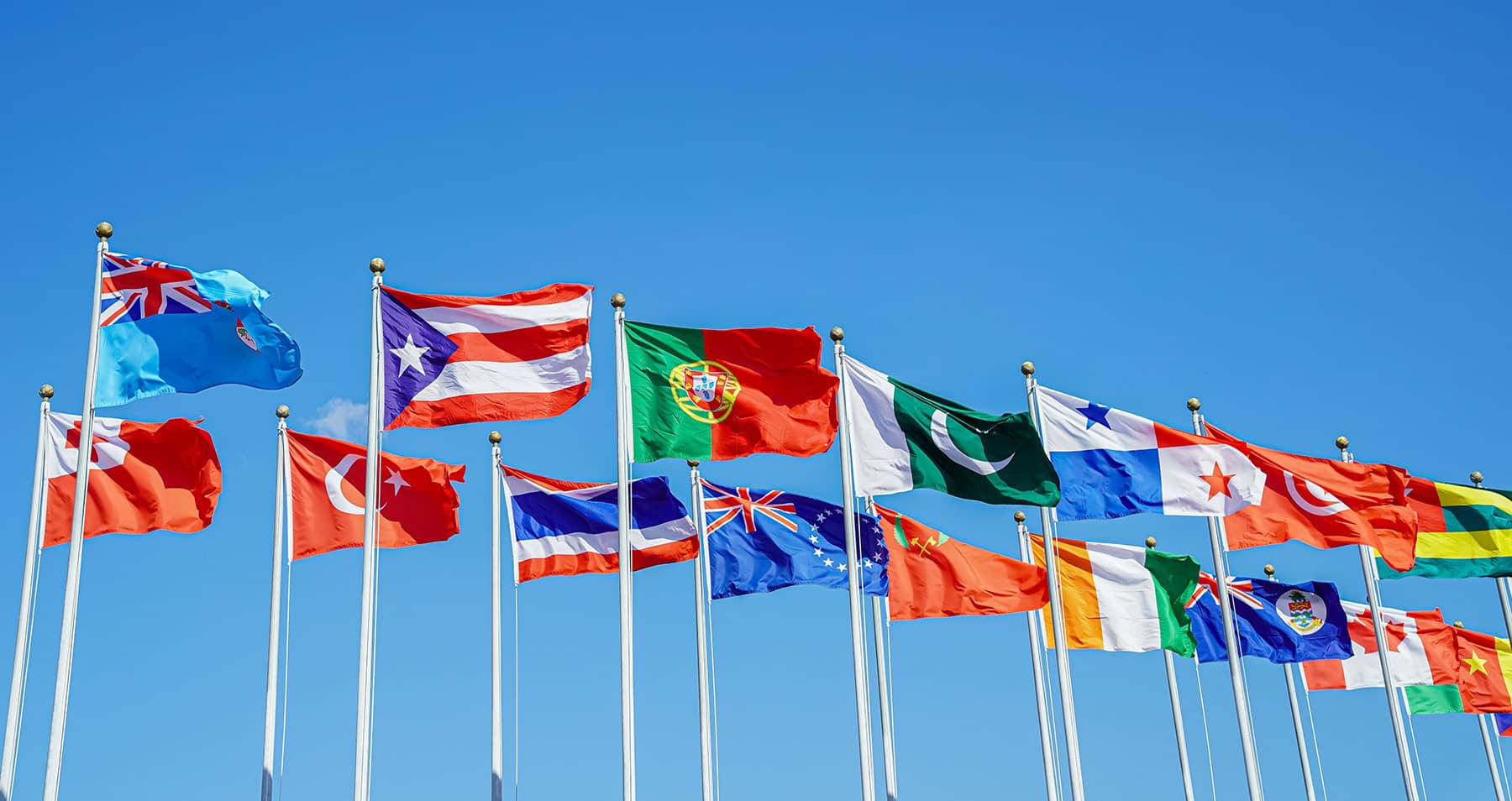
Canada has reached out with offers to stabilize trade relations and expand cooperation in energy supply chains and critical minerals—sectors where both sides see strategic value. British Prime Minister Keir Starmer has explored financial cooperation, even positioning London as a hub for Renminbi activity.
Germany, despite debates around de-risking, has doubled down on industrial ties, particularly in automotive and advanced manufacturing. South Korea’s leader called for deeper economic ties with China, including a wave of policies aimed at encouraging more Chinese tourism.
These visits all point towards a pattern of engagement driven by economic necessity, while putting ideological differences aside.
“China offers market size and industrial depth,” says Dan Wang, research fellow at Eurasia Group, as well as scale, complete supply chains and long-term policy consistency. “Unlike the US, where policies can swing every election cycle, China can plan long-term and heavily support industrial upgrading, digitalization and green tech,” she says.
A strategic opening for China
China’s diplomatic narrative is also gaining traction at a time when confidence in US leadership is wavering. Beijing is increasingly framing itself as a proponent of stability, development and non-interference—an appealing message for countries wary of global volatility.
China’s soft power story is more ambiguous. While there are signs of growing cultural visibility—ranging from viral online trends such as “Chinamaxxing” to increased global interest in Chinese technology and consumer platforms—these signals remain fragmented and difficult to quantify. Unlike its trade relationships, China’s broader cultural influence is still uneven and often filtered through geopolitical perceptions.
China’s appeal is particularly clear in the Global South. Across Southeast Asia, the Middle East and Latin America, China has become a central economic partner—much of China’s export growth has been to these developing markets.
Challenges
Despite these gains, China faces clear structural constraints which may impede its ability to foster deeper partnerships.
The economy remains export-heavy—2025 saw a record trade surplus of almost $1.2 trillion—which, while underscoring manufacturing strength, has also heightened tensions with key trading partners and emphasized problems with consumer spending. For many countries, particularly in the Global South, closer ties with China can translate into persistent trade imbalances, prompting defensive measures such as tariffs, anti-dumping probes, or efforts to protect domestic industries.
At the same time, despite renewed discussion around internationalizing the Renminbi, the global financial system remains dollar-dominated. While the use of the Renminbi in trade settlement has expanded somewhat, it is still constrained by the limited. Almost all countries still rely on the US dollar both for trade and for storing their reserves, limiting the reach and adoption of the Renminbi.
Political hedging
At its core, the current apparent shift may be less dramatic than it at first appears. While economic ties are deepening, security alignments remain largely unchanged.
“This is not a geopolitical switch,” says Wang. “In security and military terms, nothing fundamental has changed—alliances like NATO or US-Japan remain intact,” she says.
Instead, many countries are pursuing a dual strategy—engaging economically with China while maintaining traditional security ties with the US.
“They still rely on the US security umbrella,” says Wang. “Political alignment with China is also unlikely,” she says.
The shift also appears to be more of a diversification of partnerships, rather than an explicit pivot away from the US or towards China.
“I do not see the shifting geopolitical relations as predominantly the middle powers pivoting towards China as opposed to their diversification away from the United States,” says Steve Okun, founder and Chief Executive of APAC Advisors. “This means the middle powers are looking towards working with one another apart from the US and China, as well as engaging with both the US and China,” he says.
Implications moving forward
The changing dynamics present a range of opportunities for various stakeholders.
Chinese businesses may find that expanding ties between China and Europe or the Global South could open new markets for infrastructure, logistics and advanced manufacturing.
On the flipside, the trend may reinforce the fragmentation of global supply chains, with multinational companies increasingly operating parallel systems—one China-centered and one Western-aligned—to manage geopolitical uncertainty.
This may be particularly noticeable in the fallout from the Iran war. The essential closure of the Strait of Hormuz in response to US and Israeli attacks on Iran has caused a global oil and natural gas crisis and huge supply chain disruptions.
Increased jet fuel costs have also seen an uptake in bookings for Chinese airlines on flight routes between East Asia and Europe, as Western airlines have been banned from flying over Russian airspace, therefore being forced to take longer—and more expensive—routes.
For governments—particularly those of so-called middle powers—the balancing act is also becoming increasingly more complex. China does offer economic scale and stability, but deeper engagement also carries risks.
“They’re caught in the middle,” says Wang. ‘They fear US pressure of retaliation… if tensions escalate, they may be forced to choose sides—and that is the worst-case scenario,” she says.
On the rise
China’s global standing does appear to be rising, accelerated by a United States that is redefining its own role in the global system. For many countries, engagement with Beijing is no longer optional—it is an economic necessity.
Yet the queues outside of Beijing’s door appear to represent less a decisive pivot and more a careful hedging of bets. China is presenting itself as a reliable and willing economic partner. However, in terms of deeper alliances and security arrangements, ties with the US still run very deep.
During a recent visit to Beijing, Spanish Prime Minister Pedro Sanchez said, “There are those who insist on interpreting reality in zero-sum terms. On narrating the growth of some as a loss for the rest. Or on arguing that deepening certain relationships implies renouncing others.”
Enjoying what you’re reading?
Article Subscribe (1)
CKGSB Report








Related Articles

Our Programs

Scaling Innovation: AI and Digital Strategies for Business Transformation
Global Unicorn Program Series
In partnership with Columbia Engineering
This program is designed to equip senior executives with the strategic insights and tools necessary to lead in this transformative era.
LocationNew York, USA
Date27 Sep - 02 Oct, 2026
LanguageEnglish

Emerging Tech Management Week: Silicon Valley
Global Unicorn Program Series
In partnership with UC Berkeley College of Engineering
This program equips participants with proven strategies, cutting-edge research, and the best-in-class advice to fuel innovation, seize emerging tech developments, and catalyse transformation within your organization.
LocationUC Berkeley
Date01 - 06 Nov, 2026
LanguageEnglish

Asia Start (15th Edition): AI + Digital China Expedition
Asia Start provides entrepreneurs and executives with unparalleled access to Asia’s dynamic digital economy and its business ecosystems, offering the latest trends and insights, strategies, and connections to overcome challenges and unlock future growth for your business in Asia and beyond.
LocationChina (Beijing, Shanghai, Hangzhou & optional Shenzhen)
DateNovember 2-7, 2026
LanguageEnglish

Intelligent China: AI, EVs & Advanced Manufacturing
Participants may join the full 12-day journey or select individual modules based on their interests and priorities.
LocationBeijing, Shanghai & Hangzhou
Date12 Days
LanguageEnglish

Stanford & Silicon Valley Immersion Program
Global Unicorn Program Series
In partnership with Stanford Engineering Center for Global & Online Education
This CKGSB program equips entrepreneurs, intrapreneurs and key stakeholders with the tools, insights, and skills necessary to lead a new generation of unicorn companies.
LocationStanford University Campus,
California, United States
Date06 - 11 Dec, 2026
LanguageEnglish with Chinese Translation