Cheung Kong Graduate School of Business (CKGSB) participated in the 17th Asian Leadership Conference (ALC), hosted by The Chosun Ilbo in Seoul from May 20 to 21, 2026, presenting three sessions focused on energy innovation, next-generation mobility, and physical AI robotics.
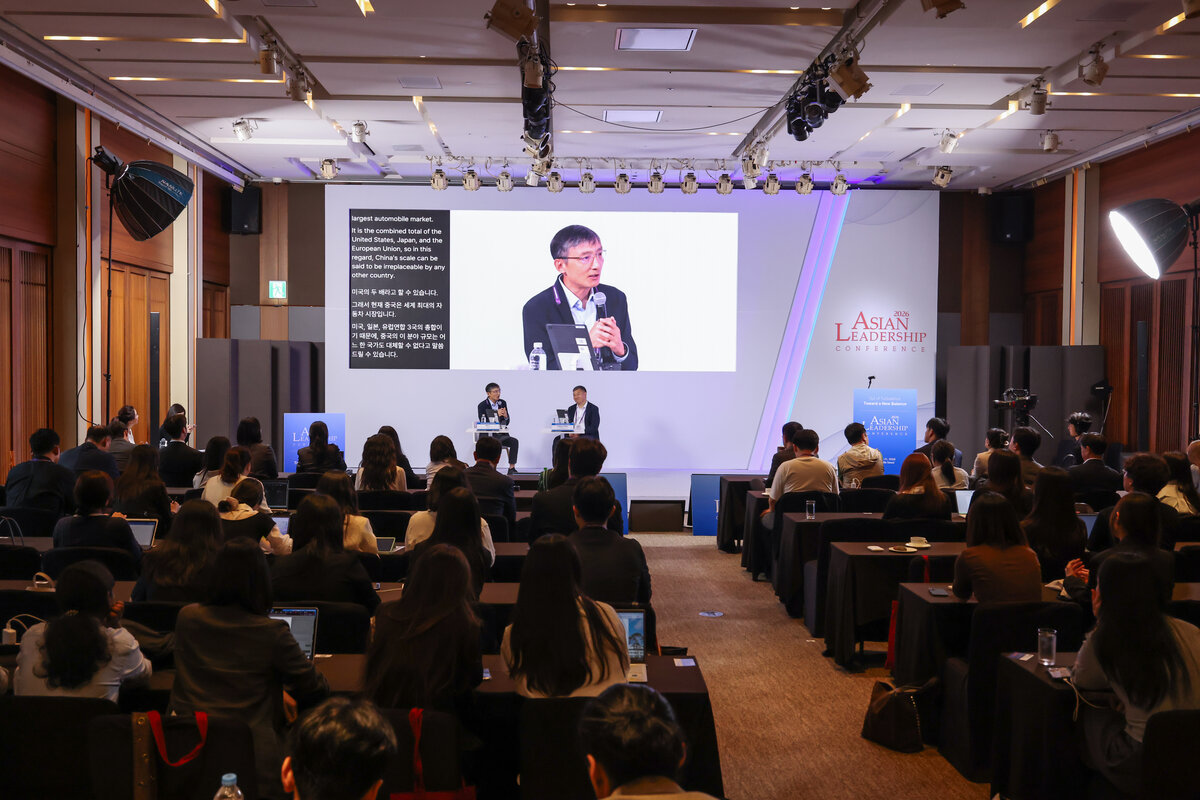
This year’s ALC was held under the theme “The Great Transformation: Toward a New Balance,” bringing together global leaders, policymakers, academics, and industry experts to discuss geopolitical shifts, supply chain restructuring, AI-driven industrial transformation, and strategies for sustainable growth.
During the opening ceremony, South Korea’s President Lee Jae-myung emphasized that the world is entering a new turning point amid simultaneous transformations in the international order, energy transition, and technological innovation. In addition, several sessions at this year’s conference introduced AI-powered real-time interpretation systems in place of human interpreters for the first time, demonstrating the rapid advancement of AI technologies in global communication.
Against this backdrop, CKGSB’s sessions highlighted how Asian companies are leading future industrial transformation through electrification, autonomous mobility, and physical AI technologies.
The first session featured Wang Haiquan, a founding member of BYD, who shared the company’s journey from a battery manufacturer to a global leader in electric vehicles and new energy technologies.
Moderated by CKGSB Professor of Economics and Associate Dean Li Wei, the session explored BYD’s long-term growth strategy through the lens of technological self-reliance, vertical integration, and electrification. Discussions also focused on how control over core technologies and the development of an integrated industrial ecosystem have strengthened BYD’s global competitiveness.
The second session examined the future of intelligent mobility driven by the convergence of aviation, ground transportation, and autonomous systems.
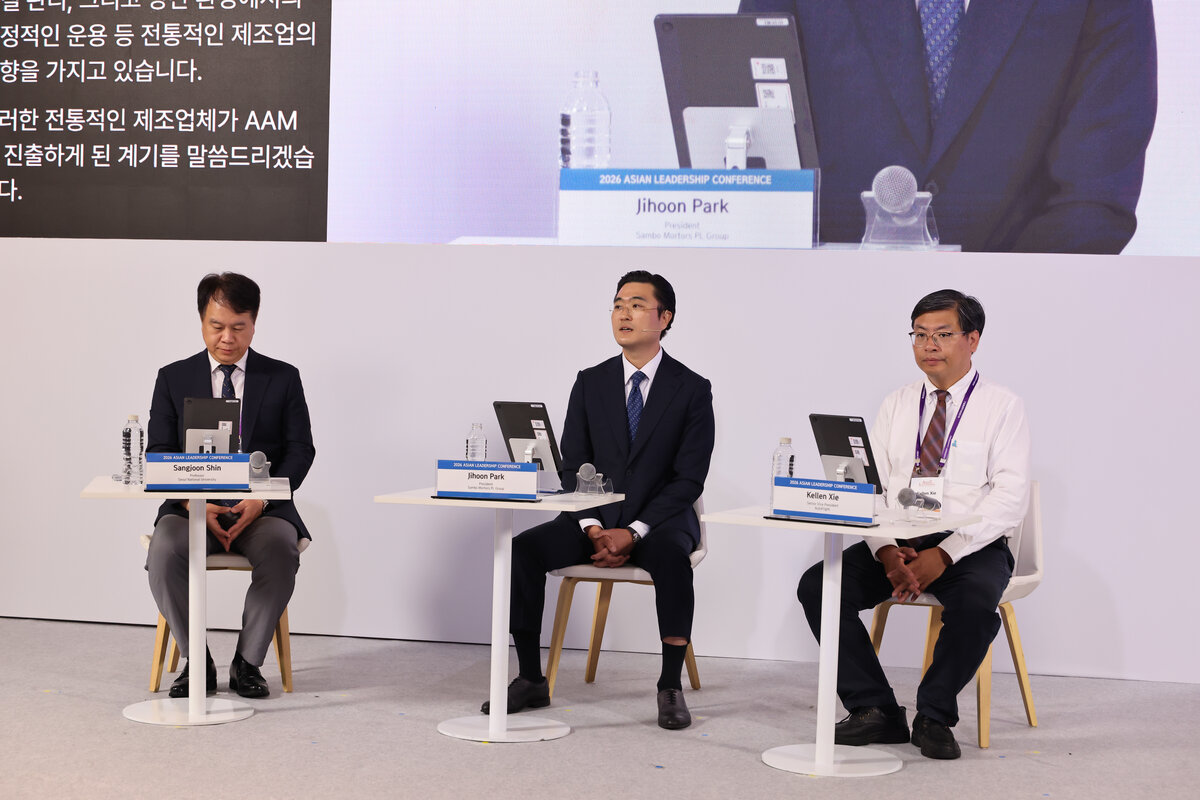
Park Ji-hoon, CEO of Samboo Motors, and Calvin Xie, Vice President of AutoFlight, discussed how eVTOL (electric vertical take-off and landing aircraft), hydrogen and electric propulsion systems, robotics, and AI technologies are reshaping the future mobility ecosystem.
Moderated by Professor Shin Sang-jun of Seoul National University, the session featured discussions on urban air mobility (UAM), smart logistics, industrial automation, and the future of integrated transportation infrastructure.
The third session focused on how physical AI and intelligent robotics are rapidly expanding beyond factory automation into real-world industrial and social environments.
Charlie Li, Northeast Asia Director of Deep Robotics, introduced the commercialization and market expansion of AI-powered robotic platforms across industries such as industrial inspection, logistics, and public safety. The session also explored how AI algorithms, sensor technologies, and autonomous navigation systems are being implemented in real industrial environments.
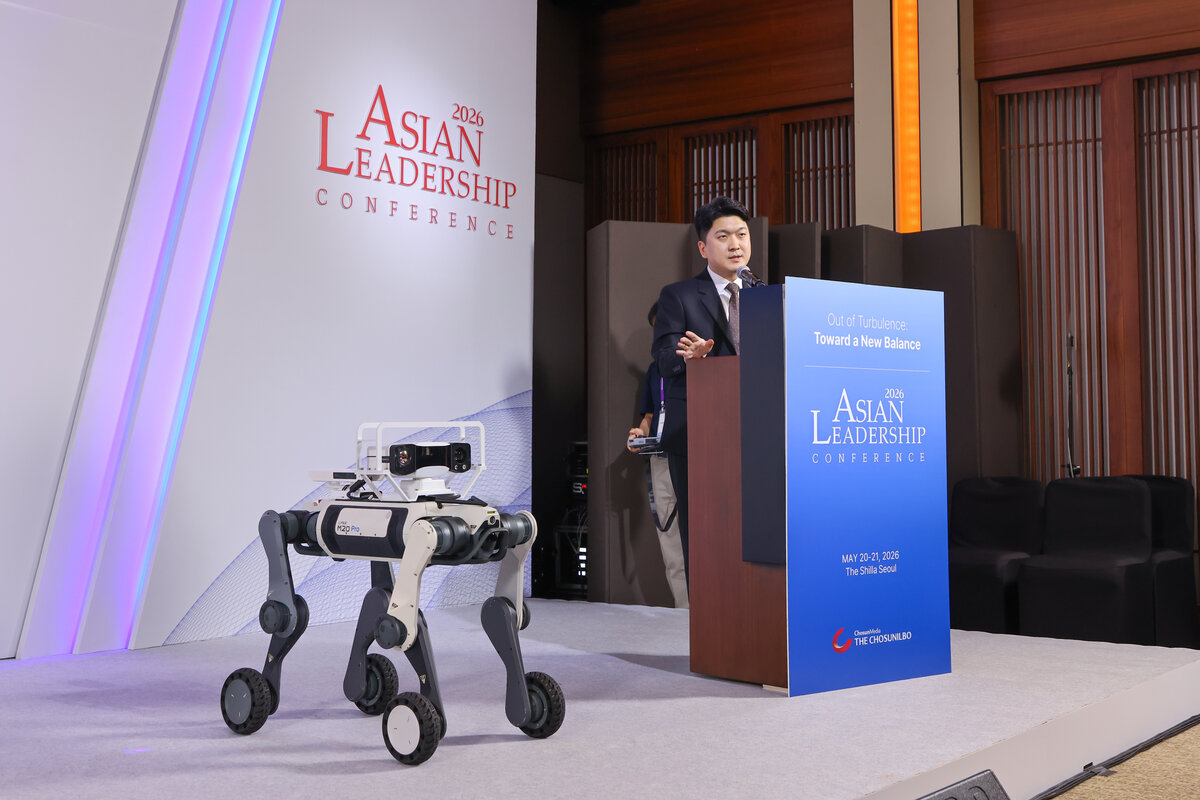
A major highlight of the exhibition area was Deep Robotics’ quadruped robot “Lynx,” which attracted significant attention alongside Boston Dynamics’ robot dog “Spot.” The two robots drew strong interest from both attendees and media, reflecting growing public attention and industry expectations surrounding physical AI technologies.
Boston Dynamics’ “Spot” is already being deployed for nighttime inspections, gas leak detection, and fire safety monitoring at large construction sites, industrial plants, and nuclear power facilities. Similarly, Deep Robotics’ “Lynx” is rapidly expanding its deployment across large-scale substations and energy facilities in China, particularly in hazardous environments that are difficult for humans to access.
Through its participation at ALC 2026, CKGSB once again reaffirmed its role as a platform connecting global discussions on innovation, industrial transformation, and future intelligent technologies. CKGSB will continue fostering dialogue on future technologies and business innovation together with global industry leaders.