

US and Venezuela: what it means for China’s Latin America interests
January 21, 2026
CKGSB’s professor Tao Zhigang discusses what the US strike on Venezuela means for China’s Latin America investments and corporate risk outlook
In the early hours of January 3, the US military launched an attack on Venezuela, seized President Nicolás Maduro, and transported him to the United States. Later the same day, President Donald Trump publicly declared that the US would “manage” Venezuela and announced that major American oil companies would be entering the country.
Against the backdrop of the Belt and Road Initiative, China’s trade and investment ties with Latin America have deepened rapidly in recent years, and Chinese companies have expanded their footprint across the region. What impact will Washington’s latest action have on regional politics, the global energy landscape, and Chinese firms operating overseas? Are the real motivations security-driven, or do they lie in energy interests and geopolitical rivalry?
CKGSB Knowledge spoke exclusively with Tao Zhigang, Professor of Strategy and Economics at Cheung Kong Graduate School of Business, for an analysis of the event’s causes, possible trajectories, and what Chinese companies should do next, viewed through the lenses of global strategy, Latin American geopolitics, and corporate risk.
US oil majors were previously restricted from operating in Venezuela. Trump has now said American oil companies will enter the country to “secure oil supplies.” What does this mean?
In recent years, US oil companies have barely operated in Venezuela. That was partly due to the nationalization of oil business and associated restrictions imposed by Caracas, but more importantly because US government sanctions made it impossible for American firms to extract or refine oil there. As a result, only one US company—Chevron—has maintained limited operations.
At its core, the hostility between the US and Venezuela is ideological. Venezuela has long adhered to socialist principles, while the US has repeatedly criticized it over human rights and economic mismanagement, accused it of contributing to drug trafficking into the US, and blamed its economic crisis for triggering refugee flows that affect regional security.
The Trump administration’s new line—that US oil companies can help develop Venezuela’s oil sector—is not entirely wrong. After all, it was Washington itself that previously blocked their entry. Venezuela holds the world’s largest proven oil reserves, yet produces less than one million barrels per day. That is partly due to outdated infrastructure, and partly because its heavy crude is highly polluting and less attractive to global markets. Some might argue that refinery facilities along the US Gulf Coast are designed specifically for heavy oil processing. That said, the US faces no shortage of heavy oil supply, given its consistent imports from two of its key neighboring allies—Mexico and Canada.
Trump is a transactional president. What he is really doing is telling the American public that “fixing” Venezuela is not just about ideology—it can also bring economic benefits to the US. But invading another country to seize resources is clearly indefensible. He has made similar claims before, such as suggesting that Ukraine’s rare earth resources could one day be used by the US. These are largely rhetorical justifications.
So based on your analysis, the US strike on Venezuela was not really about oil?
The U.S. is not acting to seize Venezuelan oil. Instead, the Trump team has used oil as a domestic talking point to defend its Venezuela-related operations—arguing that the country’s resources could “cover the expenses” of US military involvement. In reality, Venezuelan oil will still end up being sold to China. Trump actually pointed this out shortly after the U.S. moved against Venezuela.
What the US truly cares about is, first, the narrative around drugs linked to Venezuela, and second, its discomfort with having a socialist country in its “backyard,” much like Cuba.
If Venezuela’s economy were better managed, much of the controversy would fade. Countries like this should learn from China: focus on economic development by embracing market economy while at the same time using targeted poverty alleviation to give ordinary people opportunities for upward mobility. That is the fundamental solution.
The 2025 National Security Strategy emphasizes “prioritizing US interests and matters of vital importance to the United States.” How will this reshape the global order?
Trump’s 2025 strategy revolves around three pillars:
- The Western Hemisphere first
The US regards the Americas as its exclusive “backyard,” and has intensified its control over the continental landmass and adjacent regions—notably the Gulf of Mexico, the Caribbean, and the Panama Canal. This approach constitutes a de facto revival of the Monroe Doctrine, with the overarching goal of tethering Canada, Mexico, and other Latin American nations to the U.S. through both security commitments and economic interdependencies. - Cost-shifting to Europe
Washington no longer wants to fully underwrite Europe’s security and is pushing European countries to take responsibility for their own defense—for example, by leading support for Ukraine while the US provides only limited backing. This will significantly alter transatlantic relations and may also create new cooperation opportunities for Chinese companies in Europe. - Freedom of navigation in East Asia
The US recognizes China’s economic expansion and its growing economic interconnectedness with regional neighbors, and has no intention of overly targeting the Indo-Pacific. Its paramount strategic objective, instead, is to uphold freedom of navigation in key maritime corridors.
Which countries and regions will be most affected?
The implications of the US Western Hemisphere First Strategy have manifested unevenly across Latin America. A pivotal determinant is the degree of regional economies’ dependence on the United States—a factor that correlates strongly with geographic proximity.
Mexico is the most dependent: 83% of its exports go to the US. Caribbean countries such as Nicaragua, Guatemala, and Costa Rica send 40–50% of their exports to the US as well.
Countries farther away are much less dependent: Venezuela (19%), Chile (16%), Peru (13%), and Brazil (11%). Accordingly, US influence and control are weaker there, giving them greater strategic autonomy.
Argentina presents a distinctive case. While merely 8% of its exports are destined for the United States, its current administration maintains a distinctly pro-Washington orientation. Notably, President Javier Milei has confirmed plans for an official visit to China in 2026 and emphasized the significance of advancing bilateral economic cooperation, marking a pragmatic shift in his stance toward Beijing.
How will this affect China–Latin America cooperation and Chinese investment in the region?
Despite the resurgence of Monroe Doctrine-inspired ideology in US strategic thinking, China has not scaled back its engagement in Latin America and the Caribbean (LAC). On December 10, 2025, Beijing issued a new regional policy paper that reaffirmed its commitment to forging deeper bilateral and multilateral partnerships across the region.
Cooperation will be advanced through five major initiatives:
- a Solidarity Initiative,
- a Development Initiative focused on trade, investment, and the Belt and Road,
- a Civilization Initiative covering cultural and educational exchanges,
- a Peace Initiative involving military and judicial cooperation, and
- a People-to-People Initiative.
The US National Security Strategy accuses China—without naming it directly—of providing “low-cost” foreign aid to weaken US influence in the Western Hemisphere, and claims such aid hides risks such as data security threats, and “debt traps.” How might China respond to the Venezuela incident?
Washington’s strategy explicitly targets China’s growing influence in Latin America, which does create challenges for Chinese investors. When Chinese companies invest in the region, they must consider three factors:
- Geopolitical complexity. Latin America is the US backyard, and Sino-US rivalry is unavoidable.
- The business environment. Property rights protection and contract enforcement are often weak.
- Supply-chain shortcomings. Many countries rely heavily on resource exports and lack robust infrastructure and industrial ecosystems.
The key is sustainable development. Chinese firms should not pursue simple resource extraction, but deliver tangible and sustainable benefits—jobs, tax revenue, and stronger local supply chains. There may be short-term turbulence due to geopolitics, but in the long run, mutual benefit builds trust.
The so-called “debt trap” narrative is fundamentally a misperception rooted in incomplete empirical evidence. In its early engagement with developing economies, China adopted a state-to-state “resources-for-infrastructure” cooperation framework. To mitigate sovereign debt vulnerabilities, the paradigm of collaboration has since pivoted toward private-sector-led initiatives, underpinned by a phased strategy of incremental scaling—from pilot projects to full deployment—to ensure the long-term sustainability of cross-border ventures.
Will the Venezuela incident affect China–US relations? Will it disrupt Chinese investment and strategic positioning in Latin America?
In the short term, Chinese investment in the region will face greater uncertainty. Western countries themselves are uncomfortable with the US practice of intervening in other nations’ affairs and arresting foreign leaders—it is fundamentally unreasonable. Moreover, Washington does not seem to have a clear plan for what comes next.
One thing is certain: the oil Venezuela has committed to sell to China will still be supplied. Ultimately, buyers have leverage.
This dynamic mirrors China’s 2021 cooperation framework with Iran. At a time when most international actors shunned Iranian oil imports, China stepped in to procure crude at a roughly 20% discount to prevailing market prices. Proceeds from these sales were subsequently channeled by Tehran to contract Chinese enterprises for large-scale infrastructure development.
A comparable cooperation model is poised to take shape in Venezuela. The US lacks the leverage to halt Venezuelan oil exports to China, and neither Beijing nor Moscow would acquiesce to such restrictive measures. Ultimately, the US boasts ample shale oil reserves and a steady supply of heavy oil from neighboring Mexico and Canada—factors that render oil a secondary concern. Its strategic focus in Venezuela, rather, centers on exerting regional oversight: tackling narcotics trafficking, refugee flows, and broader stability imperatives, rather than securing direct access to the country’s oil resources.
For China, the priority should be to expand in countries that are geographically distant from the US and more economically and politically independent. The guiding principle remains the same: generate tax revenue, create jobs, and strengthen supply chains to achieve sustainable development.
China’s cooperation with South America is about supporting regional development, not turning it into a processing base for re-exporting goods to the US—a model even Mexico is now moving away from, as it has begun imposing tariffs on certain China-related products to avoid being reduced to a simple manufacturing intermediary.
Enjoying what you’re reading?
Professor profile
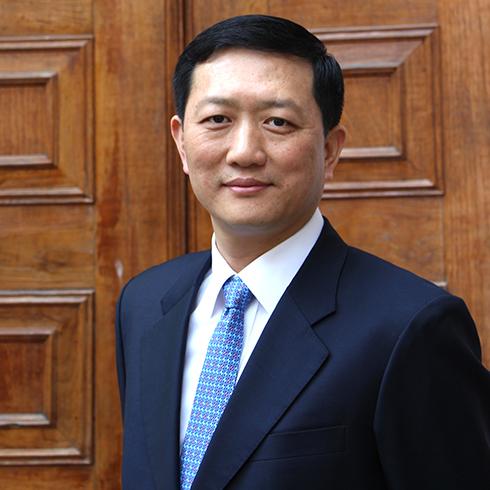
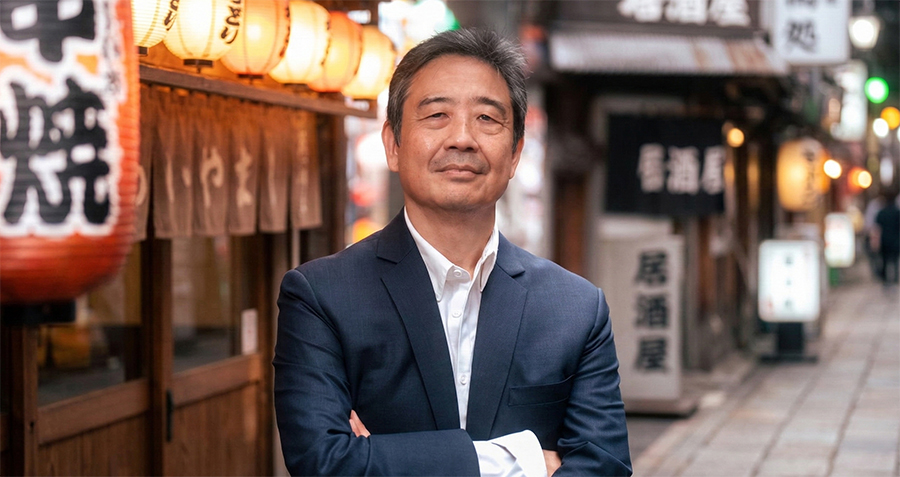
TAO Zhigang
Professor of Strategy and Economics and Associate Dean for Europe, Cheung Kong Graduate School of Business (CKGSB)
PhD, Princeton University



Related Articles


Our Programs
Asia Start: AI + Digital China Expedition
Asia Start provides entrepreneurs and executives with unparalleled access to Asia’s dynamic digital economy and its business ecosystems, offering the latest trends and insights, strategies, and connections to overcome challenges and unlock future growth for your business in Asia and beyond.
LocationChina (Shanghai, Hangzhou, Shenzhen)
Date11 - 14 May, 2026
LanguageEnglish

Scaling Innovation: AI and Digital Strategies for Business Transformation
Global Unicorn Program Series
In partnership with Columbia Engineering
This program is designed to equip senior executives with the strategic insights and tools necessary to lead in this transformative era.
LocationNew York, USA
Date27 Sep - 02 Oct, 2026
LanguageEnglish

Emerging Tech Management Week: Silicon Valley
Global Unicorn Program Series
In partnership with UC Berkeley College of Engineering
This program equips participants with proven strategies, cutting-edge research, and the best-in-class advice to fuel innovation, seize emerging tech developments, and catalyse transformation within your organization.
LocationUC Berkeley
Date01 - 06 Nov, 2026
LanguageEnglish

Stanford & Silicon Valley Immersion Program
Global Unicorn Program Series
In partnership with Stanford Engineering Center for Global & Online Education
This CKGSB program equips entrepreneurs, intrapreneurs and key stakeholders with the tools, insights, and skills necessary to lead a new generation of unicorn companies.
LocationStanford University Campus,
California, United States
Date06 - 11 Dec, 2026
LanguageEnglish with Chinese Translation