
Small markets, big logic: How Jack Technology built a global brand from the bottom up
March 04, 2026
In 30 years, Jack Technology has transformed from a small-scale operation into a global industry leader in sewing equipment
For many Chinese manufacturers, “going global” has long meant exporting more products to more places. Becoming a truly global brand, however—one that overseas customers actively trust, prefer, and recommend—has proved far more elusive. Jack Technology’s rise offers a rare counterexample.
Over the past three decades, this industrial sewing equipment maker from Taizhou, Zhejiang has transformed itself from a small workshop into a global industry leader operating in more than 170 countries. Crucially, it did so without relying on large-scale advertising or symbolic brand storytelling. Instead, Jack built its brand through a slow, disciplined process of capability accumulation—one that began in small, often overlooked markets.
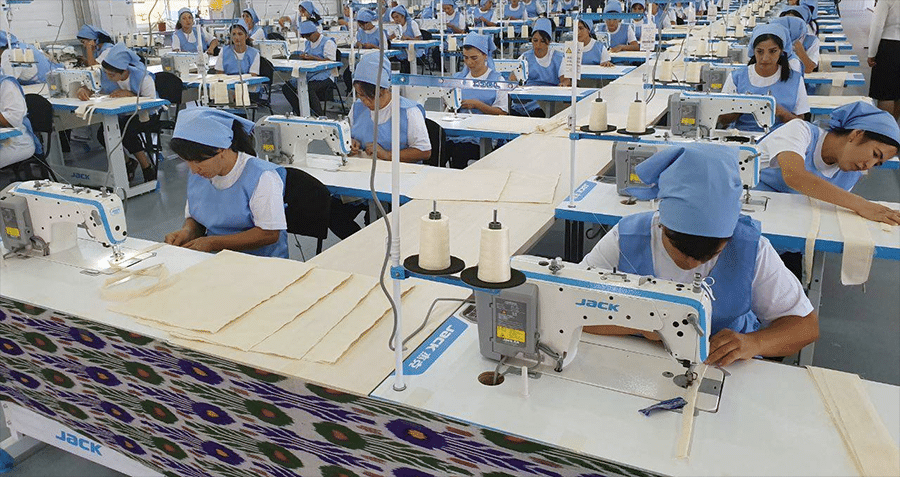
Founded in 1995, Jack today is one of the world’s largest industrial sewing equipment manufacturers. In 2024, the company reported revenue of ¥6 billion ($865 million) and an estimated global market share of around 20%, ranking first worldwide for more than a decade. In a highly specialized segment of the apparel supply chain, Jack has become a classic “hidden champion”: largely invisible to end consumers, yet deeply embedded in global garment production. By some industry estimates, a significant share of the world’s clothing is now stitched using machines made by Jack.
What makes Jack’s story distinctive is not early internationalization per se—many Chinese firms began exporting in the 1990s—but the way it evolved from selling abroad to being trusted abroad. That transition, from export-oriented manufacturing to global brand leadership, is where many companies stall. Jack’s experience suggests that the bottleneck is rarely marketing creativity. It is almost always organizational capability.
From exporter to global brand
Chairman Ruan Jixiang has described Jack’s globalization as a staged evolution, moving from simple export trade to internationalization, then to full globalization, and finally to global leadership. While the labels matter less than the logic behind them, the core insight is clear: global branding is not a single leap, but a sequence of upgrades in how a firm designs products, organizes channels, delivers service, and builds trust across borders.
The most counterintuitive element of Jack’s strategy lies at the very beginning. Rather than targeting Europe or North America—the traditional “high ground” of global branding—Jack deliberately started in a series of smaller, less mature markets, including Brazil, Mexico, and other parts of Latin America. At the time, the company lacked the capital, brand recognition, and technological depth to compete head-on with established Japanese players in developed markets. Smaller markets, by contrast, were more accessible, more price-sensitive, and less locked into incumbent brands. More importantly, they offered something Jack needed even more than revenue: room to learn.
Why small markets matter in building global brands
Ruan’s early logic was pragmatic. “Where the orders are, we go,” he has recalled. Jack’s early international expansion was built on hard travel and direct contact. Sales teams carried machines to overseas exhibitions, demonstrated products on site, and searched for local agents one by one. In an era when many firms waited for distributors to approach them, Jack actively went looking for partners. This “walking merchant” approach was not glamorous, but it forced the company to confront the realities of overseas markets early and repeatedly.
Even in its choice of agents, Jack made decisions that would later shape its global brand. Instead of prioritizing the largest distributors with the widest networks, it often chose younger, more entrepreneurial partners willing to grow alongside the company. These partners were not always the fastest to generate profits, but they were more open to building systems together. In B2B industries where channels play a central role in shaping customer experience, this emphasis on alignment over scale proved critical.
In 2003, Jack formally rebranded, changing its name from Feiqiu to “Jack”—a short, globally recognizable name designed for international markets. The rebrand did not instantly elevate Jack into a global brand, but it marked a shift in mindset. International business was no longer just about shipping products; it was about shaping perception over time.
Turning products into trust
That shift deepened in the mid-2000s, as Jack confronted the limits of simply exporting what it already made. As overseas customers’ needs diverged, the company moved from a “sell what we have” logic to a more market-driven approach. India became the most emblematic case.
At the time, many Indian garment factories still relied on outdated household machines, constraining productivity. Jack identified this pain point and introduced computerised direct-drive industrial sewing machines tailored to local needs. By combining product innovation with close cooperation with local agents, Jack rapidly expanded its footprint, eventually capturing more than 60% of the Indian market.
This phase also marked Jack’s first serious step toward localization. In 2007, the company established its first overseas office in Egypt, hiring local staff and embedding itself more deeply in the market. This move reflected a growing realization that in industrial equipment, the sale is only the beginning. Long-term competitiveness depends on service, responsiveness, and the ability to support customers under real production pressure.
Jack made service a central pillar of its global strategy. In 2006, it introduced the positioning “Fast Service 100%,” setting unified global standards for service response. While the slogan itself was simple, implementing it required deep organizational change. Spare parts logistics, diagnostic capabilities, engineer training, and agent service systems all had to be standardized and scaled. Over time, service ceased to be a cost center or afterthought and became a core component of Jack’s brand credibility.
Using acquisitions to accelerate global credibility
As Jack expanded across smaller markets, these environments increasingly functioned as capability-building laboratories. In markets where brand expectations were lower but operating conditions were tougher, the company could test whether it truly delivered on its promises. Feedback cycles were fast, and failure—while painful—was survivable. In Brazil, for example, Jack observed that certain machine designs contributed to operator strain and occupational health issues. Product modifications made in response proved highly successful and later informed globally popular models.
By the end of the 2000s, Jack had accumulated enough experience, confidence, and organizational maturity to attempt a different kind of leap. Rather than entering Europe organically, it used mergers and acquisitions to accelerate both technology and brand credibility. Starting in 2009, Jack acquired several established European companies, including Germany’s Bullmer and Italy’s MAICA and VIBEMAC—firms with long histories, strong technical capabilities, and deep relationships with global apparel brands.
These acquisitions marked a turning point. They expanded Jack’s product portfolio beyond sewing machines into intelligent cutting and automation equipment, while also anchoring the company more firmly in mature markets. Importantly, Jack did not pursue aggressive integration. Local teams retained operational autonomy, while Jack provided manufacturing scale and capital. The result was not just faster market access, but a substantial upgrade in the company’s global positioning.
Competing at the system level
From 2019 onward, Jack entered a new phase focused on system-level leadership. It reorganized its global strategy around four major market regions, reflecting differences in customer expectations, regulatory environments, and production models. At the same time, it responded to structural changes in the apparel industry, particularly the rise of small-batch, fast-response manufacturing. New products and integrated solutions were designed to help customers shorten production cycles and improve flexibility, reinforcing Jack’s shift from selling machines to delivering outcomes.
Looking back, Jack’s so-called “small market strategy” was never about thinking small. It was about choosing the right arenas in which to build core capabilities. Smaller markets provided the space to refine product adaptation, channel governance, service execution, and brand credibility through delivery rather than rhetoric. Once these capabilities were in place, expansion into larger, more demanding markets became not only possible, but sustainable.
What Jack’s globalization means for Chinese B2B brands
For Chinese manufacturers seeking to build global brands, Jack’s experience offers a different logic from the dominant narratives of high-profile branding or rapid international scale. In industrial B2B markets, trust is rarely won through storytelling alone. It is earned through repeated fulfillment—through machines that work, services that respond, and partners that deliver consistently. Jack’s brand did not emerge from advertising campaigns. It emerged from verification.
In that sense, Jack’s rise is less a marketing success story than an organizational one. Over thirty years, the company-built systems that allow trust to compound across markets and cultures. It moved slowly, but it moved with direction. And in doing so, it demonstrated that for B2B brands, the deepest logic of globalization still lies at the bottom: in capability, structure, and the discipline to deliver—every time.
Enjoying what you’re reading?
CKGSB Report








Our Programs

Asia Start: AI + Digital China Expedition
Asia Start provides entrepreneurs and executives with unparalleled access to Asia’s dynamic digital economy and its business ecosystems, offering the latest trends and insights, strategies, and connections to overcome challenges and unlock future growth for your business in Asia and beyond.
LocationChina (Shanghai, Hangzhou, Shenzhen)
Date11 - 14 May, 2026
LanguageEnglish

Scaling Innovation: AI and Digital Strategies for Business Transformation
Global Unicorn Program Series
In partnership with Columbia Engineering
This program is designed to equip senior executives with the strategic insights and tools necessary to lead in this transformative era.
LocationNew York, USA
Date27 Sep - 02 Oct, 2026
LanguageEnglish

Emerging Tech Management Week: Silicon Valley
Global Unicorn Program Series
In partnership with UC Berkeley College of Engineering
This program equips participants with proven strategies, cutting-edge research, and the best-in-class advice to fuel innovation, seize emerging tech developments, and catalyse transformation within your organization.
LocationUC Berkeley
Date01 - 06 Nov, 2026
LanguageEnglish

Stanford & Silicon Valley Immersion Program
Global Unicorn Program Series
In partnership with Stanford Engineering Center for Global & Online Education
This CKGSB program equips entrepreneurs, intrapreneurs and key stakeholders with the tools, insights, and skills necessary to lead a new generation of unicorn companies.
LocationStanford University Campus,
California, United States
Date06 - 11 Dec, 2026
LanguageEnglish with Chinese Translation