New research by Cheung Kong Graduate School of Business (CKGSB) Associate Professor of Economics Jingting Fan shows that when firms import advanced machinery, cities gain more college-educated workers—through both education and migration—and the resulting rise in wage gaps is only half as large as it would otherwise be.

How does a city attract and keep talent? Local governments usually reach for familiar tools: recruiting investment, building universities, offering talent subsidies and easing residency rules. But one factor is often overlooked: whether local technology upgrading keeps creating demand for skilled workers.
That is the central insight of “Skill-biased Imports, Skill Acquisition, and Migration,” by CKGSB’s Jingting Fan and Lei Li of the University of Göttingen, published in 2025 in the Journal of International Economics. The authors study China between 2000 and 2010, when imports of capital goods—advanced computers, production machinery and other equipment—surged after the country joined the WTO. Over roughly the same period, the extra pay earned by college-educated workers rose from 14.3% in 1992 to 44.4% in 2009, and the share of people with some college education quadrupled, from 2% to 8.2%.
Were these trends connected? The study shows that they were.
A skeptic might ask: did the machines bring the talent, or were more developed cities simply better at getting both? To separate cause from coincidence, the researchers combined census, customs, firm and household data and predicted each city’s import growth from the equipment it already imported and national growth in those products, while accounting for provincial trends and cities’ starting conditions.
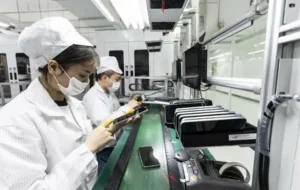
The effect holds up. Import growth explains about 13% of the differences in how fast college shares rose across cities. Firms using more imported equipment are more productive, employ more skilled workers and pay higher wages, because advanced machines need skilled people to run, maintain and organize them. The researchers also ruled out other explanations, including richer households and local governments spending more on education, local college capacity, other imports, tariffs and the presence of state-owned and foreign firms.
When skilled workers become more valuable, some young people decide college is worth it, while people who already have skills move to where the jobs are. Young people can do both; older workers mostly move. In the city-level data, migration plays the larger role.
The two channels are intertwined. One city’s gain is another’s loss, and a young person who expects to work in a big city may choose college for that reason. The researchers therefore built an economic model of China’s cities, which estimates that imports added 3.1 million to 7.3 million college graduates. That matters, but it is not the main driver of China’s graduate boom: the expansion of higher education, domestic productivity growth and hukou (household registration) reforms likely played bigger roles.
Capital-goods imports grew much faster along China’s coast, and talent followed. About 59% of the coastal gain in high-skill workers came from local young people, and roughly 32% from young people who moved from inland China.
The lesson for cities is twofold. Attracting industry and equipment does not automatically bring talent; a city must keep offering attractive jobs and pay. And for regions losing talent, building universities is not enough to keep graduates if local firms lack high-skill jobs. Technology upgrading can enlarge a country’s talent pool while widening the gaps between regions.
Because imported equipment favors skilled workers, it widens the skill premium—the extra pay skilled workers earn. But people do not stand still. More education eases the premium everywhere. Migration eases it where skilled workers arrive, but raises it in the places they leave. Together, these responses cut the rise in the skill premium roughly in half.
Technology is usually judged by how many jobs it replaces or creates, and whose wages rise or fall. But that approach quietly assumes people’s skills and locations stay fixed. This study shows that technology’s long-term impact also depends on how people respond: education lets them upgrade their skills, and migration lets them change which job market they are in. Together, these choices shape how the gains from technology are shared and how regional gaps evolve.
Industrial, education and regional policies are linked. Bringing in advanced industries raises demand for skills, but whether that becomes broader human capital depends on access to education. Promoting mobility helps match talent to jobs, but can concentrate talent in a few places. Expanding education narrows wage gaps, but without local opportunities, graduates may leave. The authors suggest that expanding access to education and making it easier for workers to move can help limit the inequality new technology creates. These links form a chain: technology investment changes the returns to skills, those returns shape education and migration, and education and migration in turn affect wages and regional development. Ignoring any link risks misjudging technology’s true impact.
The study covers China’s equipment imports from 2000 to 2010, so its results cannot simply be applied to artificial intelligence. But it offers a useful framework. As new technologies arrive, the question is not only which jobs will change, but whether people can learn and move in response—and whether every region gives them the same ability to do so.
“Whether technological progress ultimately brings greater opportunity or deeper division depends largely on how people respond, and on the conditions different regions provide for that response,” says Professor Fan.
The paper “Skill-biased Imports, Skill Acquisition, and Migration” by Jingting Fan and Lei Li is published in the Journal of International Economics, Vol. 157 (2025), 104128, and is available at https://doi.org/10.1016/j.jinteco.2025.104128.