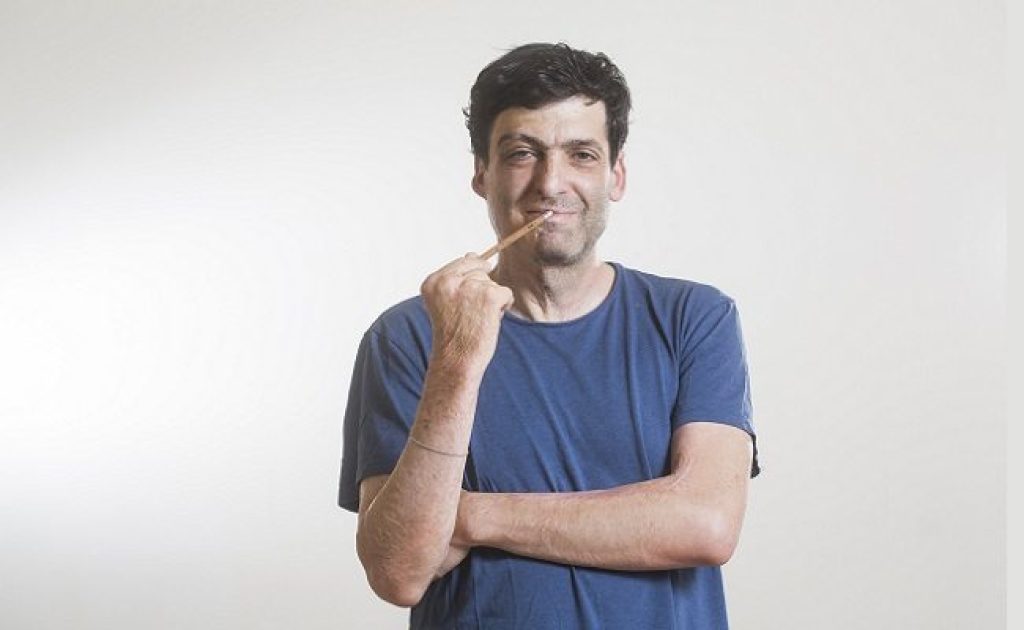

Dan Ariely’s Advice for Decision Making: Understanding our Minds
August 01, 2016
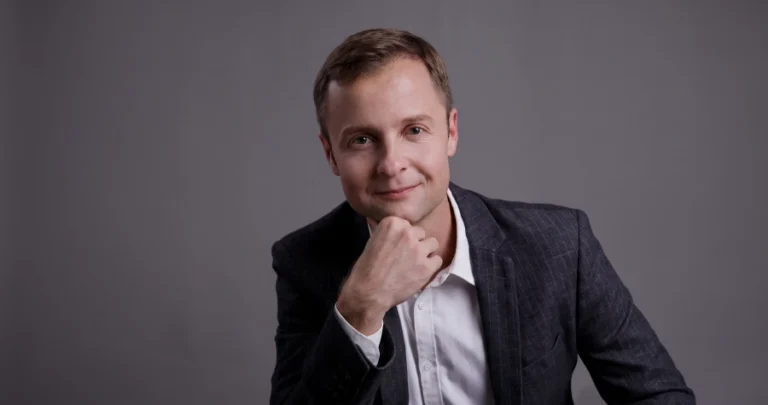
In this interview with Dan Ariely, the author of Predictably Irrational and The (Honest) Truth about Dishonesty discusses our mental frailties and how they can help with our decision making in the modern world.
Each of us makes hundreds, if not thousands, of decisions every day. Most of them are small: Should I buy that nice shirt? Do I have five more minutes to spend playing my favorite app? Others demand more thought: How should I plan my retirement savings? Is marriage right for me? The common thread running between a lot of them is that we are, in some sense, unequipped to make sense of any of it. The world in which the human race came of age—one of ferocious predators and unforgiving nature—is no longer the world we live in. For the risks we face now, we are out of date.
Dan Ariely, James B. Duke Professor of Psychology and Behavioral Economics at Duke University, has built a career mapping the peculiarities of our innermost decision-making foibles, and offers insight in guarding against them. He is the author of New York Times best-selling books Predictably Irrational, The Upside of Irrationality, as well as The Honest Truth About Dishonesty—his numerous TED Talks have been watched over 1.5 million times. In this interview he discusses the roots of our condition, differences between biology and culture when it comes to our behavior, as well as the pernicious effects of dishonesty.
Q. Why are human beings hardwired to be predictably irrational?
A. So, there’s a few potential answers for this, but here is one general idea. So if you think about it, we were designed with a computation machine, a brain, to deal with all kinds of things… to deal with jungles and different types of risks. And the machinery that we got did not have to be perfect, but it had to be very accurate. For example, if you see a tiger, you want to run away very, very quickly. You don’t want to stop and think about it. And if it’s not a real tiger you still want to run away, why take the risk? Because if you run away when there is not a tiger, nothing much happens, you just run away. But if you don’t run away when there is a tiger, that could be really devastating.
So, we created this machinery to help us make decisions, and now the world has changed on us. We don’t have many tigers, sadly actually, anymore. And now we deal with all kinds of other things, we deal with something like money. Very long term, we have to think, we have to plan. We have to deal with things like traffic. I mean, just think about the range of things that we deal with. They are very different from the things we evolved to deal with, and now we use our brain mechanism to deal with those things, but it’s very far from perfect. So what do we do? We make mistakes. What kind of mistakes? All kinds of mistakes. We are basically trying to use the machinery that is not used to solving problems about healthcare and money and long-term relationships and mortgages. And we try to use them and we make mistakes.
Q. How does decision making vary across different places and different cultures?
A. So, here is what we find. Think about visual illusions. Visual illusions are basically the same the world over. If you can see, you have a visual illusion. It’s something very basic in terms of how our brains work. Now, when we come to decision making, there is some very basic decision making. For example what happens when we’re stressed, or what happens when we have too many options, or what happens when we have the default, and in those cases people don’t seem to be too different from each other.
But, cultures do matter, because cultures can take up a domain and say, “In this domain, we care about X, Y or Z.” So some cultures can say, “You know what? We care a lot about how you portray yourself to other people.” Or some cultures can come and say, “We care a lot about how you stand in line” or something. Or some culture could come along and say, “We care a lot about the value of friendship.” Whatever it is, cultures don’t change the backbone of humanity, but they do change the way we view particular types of activities, kind of silos.
Q. So knowing something about the ways our brains work, and the way we are prone to make mistakes, can we build models to help people make better decisions?
A. Absolutely. Think about money. If we understand the kinds of mistakes people make when they think about money, we can help them. If we understand that people have conflicts of interests… you know I’ve done lots of research on conflicts of interest showing that when people are in conflicts of interest they make terrible decisions. So once we understand it, we just say, “Let’s eliminate conflicts of interest.” And so on, and so forth.
Q. How might insights into our hardwired flaws and the way to guard against them apply to business decisions? Can a CEO make use of it?
A. Of course [we can apply it here]. There are lots of ways in which we are rational. You can think about what motivates employees. Is it just salary? Is it gifts? Is it kind words? Lots of things motivate us. If you understand what things actually motivate people, rational, irrational, you can motivate people to a higher degree. If you understand what kinds of products people will be excited about, you can create those. So lots of things in the business domain as well.
Q. The world seems to be moving faster and faster, day by day, year by year. Does that translate to a greater urgency to pay attention to the way we make decisions?
A. Yes, absolutely. So, partially it is these days we have more temptations, right? So that’s very important to realize. There’s more things around us to tempt us. Partially we make more decisions without thinking. We are on the mobile device, thinking, making decisions on the go. We are also more stressed and have less time to consider all options. So I think, you know, irrationality is on the rise. Temptation is on the rise, and the consequences and the opportunities for us to make mistakes are higher.
Q. Your book The Honest Truth about Dishonesty described an experiment in which a fake student was planted among students taking a real exam. The plant, openly cheating on the exam, induced other students to cheat. Can this sort of thing happen on a larger scale? Say, if a CEO, or high-ranking political leader is perceived to be dishonest?
A. Yes. So what we find is that dishonesty is socially infectious. And if somebody in high power, let’s say, a CEO, or an executive, or a movie star or somebody like this, cheats in an egregious way, people would look at it and change what they view as acceptable and not acceptable. Very, very distressing.
Q. Seeing as that is true, how do you go about fixing this problem once it has taken root in a large organization?
A. I actually think that this is something that is very interesting about China. So in China there have been attempts with the new government to reset things. So they say, “No more waste… we are not going to waste, we are not going to pile things on our plate and eat too much,” and “no more corruption.” It’s not that corruption stops, or that waste stops, but you basically… to stop this slippery slope in that direction, you need to say, “Here is how we are going to act from now on” and basically make sure that everybody acts in that new way, and announce: “From now on, we are going to do things differently,” and that’s a very important direction.
Enjoying what you’re reading?
Article Subscribe (1)
CKGSB Report





Related Articles
Our Programs

Emerging Tech Management Week: Silicon Valley
Global Unicorn Program Series
In partnership with UC Berkeley College of Engineering
A technology management program for leaders looking to turn emerging technologies into business opportunities.
Combining proven strategies and cutting-edge research, the program helps participants fuel innovation, seize opportunities in emerging technologies, and catalyze transformation within their organizations. Designed for managers, start-up leaders, and technology investors, it includes visits to venture capital firms and technology companies, alongside mentored group projects.
LocationUC Berkeley, California, United States
Date01 - 06 Nov, 2026
LanguageEnglish

Stanford & Silicon Valley Immersion Program
Global Unicorn Program Series
In partnership with Stanford Engineering Center for Global & Online Education
A Silicon Valley immersion for entrepreneurs, intrapreneurs, and investors leading and scaling AI-driven companies.
The program combines academic learning with visits to AI and robotics labs and Silicon Valley companies, giving participants direct exposure to emerging technologies and the businesses developing and applying them.
LocationStanford University Campus, California, United States
Date06 - 11 Dec, 2026
LanguageEnglish with Chinese Translation

Emerging Markets: Innovation and Scaling for Exponential Growth – ASEAN
A China-focused innovation program for ASEAN executives and business owners responding to the impact of AI on their industries.
Gain insights from leading Chese thinkers in Jakarta, with an optional immersion in China and opportunities to connect with the business leaders driving innovation. The program offers a closer look at how developments in China could affect your industry and business.
LocationJakarta, Indonesia
Date23–26 March 2027
LanguageEnglish (with Chinese translation)

Asia Start: AI + Digital Ecosystem China Expedition
An immersive program for entrepreneurs and executives looking to understand China's AI and digital economy firsthand.
Gain the latest trends and insights, strategies, and connections to overcome challenges and support future business growth in Asia and beyond.
LocationChina (Beijing, Shanghai, Hangzhou & optional Shenzhen)
DateApril 19–24, 2027
LanguageEnglish

Intelligent China: AI, EVs & Smart Manufacturing
A three-part program examining China’s advances in AI, electric vehicles, and smart manufacturing.
Through faculty-led sessions, company visits, and exchanges with industry leaders, gain practical insights for your organization's strategy, partnerships, and investment decisions. Join an individual four-day program or complete the full 12-day series.
LocationBeijing, Shenzhen, Shanghai, and Hangzhou
DateSummer – Winter 2027 (three 4-day programs)
LanguageEnglish