Entrepreneurship,Market Entry
In early 2026, Shenzhen-based WOOK Technology Co., Ltd. filed for a listing on the Hong Kong Stock Exchange. According to its prospectus, the cross-border e-commerce company generated revenue of RMB 1.049 billion (USD 152.6 million) in 2024 and RMB 880 million (USD 128 million) in the first three quarters of 2025.
Although relatively little known in China, WOOK has quietly become a major player in Southeast Asia’s consumer electronics accessories market.
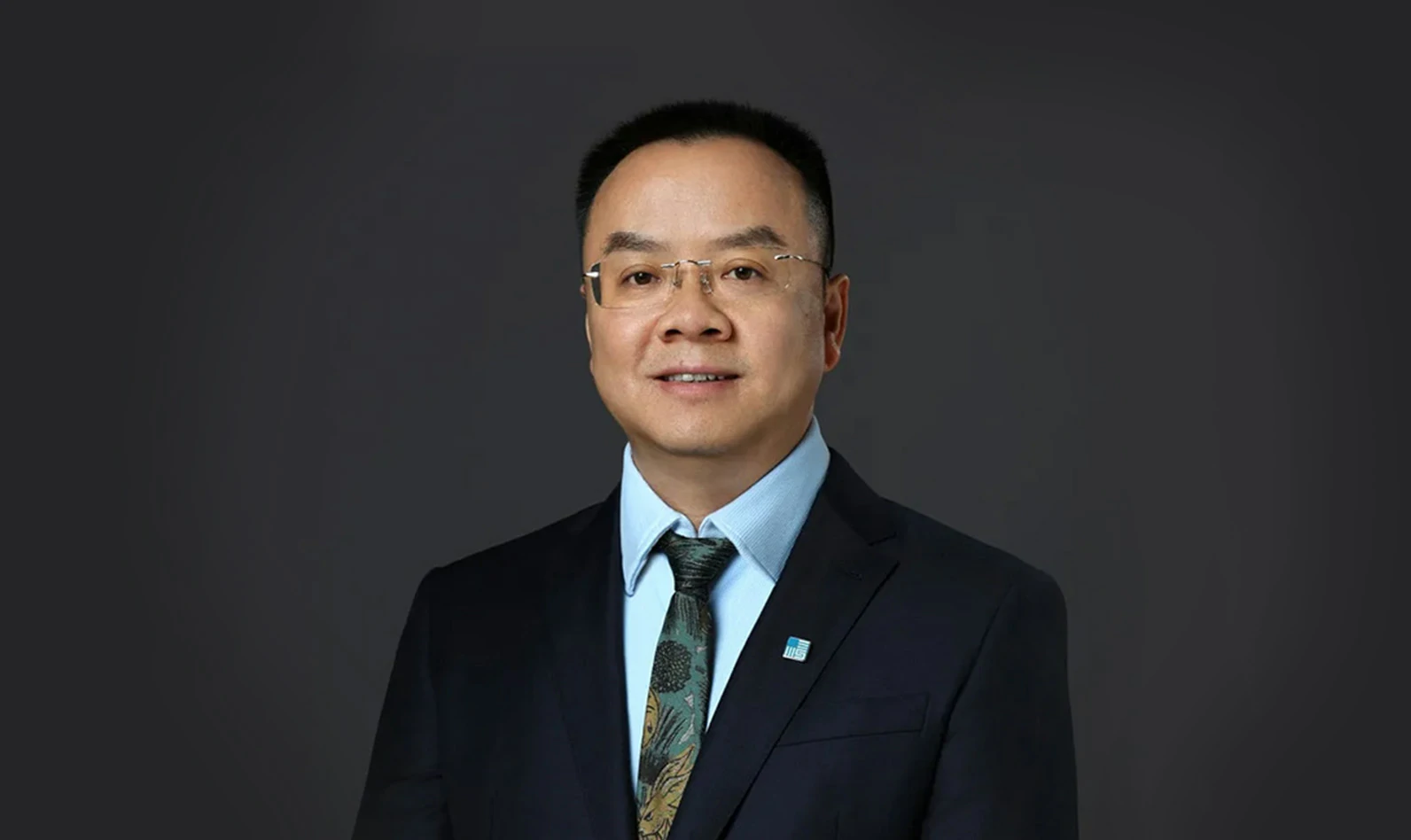
Behind this “hidden champion” is Xu Longhua, founder of WOOK and an alumnus of the Cheung Kong Graduate School of Business (CKGSB) Business Scholars Program (DBA program).
Xu’s journey began in 2010 when he identified a gap in Indonesia’s underserved mid-tier consumer market. Four years later, he launched WOOK, a cross-border platform connecting Chinese manufacturers with tens of thousands of small retailers across Southeast Asia.
Rather than positioning himself as a “market invader,” Xu prefers to describe WOOK’s mission differently: “Our goal is to become fertile soil where our customers can thrive.”
WOOK’s story illustrates a broader shift in how Chinese companies are expanding overseas—from simply exporting products to co-building local retail ecosystems.
According to Frost & Sullivan, measured by retail sales value in 2024, WOOK ranked No.1 among Chinese cross-border companies in Indonesia’s 3C accessories market, ahead of brands such as Anker, UGREEN, Transsion, and Baseus. In small home appliances, it ranked sixth among Chinese cross-border brands.
Unlike many competitors that rely heavily on branding campaigns and influencer marketing, WOOK pursued a far more grounded approach.
The company invested neither in splashy advertising nor viral online marketing. Instead, it relied on what Xu calls “the hard way”—through an extensive local presence. Today, WOOK operates more than 40 subsidiaries across Indonesia, Vietnam, Thailand, and other markets, supported by a local field sales team of over 1,000 staff who visit neighborhood retailers one by one.
The strategy stemmed from Xu’s early observations of Indonesia’s retail landscape. When he first arrived in Jakarta in 2010, he noticed a striking imbalance. International brands dominated high-end malls, while counterfeit goods flooded traditional retail channels. The vast mid-tier market in between was largely unserved.
Drawing on his experience at TCL and anticipating the rapid rise of smartphone adoption, Xu chose to enter the market through mobile accessories, insisting from the beginning on authentic products and long-term brand building.
The early years were far from smooth.
A power bank brand he launched—Watson—had to be abandoned after a naming dispute with a well-known international brand, resulting in losses exceeding one million yuan. At one point the company’s cash flow was so strained that it struggled to pay employee salaries.
A turning point came when a factory owner from Maoming, Guangdong, extended a RMB 50 million credit line without collateral.
“He simply believed I was someone who worked honestly and seriously,” Xu recalls.
That trust—combined with Xu’s persistence—helped WOOK survive its most difficult period. Gradually, the company gained traction through supply chain integration and business model innovation. Revenue reached RMB 908 million (USD 132 million) in 2023, RMB 1.049 billion (USD 152.6 million) in 2024, and RMB 880 million (USD 128 million) in the first nine months of 2025.
Another pivotal turning point came in 2014, when Xu realized the real challenge in Southeast Asia was not the products themselves—but the supply chain structure. Between Chinese factories and local neighborhood stores, multiple layers of intermediaries drove up prices, lengthened payment cycles, and fragmented market information.
WOOK was designed to bridge that gap.
The platform connects high-quality Chinese manufacturers directly with tens of thousands of small retailers, building an ecosystem that integrates digital tools, reliable product supply, and localized services.
“Going global should not be an invasion—it should be a form of coexistence,” Xu says. “Only when the local market becomes better because you are there can your business truly last.”
The name “WOOK” itself comes from the Chinese words meaning “fertile soil for customers.”
As of September 2025, the company employed 1,280 staff in Southeast Asia, with local employees accounting for 85.5% of the workforce—a structure that has helped it build strong relationships with local governments and communities.
Today, WOOK has evolved far beyond a traditional trading company. Its prospectus reveals a platform built on three mutually reinforcing pillars: brand development, digital infrastructure, and a deep retail network.
WOOK operates four proprietary brands—VIVAN, ROBOT, SAMONO, and RONA— spanning 3C accessories, small home appliances, and household products.
At the same time, it partners with with leading Chinese brands such as vivo, M&G, and Liby.
This “own brand + strategic partnerships” model allows WOOK to cover a full range of price points while enhancing product differentiation and margins.
Southeast Asia’s retail market remains highly fragmented, dominated by small independent stores. WOOK has turned this fragmentation into an advance.
With over 40 local subsidiaries and more than 1,000 field sales staff, WOOK directly connects with over 40,000 retailers, reaching more than 85,000 stores.
What once appeared to be a fragmented market has effectively become a manageable and scalable retail infrastructure.
WOOK has also built a strong online presence. The company operates 55 official flagship stores on platforms such as Shopee and Tokopedia and runs live-stream commerce operations across multiple markets on TikTok, collaborating with more than 100,000 local KOLs.
These online channels serve not only as direct-to-consumer sales outlets but also as a real-time data feedback system.
Insights into consumer preferences, trending products, and regional demand feed back into WOOK’s digital platform, guiding product selection, inventory allocation, and offline sales strategies.
Together, these pillars create a closed-loop system of online reach, data insights, and offline execution.
Through this structure, WOOK has evolved from a cross-border seller into what Xu describes as a regional retail operating system.
After more than a decade of steady expansion, WOOK is now preparing for its next phase of growth.
Xu says the company will prioritize three areas: new product categories, new geographic markets, and AI-driven technology applications.
One focus is the incubation of new brands to strengthen pricing power. Another is upgrading offline retail experiences by establishing branded counters, specialty zones, and flagship stores.
In product strategy, WOOK plans to move beyond relatively low-frequency purchases into higher-frequency and service-oriented categories.
“Products combined with services create stronger barriers to entry and greater profitability,” Xu notes.
Meanwhile, Indonesia itself continues to evolve as a market. The country’s young population and rising purchasing power are driving consumption upgrades and retail diversification. At the same time, competition is intensifying as more Chinese companies enter the region.
After establishing a solid presence in four Southeast Asian countries, Xu is already looking beyond the region, exploring potential expansion into South Asia, the Middle East, and Central Asia.
Artificial intelligence is also becoming central to the company’s strategy.
WOOK has established a dedicated AI development team within its IT division to build applications based on the company’s operational data. Early applications focus on internal efficiency, including product management, inventory optimization, and customer relationship management. Sales staff can even access product information through AI-assisted tools during face-to-face meetings with clients.
Looking ahead, AI could connect the entire value chain—from product design and manufacturing to consumer insights, distribution, and livestream commerce—creating a fully integrated digital ecosystem.
With the digital foundation already in place, Xu believes AI will become a powerful accelerator for WOOK’s next stage of growth.
Many companies expanding overseas pursue short-term, rapid growth through aggressive marketing hype.
WOOK chose a different path—patiently building offline networks while investing in long-term digital infrastructure.
By connecting more than 40,000 small retailers through over 40 local subsidiaries, the company has quietly established a powerful competitive moat across Southeast Asia.
Its IPO application now brings this once low-profile company into the spotlight.
Yet the real test for WOOK lies not in financial results but in whether its model can continue to scale, evolve, and endure.
What began as a small venture targeting Indonesia’s overlooked middle market is now aiming for something far larger: a new retail infrastructure platform for emerging markets worldwide.


