

Entrepreneurship,Female Leadership,Technology
Chen Jie, CKGSB EMBA Alumna, Founder and Chairwoman, Baiwang Co., Ltd.
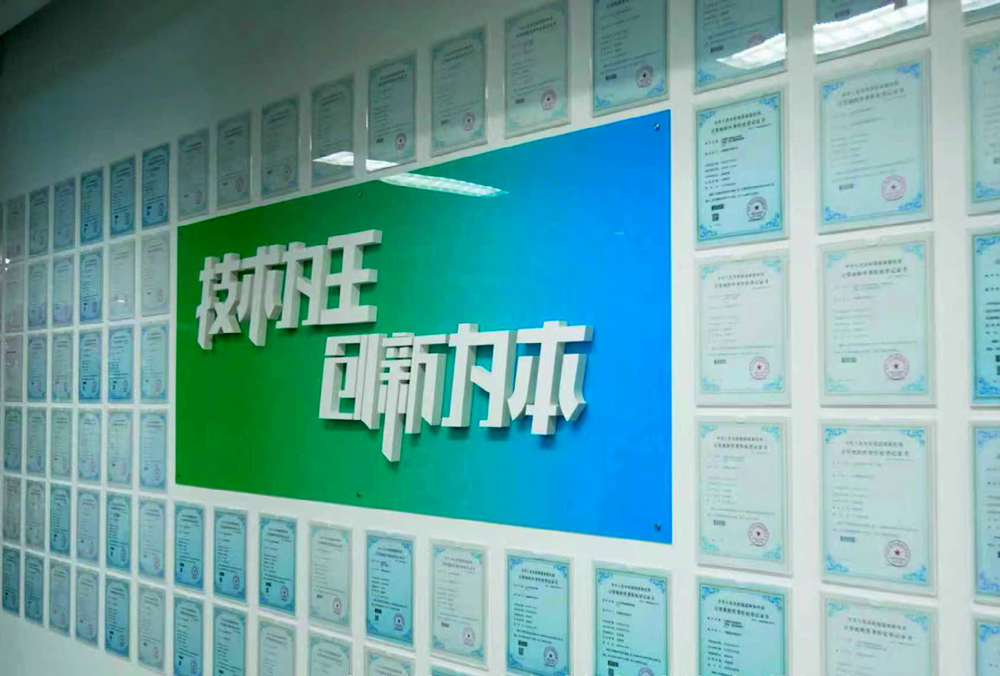
In the mid-2010s, Chen Jie stood at the height of a successful career. With more than 15 years in information security, she had played a key role in national-level digital governance projects, representing the peak of China’s e-government infrastructure. Her work had safeguarded government and enterprise systems across the country, earning her national recognition, including Beijing’s prestigious May Day Labor Medal.
For many professionals, this would have been the pinnacle of achievement—a chance to enjoy the security of status and reputation. But Chen harbored a larger ambition: to found her own company and take it public.
Her decision was not impulsive. She understood the risks of leaving behind an established career, but she also recognized that entrepreneurship in China, when aligned with national policy priorities, could unlock opportunities unavailable to even the most senior executives.
In 2015, at the very peak of her career, Chen resigned to start from scratch. She founded Baiwang Cloud (Baiwang Co., Ltd.), determined to align her vision with the momentum of China’s economic reforms.
Chen’s timing was no accident. That year marked the launch of China’s landmark VAT reform—a sweeping change that required massive digital infrastructure under the government’s “Golden Tax Phase III” initiative.
For Chen, this was the opening. With deep experience in financial IT systems, she positioned Baiwang to serve banks and large corporates, offering digital solutions that could bridge urgent policy requirements and business needs. Her proposition was simple yet powerful: if Baiwang could become indispensable in implementing reform, it would gain credibility and a foothold in the market. Execution mattered. “Speed is the only unbreakable advantage,” Chen would say. Baiwang pursued a top-down strategy— quickly adapting its products to policy and client demand. Within months, the company won one of the largest banking clients under VAT reform, a breakthrough that established Baiwang as a serious contender.
From there, Chen expanded into insurance and other financial services, capturing significant market share. The company had survived its first critical test: establishing relevance and credibility in a highly regulated, rapidly shifting environment.

But Chen was under no illusion. Survival through project wins was not a long-term business model. Project-based companies rarely scale.
Once Baiwang secured stability, she pivoted toward a platform model aligned with the company’s original G2B2B strategy: government-to-business- to-business. The idea was to harness national policy, help shape industry standards, and deliver enterprise services on a scalable platform. Baiwang’s first five-year plan was structured around this pivot. Anchored in the Golden Tax Phase III project, the company expanded from e-invoicing into broader digital tax services. It launched SaaS solutions for mid-to-large enterprises, offering not only invoicing but also accounts payable automation, tax automation, and supply chain collaboration.
The results were striking. Within five years, Baiwang had transformed into China’s leading e-invoicing unicorn, serving a wide array of corporate clients.
Chen knew, however, that a single growth curve would not sustain the company indefinitely. As government priorities shifted toward inclusive finance, she saw another inflection point.
China was pushing to expand financial access for small and medium-sized enterprises (SMEs). Chen identified a dual opportunity: Baiwang could help set data- driven credit risk standards, while also expanding its client base by offering free basic services to SMEs.
This became the company’s second five-year plan. Baiwang launched fintech cloud solutions for banks, applied digital marketing to acquire SME customers, and built tools to improve financial access.
By leveraging data, Baiwang positioned itself as a trusted enabler of inclusive
finance.
The transformation was significant. Baiwang had evolved from an e-invoicing specialist into a fintech cloud leader, serving both large financial institutions and SME clients.
“Speed is the only unbreakable advantage.
By the early 2020s, another shift was underway. China began emphasizing the digital economy and data asset circulation as part of its national strategy. For Chen, the emerging “20 Data Measures” signaled a profound opportunity: data itself was becoming a factor of production, on par with labor and capital.
Drawing on nearly a decade of experience in enterprise cloud services, Chen envisioned Baiwang’s third five-year plan: to build a marketplace for data. The company would focus on data production, exchange, and monetization—effectively acting as a broker for data assets. Her ambition was bold: to position
Baiwang as a comprehensive operator of data assets, leading the way in a field that would define the next decade of China’s digital economy.
Baiwang’s trajectory had not gone unnoticed. Investors recognized its growth potential and strategic alignment. At a pivotal moment, the company filed for an IPO on the Hong Kong Stock Exchange—bringing Chen’s founding vision within reach.
But the path to capital markets required more than growth. It required financial acumen, investor relations, and strategic positioning. Chen credits her nearly three years in the Cheung Kong Graduate School of Business (CKGSB) EMBA program with giving her the tools to navigate this stage. Through the program, she learned how to structure financing, gain shareholder support, and align business growth with market valuation. More importantly, it broadened her strategic perspective.
She often cites CKGSB’s Founding Dean, Professor Xiang Bing: “Look at Earth from the Moon, and use global perspectives to meet global challenges. ” For Chen, this was a reminder that building a successful company was only a starting point; building a great company required continuously refining vision, goals, and efficiency.
Throughout Baiwang’s journey, Chen has emphasized one principle: people are the foundation of success.
The company’s evolution into a data asset operator depended on a diverse, highly specialized team: experts in information security, ERP enterprise services, fintech, and data science. Chen often summarizes her philosophy simply: “There are no perfect individuals, but there can be a perfect team. ”
This belief shaped Baiwang’s talent strategy and corporate culture. For Chen, leadership was not about being flawless, but about building a team capable of scaling vision into reality.
As China advances its Belt and Road Initiative and e-invoicing gains global traction, Chen sees globalization as Baiwang’s next horizon. The challenge is complex: how to adapt Baiwang’s business model, talent strategy, and capital playbook for global markets.
But Chen views it as essential. Innovation, she insists, has no finish line. Her ambition is for Baiwang to become a diversified global digital technology company—evolving from a domestic unicorn into a worldwide leader in data- driven services.
Read how women leaders are reshaping China’s digital economy, combining research on AI’s mental-health impact with profiles of seven entrepreneurs advancing semiconductors, healthcare, data centers, and AI marketplaces.


