Governments constantly have to find the right balance between taxation and debt—as they need to fund public spending like infrastructure, healthcare, and defense while deciding how much to tax citizens and how much to borrow. Economists have long explored various ways to design the best possible combination of taxes and borrowing that maximizes overall economic well-being—an ideal approach known as the “Ramsey plan”. But there’s a catch.
Even if a government creates the perfect long-term plan today, future policymakers may have incentives to change it. That makes it hard to stick to the original strategy over time. Will the optimal tax rate plan decided by today’s government be implemented by the government tomorrow?
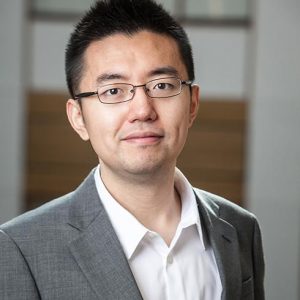
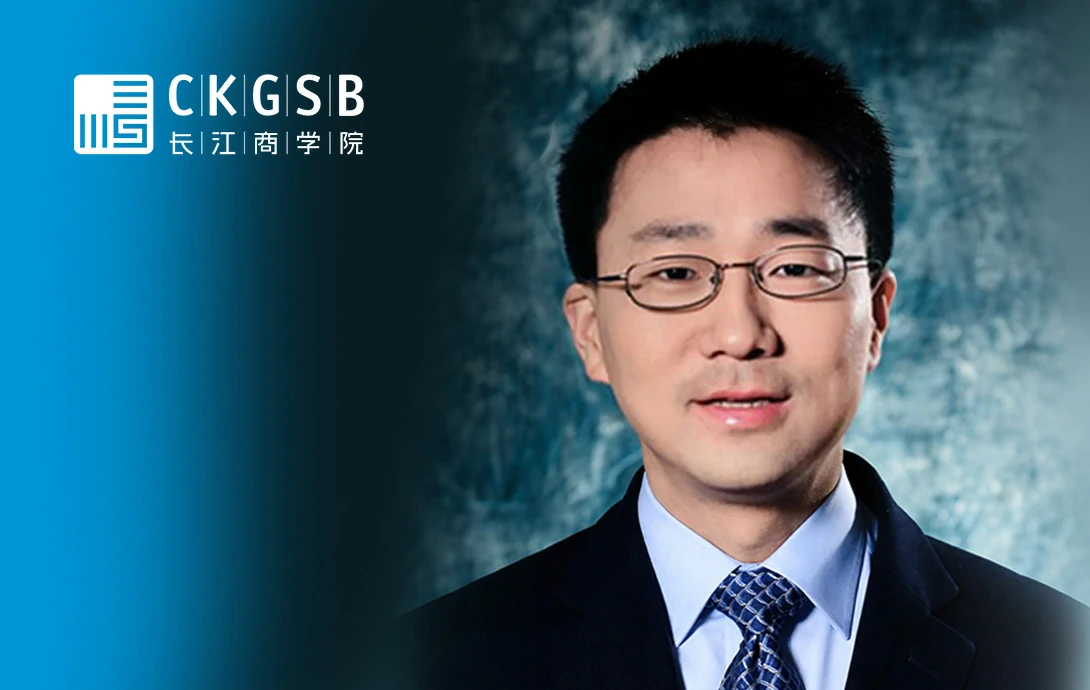
A new academic paper by CKGSB Professor Neng Wang and his co-authors Nobel Prize winner Professor Thomas Sargent and Professor Wei Jiang, offers a new approach to fiscal policy. Accepted by the Journal of Political Economy, their paper, Implementing an Optimal Tax Plan with Short-Term Debt, suggests governments struggling with high debt levels could benefit from a surprisingly simple tool: short-term debt—an approach for which previous economists had not developed an optimal tax framework.
Lucas and Stokey (1983) suggested that governments could maintain policy discipline by carefully managing the maturity structure of their debt—that is, the balance between short- and long-term obligations. The idea is that by spreading debt over time, future policymakers are incentivized to adhere to the original plan. However, more recent work (Debortoli, Nunes, and Yared, 2021) shows that this approach can break down when government debt is very high. In such cases, future policymakers may have an incentive to deviate by adjusting tax rates—especially if the existing plan requires taxes at economically costly levels.
While the Lucas and Stokey model laid the groundwork for government debt management, it falls short in cases of high debt. This is where the new research by Professor Wang and his co-authors steps in. Their paper introduces two key modifications and proves that optimal tax plans can be implemented by current and future governments even if debt is high.
Professor Wang’s paper introduces two important innovations to overcome the limitations of past approaches:
– Modifying the timing protocol of tax rate decisions
The authors introduce a more plausible real-world fiscal policy timeline: policymakers cannot easily change the tax rate set by their immediate predecessor, but they can choose tax rates for the future.
– Leveraging short-term debt as a new management strategy
As short-term debt must be repaid or refinanced quickly, leaning more on short-term debt means future governments can finance deficits more flexibly using bonds that mature within the same period. This reduces temptation to deviate from the original tax plan and keeps future tax rates on track, while addressing the debt-overhang problem.
The paper demonstrates that these two improvements ensure that each successive government faces the same constraints as its predecessors. This concept, referred to as the ‘invariance and equality of Lagrange multipliers,’ allows for the optimal tax plan to be applied at any level of debt.
The study offers a new way to think about one of the oldest problems in economics: how to design policies that stand the test of time.
By showing how short-term debt can help governments stick to optimal tax plans—even in challenging situations—the authors provide a fresh lens on fiscal strategy.
1. Rethinking Debt Strategy
Countries with large debt burdens, a challenge many economies face today,may have more options than previously thought. A greater reliance on short-term debt could improve policy consistency.
2. A Different Role for Short-Term Debt
Traditionally, short-term debt has been seen as risky. It exposes governments to refinancing pressures and interest rate fluctuations. But this research highlights a different benefit: it can help enforce discipline and credibility in fiscal policy.
Neng Wang is Dean’s Distinguished Chair Professor of Finance and Senior Associate Dean at CKGSB. Since joining CKGSB in 2021 from Columbia Business School, he has published or had 16 papers accepted in leading international academic journals.
Professor Neng Wang and Professor Sargent have continued to deepen their collaboration since their first publication in 2002. Their work spans macroeconomics, wealth distribution, government debt and fiscal policy, and has been published in leading journals such as the Journal of Political Economy, the Journal of Finance, and the Proceedings of the National Academy of Sciences.
This highlights the growing academic influence of Cheung Kong Graduate School of Business in global economics and finance research.