
Should the Liquor Tax in China be Higher?
January 27, 2015
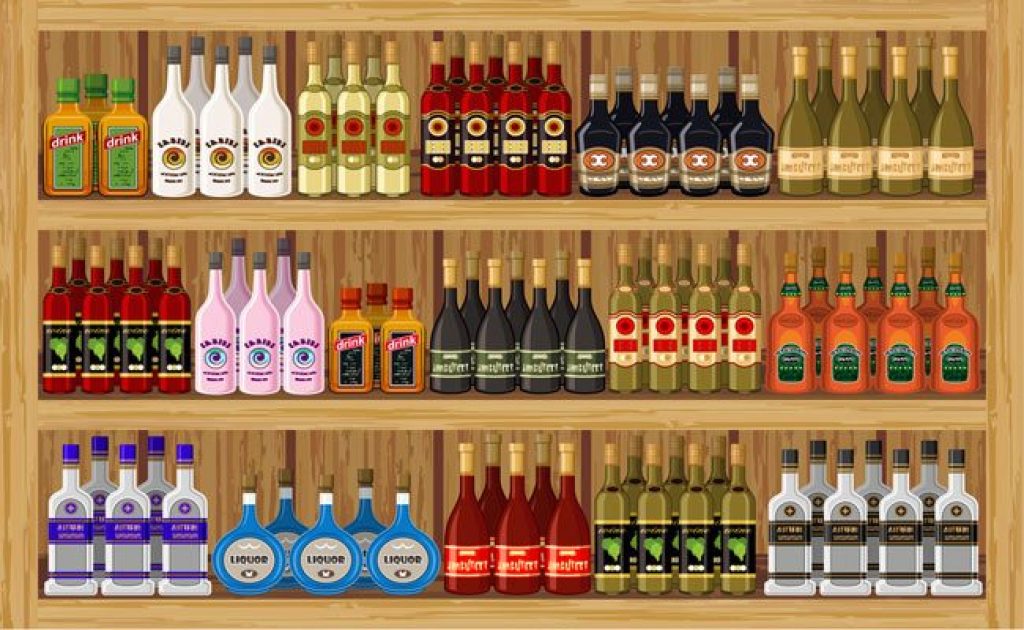
Liquor tax in China is lower than in most other countries. Prof Brian Viard on whether there is a case for raising it.
A recent Economist article discussing increased consumption of alcohol in China pointed out that China’s alcohol tax is lower than most countries—implying that an increase in the tax would significantly curtail consumption. But would it?
Before we come to that question let’s first ask why a government would want to tax alcohol. There are two reasons. First, as with any tax the government may want to raise revenues to fund its operations. Second, the government may want to reduce consumption of a product by making it more expensive. The second reason is what The Economist has in mind. Excessive drinking of alcohol leads to various social ills such as accidents from drunk driving, domestic and other violence, medical problems and reduced productivity.
How do we know whether a tax will accomplish one or the other of these goals? Economists have a handy tool for predicting this—an elasticity. As you might guess, an elasticity measures how flexible something is; how much it will change when you apply pressure. In this case, how much alcohol consumption will change if you tax it more? Increasing the alcohol tax will increase its price—producers will pass on at least some of the increased cost to buyers—so this is the same as asking how much alcohol consumption will decrease when its price increases. Economists calculate an elasticity as the percentage change in alcohol consumption that occurs if we increase its price by 1%.
We know that this elasticity will be negative—a higher price will make people drink less. The question is by how much it will fall. It is useful to know the answer to this question because it will tell us how an increase in the alcohol tax will play out.
Suppose the elasticity is a big negative number. This means if we increase the alcohol price by 1%, alcohol consumption will fall by a lot. For example, if the elasticity is -3 then a tax increase leading to a 1% increase in price will reduce consumption by 3%. In this case, the tax will do a good job of addressing the social ills caused by alcohol. The flipside of this is that it will not add much to the government’s coffers because sales will fall by a lot greatly reducing the tax base.
If, on the other hand, the elasticity is a small negative number then a 1% increase in price will not cause consumption to fall by much. For example, an elasticity of -0.1 would mean that a tax increase that leads to a 1% price increase will only reduce alcohol consumption by 0.1%. If this is the case, increasing the alcohol tax won’t do much to address the social ills of drinking (perhaps changing behavior through education or stricter drunk-driving punishments are needed instead). However, it will help in financing the government. We can increase the alcohol tax and most people will keep on drinking and paying the tax.
So how big is the elasticity of alcohol consumption? Elasticity estimates are tricky so unfortunately there are not many available.[1] I found one study which estimated elasticities in China for the mid-1990s. The study found an elasticity of -1.36 for wine and -0.90 for beer.[2] These are intermediate in magnitude and suggest that increasing the alcohol tax would be moderately effective in reducing drinking and its associated ills.
However, these estimates are fairly outdated. I found another study that uses more recent data and suggests that alcohol consumption has become much less responsive to price increases. The study found an elasticity of -0.12 for liquor and nearly zero for beer.[3] If these are more reflective of drinking habits in China now, then raising the tax may help bring in tax revenue but will not go far in reducing drinking.
So the question of whether the government should increase the liquor tax or not depends on the objective. In some sense, you can’t have it both ways—you can’t both generate significant revenue and reduce drinking a lot by raising the tax. Either people will drink a lot less and thereby pay less tax or keep on drinking and pay a lot in taxes.
[1] They are tricky because we need to randomly change the liquor price and see how people’s drinking habits change. Tax changes are often not random because the government implements a tax only because it expects a certain response.
[2] These are from Table 4 of “Liquor and Beverage Consumption in China: A Censored Demand System Approach”, Cheng Fang, 2003 based on data from the urban household surveys conducted by the National Statistical Bureau (NSB) of China in 1993 and 1998. The data used were 2,298 households in Beijing, Tianjin, Shanghai and Jiangsu.
[3] These are from Table 2 of “Is the Demand for Alcoholic Beverages in Developing Countries Sensitive to Price? Evidence from China”, Guoqiang Tian and Feng Liu, 2011 based on data from the 1993, 1997, 2000, 2004 and 2006 waves of the China Health and Nutrition Survey. The data used were from 44,025 individuals in Liaoning, Heilongjiang, Jiangsu, Shandong, Henan, Hubei, Hunan, Guangxi and Guizhou provinces.
Enjoying what you’re reading?
Article Subscribe (1)
CKGSB Report





Related Articles
Our Programs
Emerging Markets: Innovation and Scaling for Exponential Growth – ASEAN
A China-focused innovation program for ASEAN executives and business owners responding to the impact of AI on their industries.
Gain insights from leading Chese thinkers in Jakarta, with an optional immersion in China and opportunities to connect with the business leaders driving innovation. The program offers a closer look at how developments in China could affect your industry and business.
LocationJakarta, Indonesia
Date23–26 March 2027
LanguageEnglish (with Chinese translation)
Asia Start: AI + Digital Ecosystem China Expedition
An immersive program for entrepreneurs and executives looking to understand China's AI and digital economy firsthand.
Gain the latest trends and insights, strategies, and connections to overcome challenges and support future business growth in Asia and beyond.
LocationChina (Beijing, Shanghai, Hangzhou & optional Shenzhen)
DateApril 19–24, 2027
LanguageEnglish

Intelligent China: AI, EVs & Smart Manufacturing
A three-part program examining China’s advances in AI, electric vehicles, and smart manufacturing.
Through faculty-led sessions, company visits, and exchanges with industry leaders, gain practical insights for your organization's strategy, partnerships, and investment decisions. Join an individual four-day program or complete the full 12-day series.
LocationBeijing, Shenzhen, Shanghai, and Hangzhou
DateSummer – Winter 2027 (three 4-day programs)
LanguageEnglish

Scaling Innovation: AI and Digital Strategies for Business Transformation
Global Unicorn Program Series
In partnership with Columbia Engineering
This program is designed to equip senior executives with the strategic insights and tools necessary to lead in this transformative era.
LocationNew York, USA
Date26 Sep - 01 Oct, 2027
LanguageEnglish

Emerging Tech Management Week: Silicon Valley
Global Unicorn Program Series
In partnership with UC Berkeley College of Engineering
A technology management program for leaders looking to turn emerging technologies into business opportunities.
Combining proven strategies and cutting-edge research, the program helps participants fuel innovation, seize opportunities in emerging technologies, and catalyze transformation within their organizations. Designed for managers, start-up leaders, and technology investors, it includes visits to venture capital firms and technology companies, alongside mentored group projects.
LocationUC Berkeley, California, United States
Date31 Oct - 05 Nov, 2027
LanguageEnglish
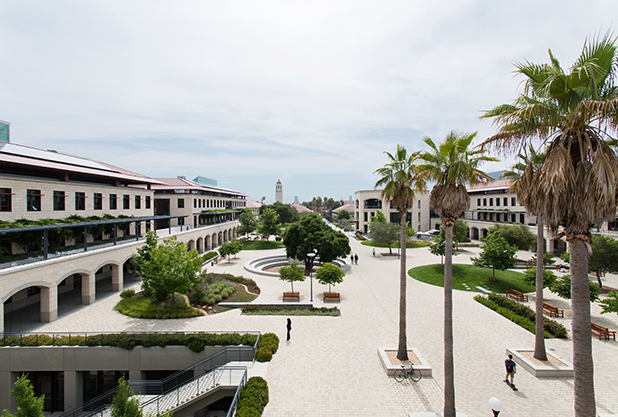
Stanford & Silicon Valley Immersion Program
Global Unicorn Program Series
In partnership with Stanford Engineering Center for Global & Online Education
A Silicon Valley immersion for entrepreneurs, intrapreneurs, and investors leading and scaling AI-driven companies.
The program combines academic learning with visits to AI and robotics labs and Silicon Valley companies, giving participants direct exposure to emerging technologies and the businesses developing and applying them.
LocationStanford University Campus, California, United States
Date05 - 10 Dec, 2027
LanguageEnglish with Chinese Translation